


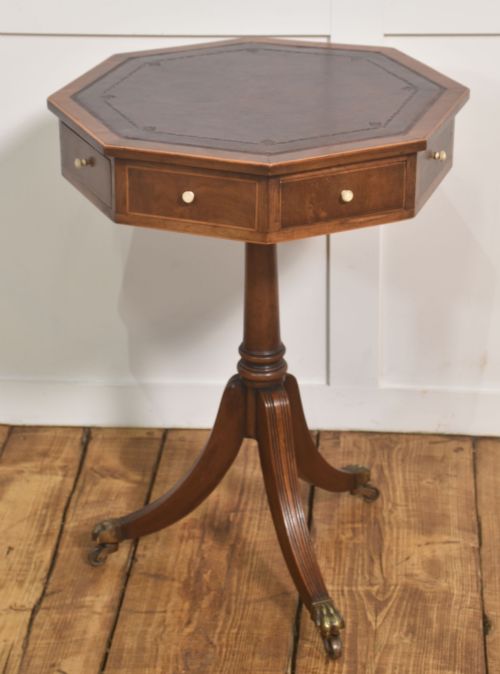
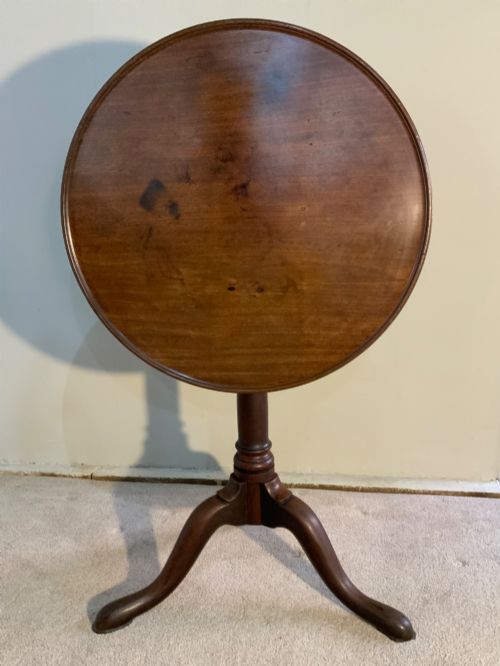
Brown Mahogany Tripod Table
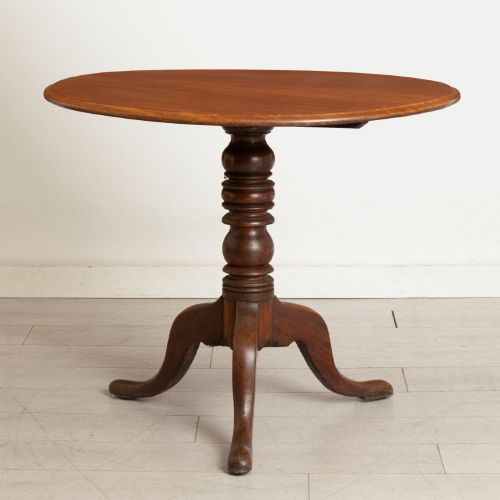
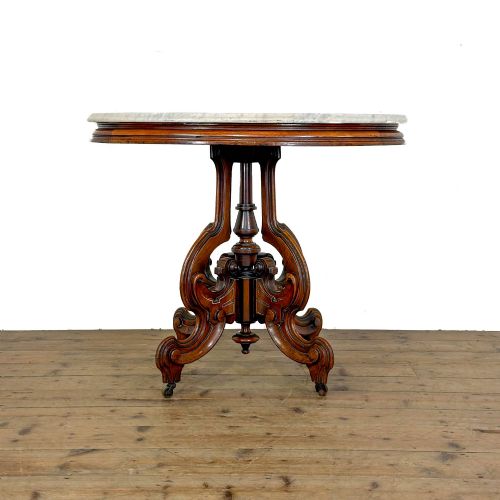
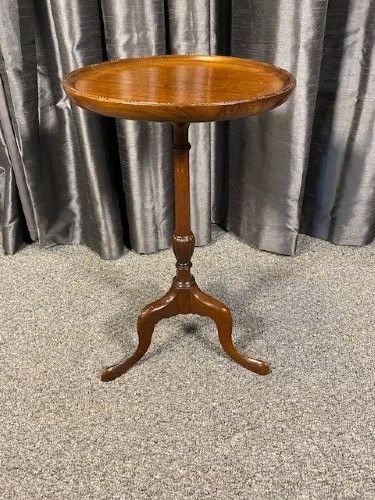
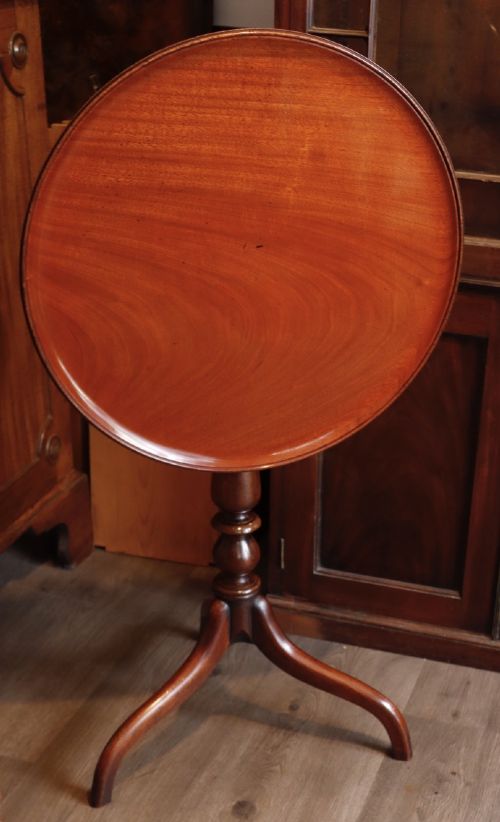
These brown mahogany tripod table examples combine sturdy pillar supports with pivoting tops, bringing compact elegance to period rooms.
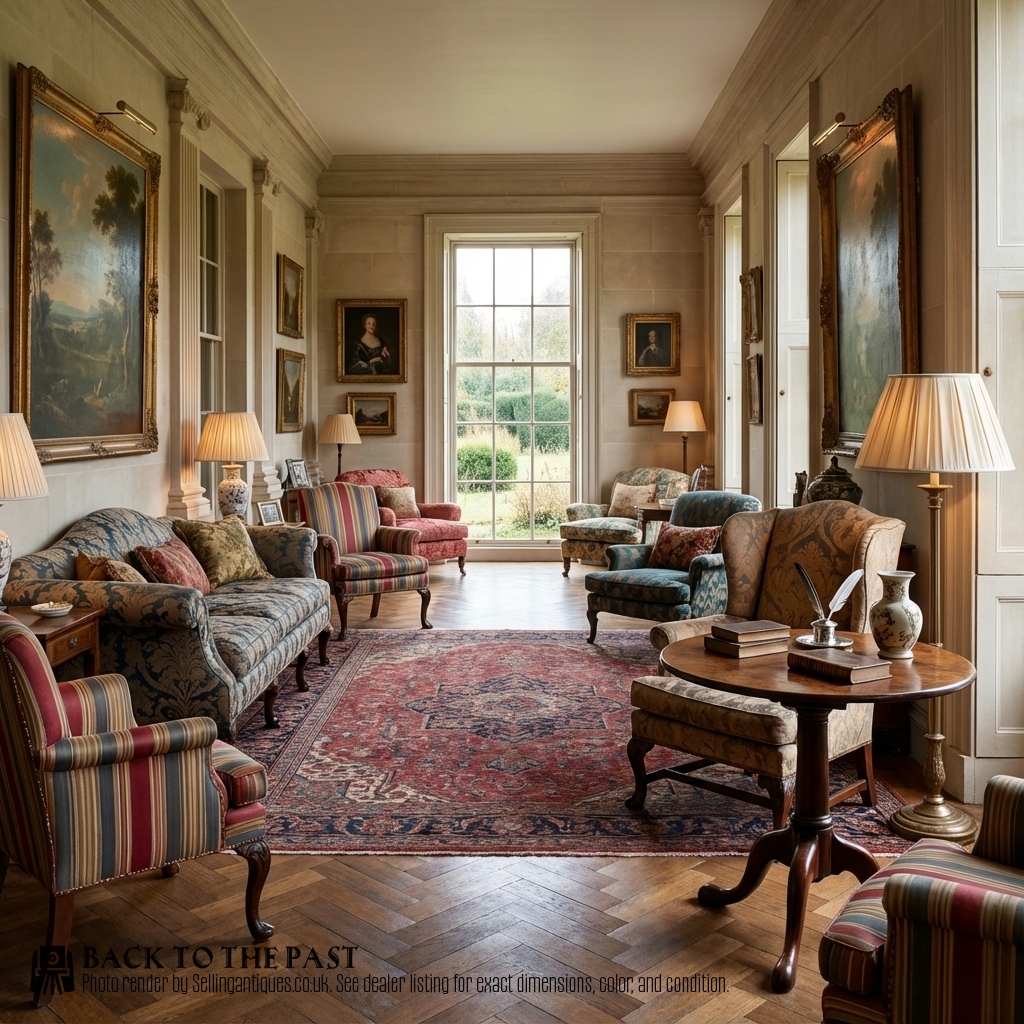
Brown Mahogany Tripod Table
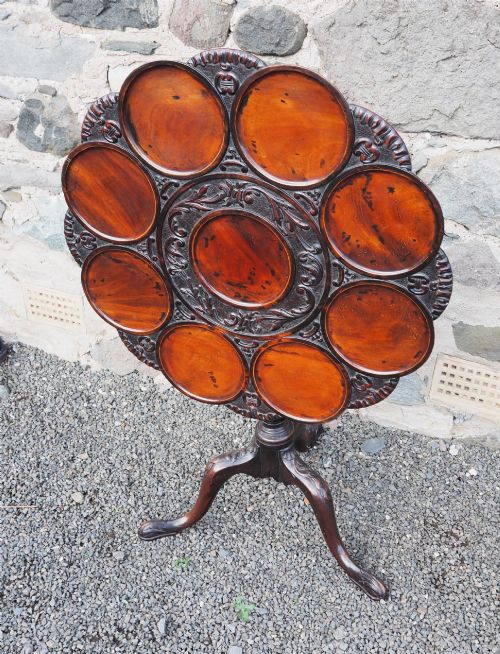
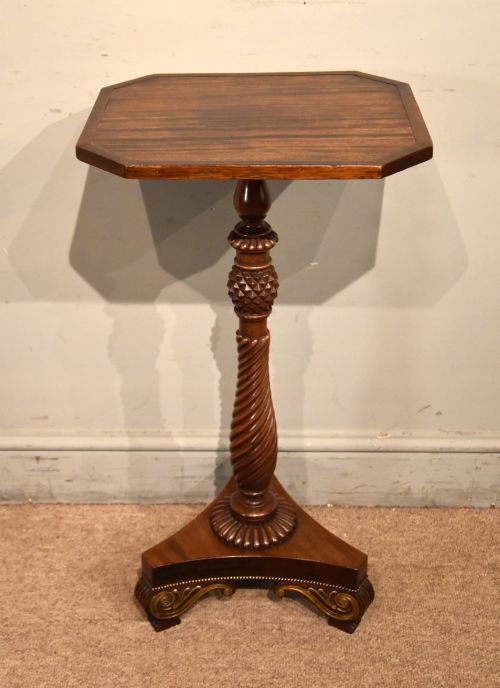
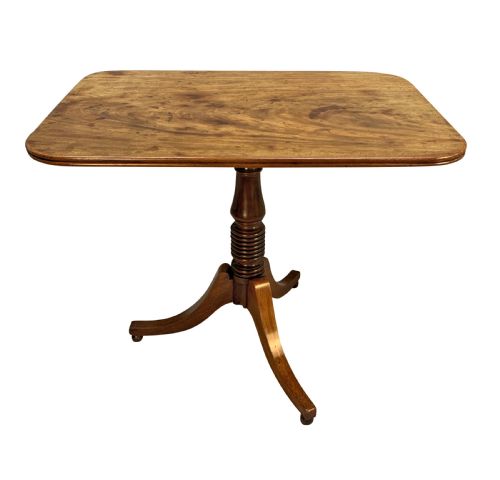
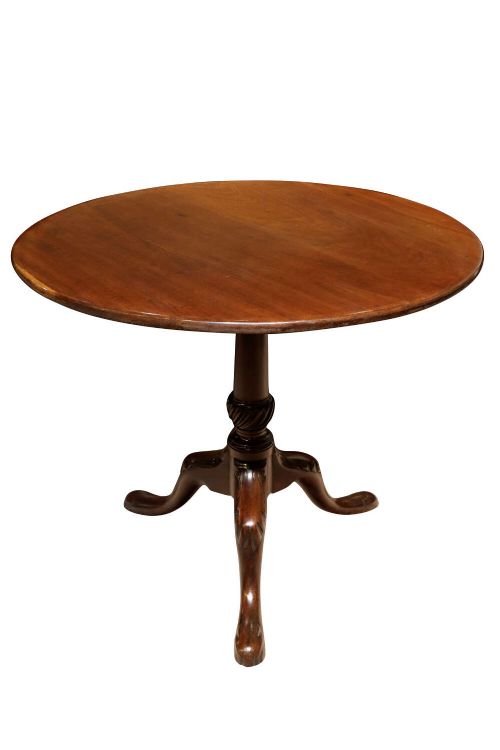
A brown mahogany tripod table stands on a central pillar supported by three outward-curving legs, offering a stable surface with a minimal footprint. These versatile pieces function as wine tables, occasional tables, tilt-top tables, and tea tables across several historical eras.
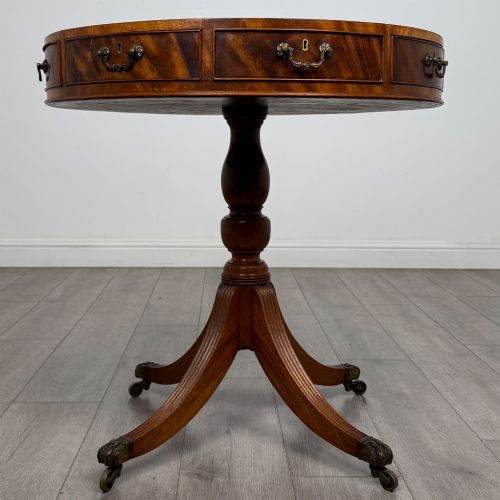
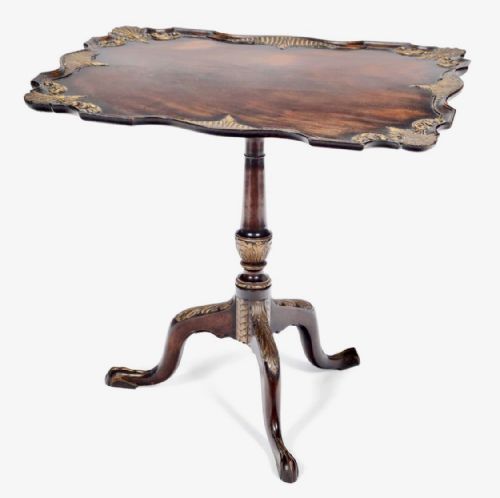
The pieces on this page span the Georgian, Regency, and Victorian periods, alongside later Revival styles from the Edwardian era and the early twentieth century. Buyers encounter circular tops, tray tops, and pie-crust edges, often incorporating birdcage mechanisms or tipping actions.
Originating predominantly from English workshops, these items served practical daily uses in drawing rooms and parlours. Their forms range from small wine tables to larger dining and centre tables supported by tripod bases.
How They Were Made
Craftsmen built these tables using solid and figured mahogany, frequently enhanced with boxwood inlay, parcel gilt, and brass details. Selected timbers provided rich brown tones and distinct grain patterns that responded well to polishing.
Structural integrity relied on sturdy turning for the central pillar and precise joinery where the three legs met the shaft. Many examples utilised a birdcage mechanism or a tilting hinge to allow the top to fold flat when not in use.
Brown Mahogany Tripod Table Retail Price Guide 2026
Typical asking prices for brown mahogany tripod table among the pieces listed under this phrase on Sellingantiques today, from the lower quarter to the upper quarter. They describe what is for sale here now, not the wider market.
Listings span multiple eras including Georgian, Regency, Victorian, and Edwardian periods, utilising mahogany alongside brass, boxwood, and leather.
What Varies in Quality
Quality rests upon the crispness of the carved details on the legs and pillar, from plain turned stems to elaborate parcel-gilt ornament. The choice of timber also dictates value, with well-figured mahogany displaying superior depth and colour.
Mechanisms differentiate standard pieces from finer examples, particularly the smooth operation of birdcage fittings and tilting actions. The balance and stability of the three-legged base remain crucial indicators of original craftsmanship.
The Brown Mahogany Tripod Table Glossary
- Tripod table
- A small freestanding table supported by a central pillar and three legs. This form gained popularity during the Georgian period for serving tea or holding candlesticks.
- Tilt-top table
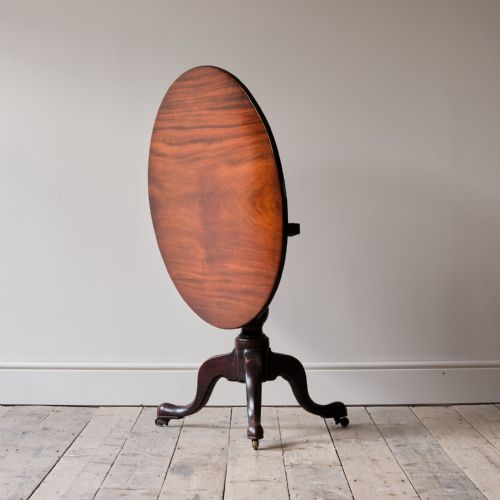
- A table with a hinged top that pivots to a vertical position for storage. This design allowed furniture to be pushed against walls when floor space was needed.
- Birdcage mechanism
- A box-like wooden frame beneath the table top that allows the surface to both rotate and tilt. It represents a refined piece of cabinetmaking found on better tables.
- Pie-crust edge
- A raised, decoratively carved rim shaped around the perimeter of a circular table top. This difficult woodworking technique is typically associated with high-status eighteenth-century pieces.
- Dumb waiter
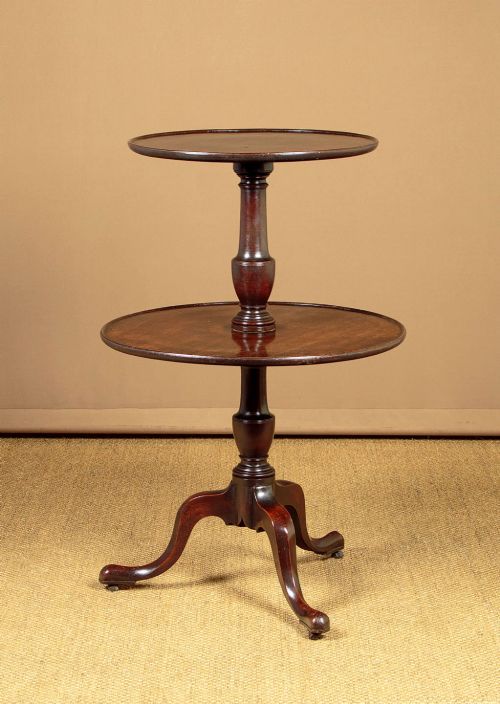
- A tiered set of circular rotating trays supported on a central pillar and tripod base. These items were used in dining rooms to hold tableware without requiring servants present.
Brown Mahogany Tripod Table: Frequently Asked Questions
How do I use a tilt-top table?
Release the catch beneath the top to pivot the surface vertically against the central pillar. This allows the table to take up minimal space against a wall when not in use.
Return the top to the horizontal position and secure the latch before placing items on the surface. Ensure the mechanism locks firmly to prevent accidental tipping.
What is a birdcage mechanism?
A birdcage is a revolving wooden frame positioned between the table top and the central pillar. It permits the surface to spin horizontally as well as tilt vertically.
This sophisticated fitting indicates a higher grade of construction, often seen on eighteenth-century and Regency examples.
Where were these tables placed?
These pieces traditionally stood in drawing rooms, parlours, and libraries to hold books, tea services, or lighting. Their compact tripod base made them easy to move around a room as needed.
Today they function effectively as bedside tables, lamp stands, or decorative accents in both traditional and modern interiors.
How do I distinguish Georgian from Victorian pieces?
Georgian examples, dating through the eighteenth and early nineteenth centuries, generally display restrained proportions, fine carving, and elegant pillar turnings. Mahogany from this era often exhibits a rich, warm patina developed over time.
Victorian pieces from the later nineteenth century tend to be heavier in construction with bolder ornamentation and darker finishes. Revival styles from the Edwardian period often emulate these earlier Georgian and Regency forms.