

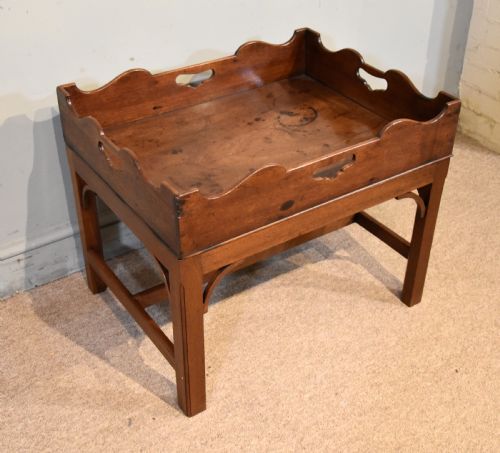


Brown Mahogany Drinks Tray
A brown mahogany drinks tray brings practical elegance to hosting, offering sturdy service surfaces shaped from rich timber across Georgian, Victorian, and Edwardian periods.
Brown Mahogany Drinks Tray
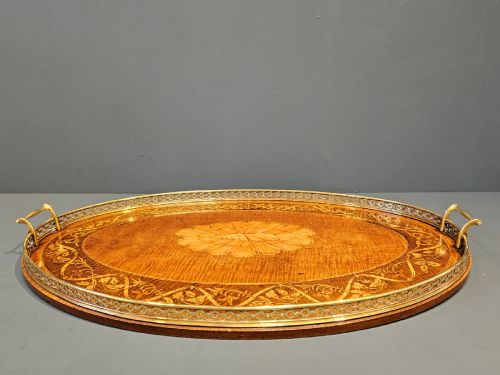
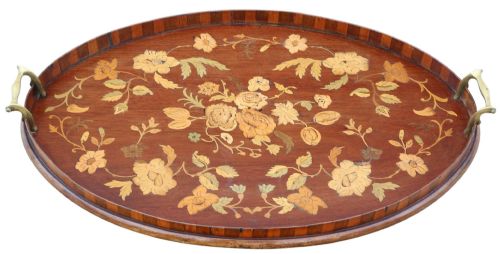
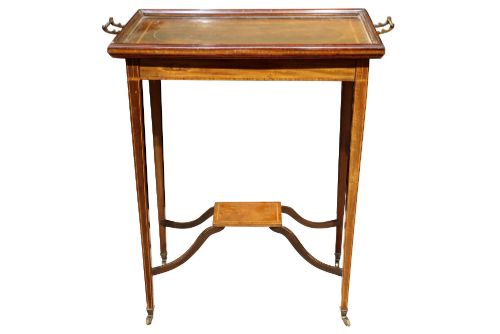
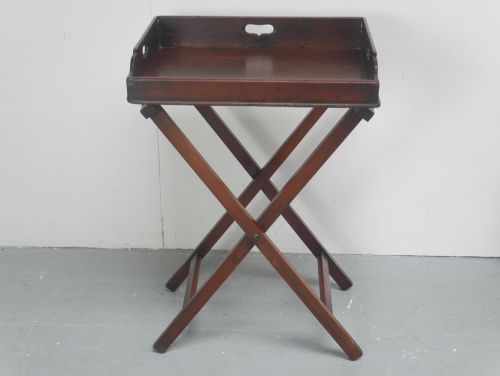
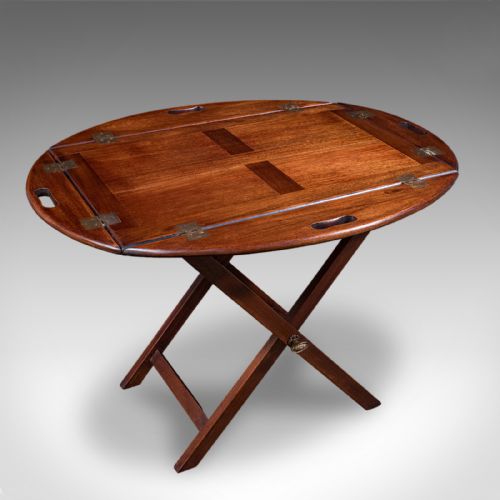
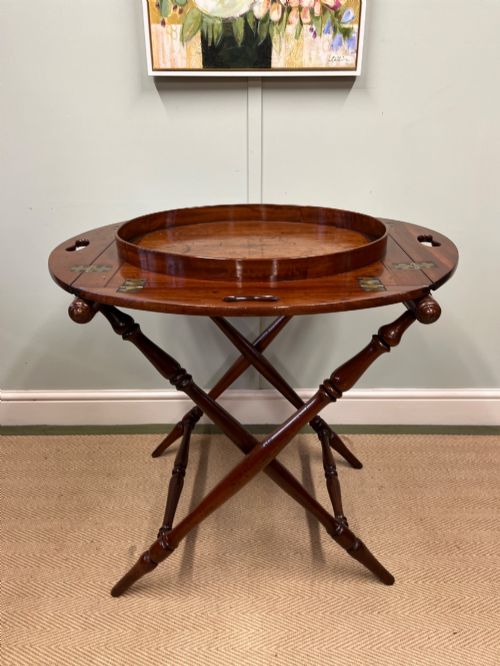
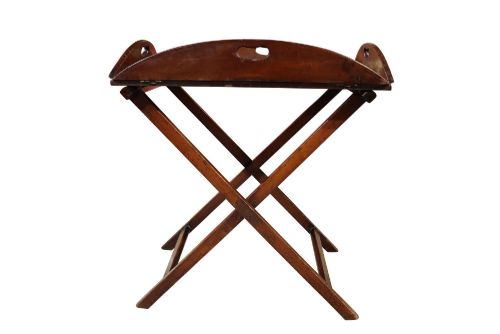
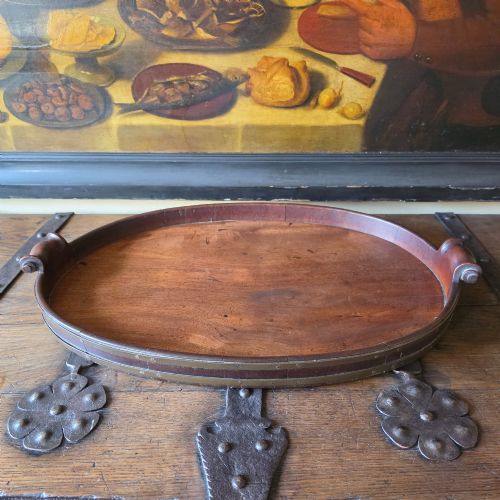
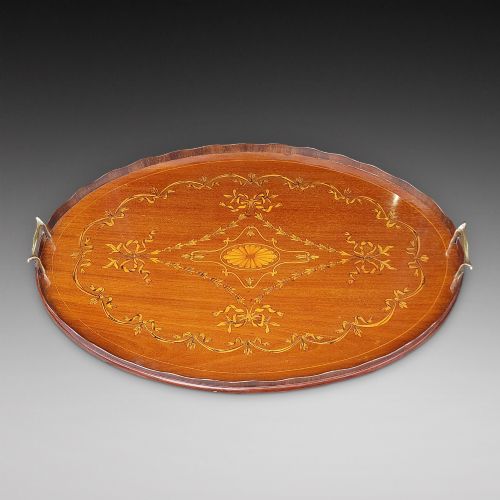
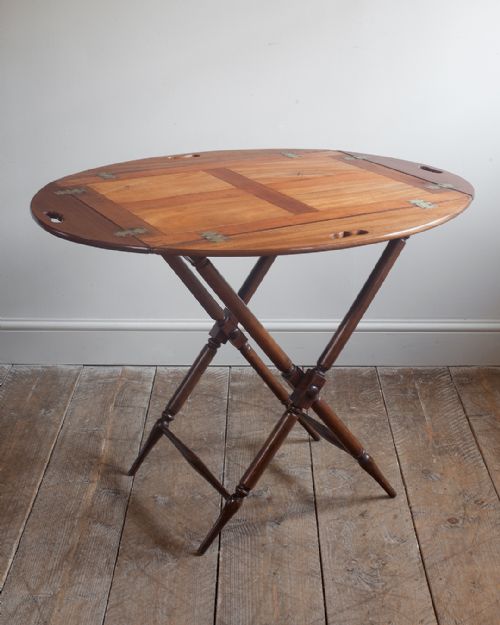
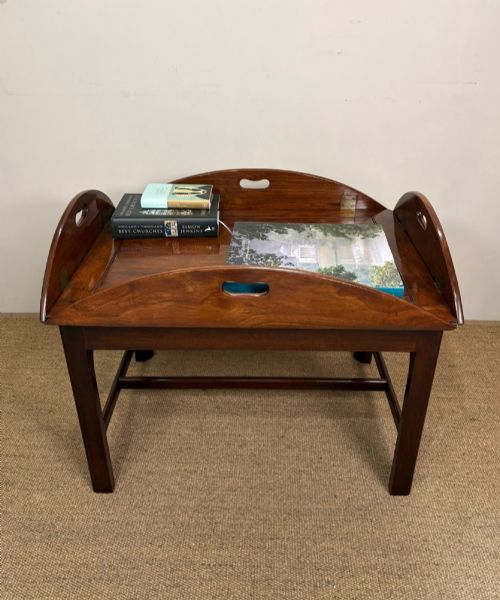
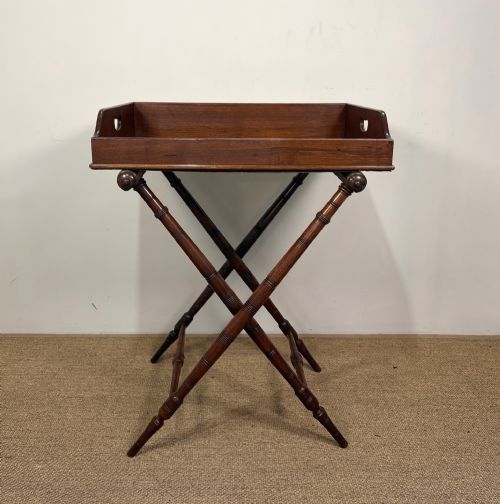
A brown mahogany drinks tray serves as a functional centrepiece for hospitality, appearing across periods from the 18th century through the Edwardian era. You will encounter handheld serving platters alongside larger butler's trays mounted on folding stands and occasional tables.
The selections span oval shapes, kidney-shaped forms, and rectangular designs with scalloped or galleried edges. Many examples incorporate drop-flaps or removable trays paired with dedicated stands for flexible entertaining.
How they were made
Cabinet makers utilised dense, durable mahogany as the primary timber, often enhancing surfaces with contrasting satinwood inlay or intricate marquetry patterns. Brass handles and fittings provided functional strength and visual contrast against the dark wood grain.
Some sophisticated examples integrated silver-plated mounts, canvas webbing on folding stands, or glass panels to protect the polished wood during service.
Garden party hosting required sturdy folding stands so trays could bravely venture out onto the lawn without wobbling.
What varies in quality
The standard of a brown mahogany drinks tray rests upon the crispness of its inlay work and the structural integrity of its joinery. Superior pieces display finely fitted handles, balanced proportions, and meticulously executed marquetry rather than simple painted decoration.
The integration between the tray and its folding stand dictates the quality of butler's trays, where tight joints and well-figured timber distinguish finer workshop output from utilitarian items.
The Brown Mahogany Drinks Tray Glossary
- Butler's tray
- A removable wooden tray featuring raised sides, often with hinged flaps, designed to sit upon a folding X-frame stand for serving drinks or meals. This form became a staple of British domestic service during the Georgian and Victorian periods.
- Galleried edge
- A raised border surrounding the perimeter of a tray to prevent items from sliding off during transport. These borders range from simple shaped mouldings to pierced wooden galleries.
- Marquetry
- The art of applying decorative veneer pieces in various woods to form geometric or pictorial designs on the tray surface. It requires precise cutting and fitting to achieve a smooth finish.
- Satinwood inlay
- Contrasting light-coloured yellowish timber inserted into recesses within the darker mahogany base. This technique highlights borders, handles, and central cartouches.
- Drop-flap
- A hinged side section on a tray or table that can be lowered or raised to alter the surface area. These flaps often feature secure brass hinges.
Brown Mahogany Drinks Tray: Frequently Asked Questions
How were butler's trays used?
These trays functioned primarily for transporting food and beverages between rooms before being placed upon folding wooden stands to serve guests.
They provided portable surface space that staff could clear away easily after tea or evening gatherings.
How do I style a tray table?
Place a mahogany tray table beside a sofa or armchair to hold lamps, glassware, or decorative objects within easy reach.
Their removable tops allow you to lift the tray directly off the stand and carry drinks to guests.
How do I tell Georgian from Edwardian trays?
Georgian pieces generally rely on restrained lines, deep solid mahogany timbers, and classical proportions associated with the 18th century.
Edwardian interpretations frequently incorporate lighter satinwood inlay, marquetry motifs, and kidney-shaped silhouettes.
What is the difference between a tray and a tray table?
A standard tray is designed to be carried by hand using built-in handles or raised edges during service.
A tray table pairs that same removable surface with a dedicated folding or fixed stand to create an occasional table.