
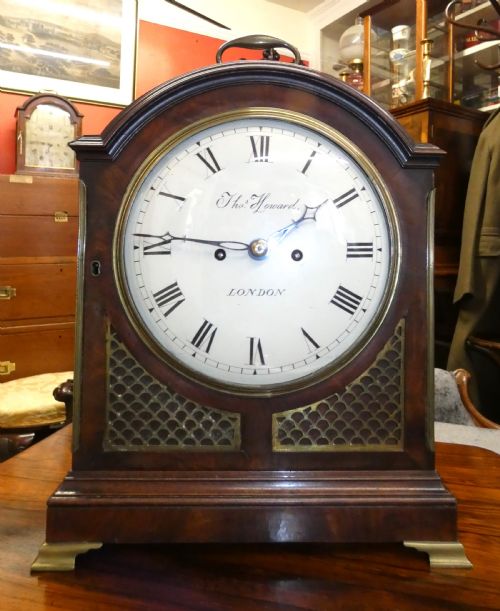
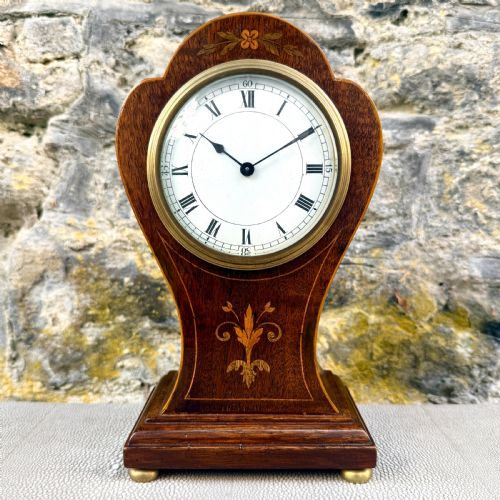
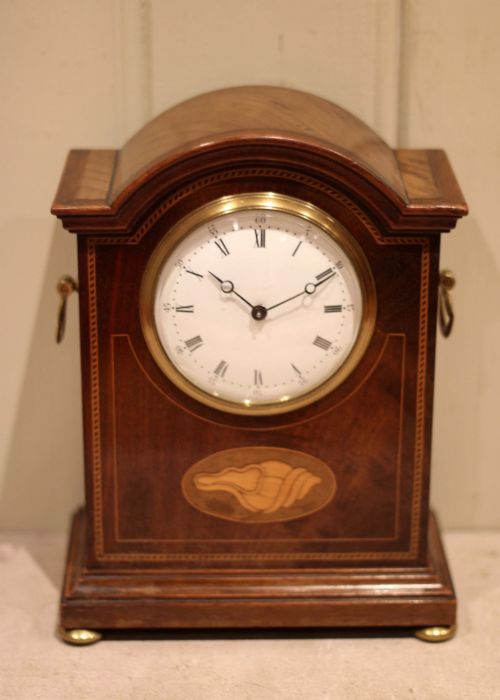
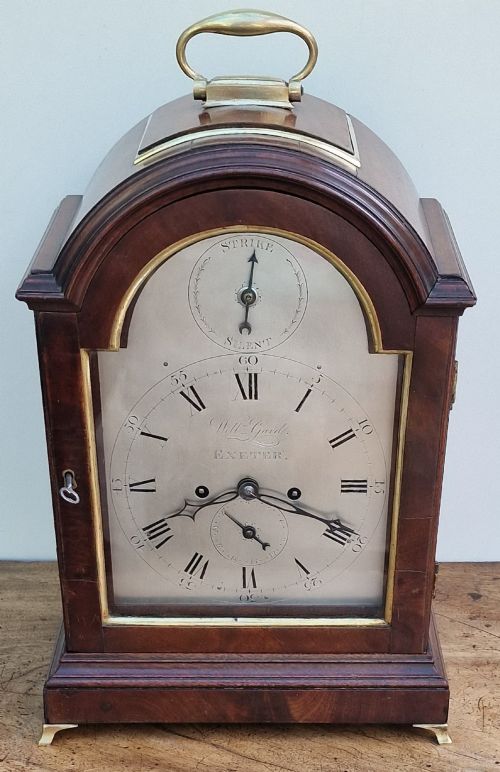



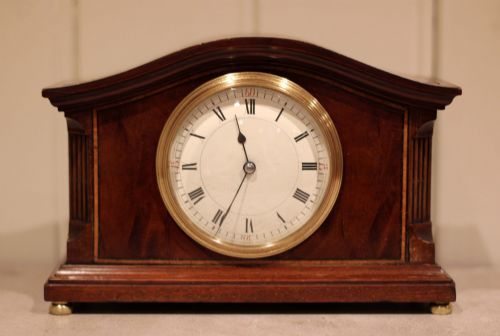

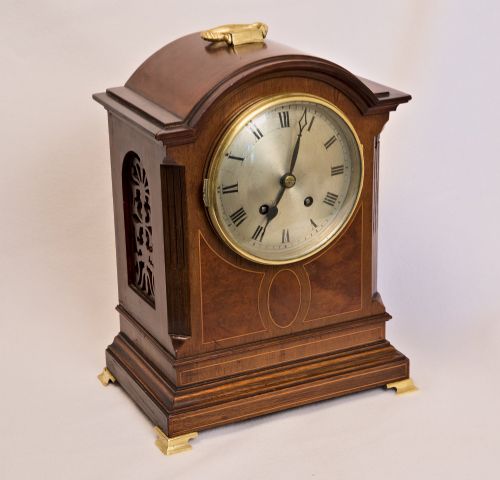

Brown Mahogany Bracket Clock
A brown mahogany bracket clock brings precise mechanical movement and rich timber grain to a desk or mantel.
Brown Mahogany Bracket Clock
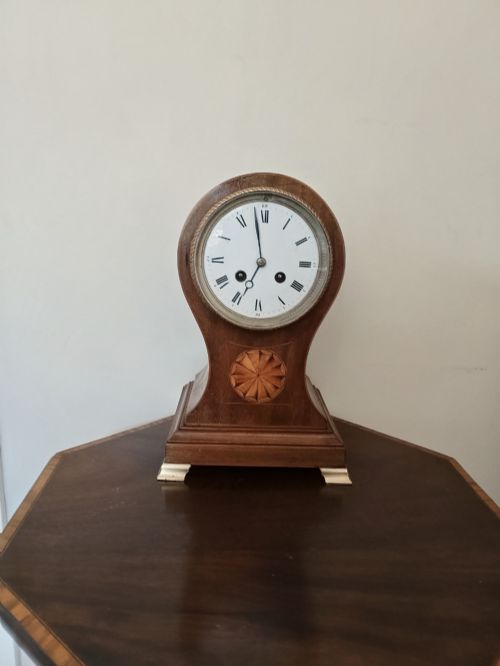
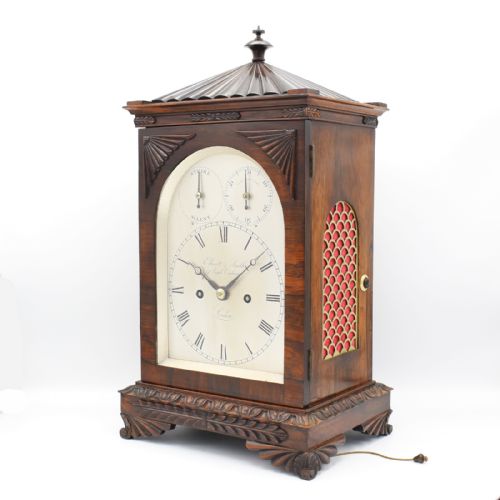
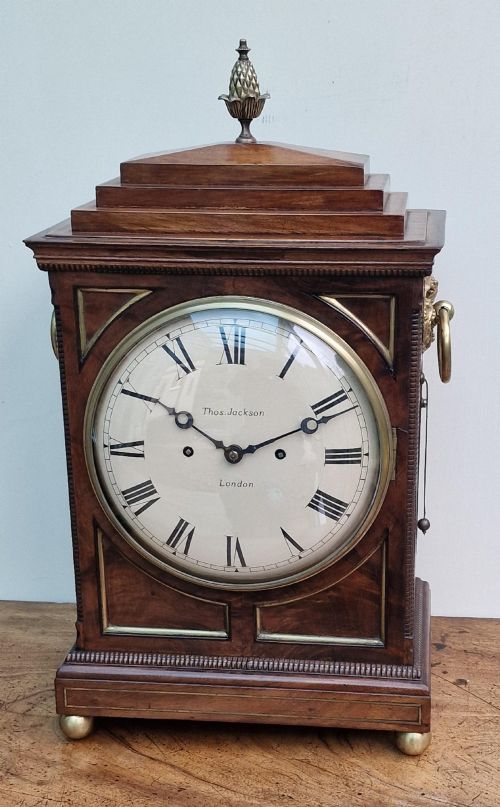
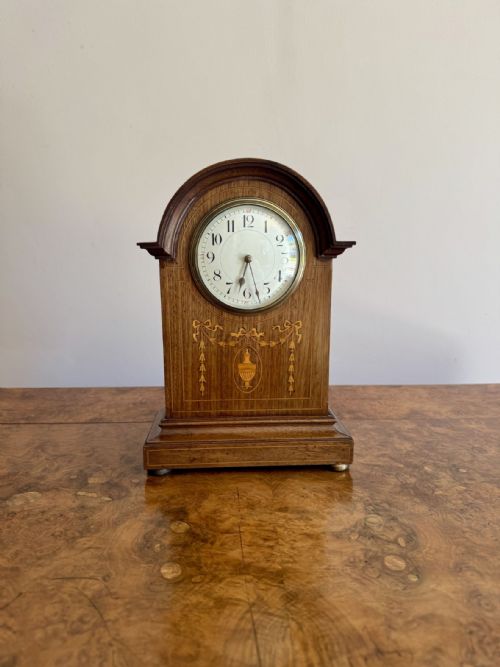
A brown mahogany bracket clock sits among mantel clocks, table clocks, and library clocks found on this page. These pieces originate across the Georgian, Regency, Victorian, and Edwardian periods, stretching from the late eighteenth century into the twentieth.
Makers such as William Gard, Ellicott & Smith, Thomas Jackson, Bush of London, L. Vick, Webster, Thomas Moss, Dent, Cording, W. Burton, Piggin, Geo. Carter, Wilkinson, J. Kingerley, Hyde, and Robert Brown appear in the historical record. The versions most commonly met today are Edwardian and nineteenth-century examples in mahogany cases.
The selection includes fusee bracket clocks, timepiece mantel clocks, and striking movements housed in architectural or balloon-shaped timber cases. Buyers encounter both provincial makers and prominent London names working within traditional English styles.
Judging quality in a brown mahogany bracket clock
Quality rests in the crispness of the mahogany case carving, the subtlety of any inlay work, and the original integrity of the brass movement. Finer examples display harmonious proportions, unblemished dial enamel, and clean signatures from established makers rather than later replacements.
The sophistication of the internal mechanism dictates the upper tier of the range, particularly fusee movements and striking or chiming trains by known makers. Heavy, well-figured timber housings with original brass feet and handle fittings command higher regard than plain or heavily restored alternatives.
William Gard Exeter·Ellicott & Smith·Thomas Jackson London·Bush of London·L. Vick Stroud·Webster Cornhill London·Thomas Moss·Dent·Cording of London·W. Burton·Piggin Norwich·Geo. Carter Hackney·Wilkinson Leicester·Hyde of Salisbury·Robert Brown London
The Brown Mahogany Bracket Clock Glossary
- Fusee
- A conical pulley used in mechanical clocks to maintain even power delivery as the mainspring unwinds. This device equalises the diminishing force of the spring to improve timekeeping accuracy.
- Bracket clock
- A portable spring-driven clock originally designed to sit on a wall bracket or table. These pieces feature enclosed movements and sturdy carrying handles.
- Timepiece
- A clock that measures and indicates time without a striking mechanism for hours or quarters. Such movements focus purely on the visual display of the hour and minute.
- Striking clock
- A timepiece equipped with an internal mechanism to sound the hours on a bell or gong. The countwork or rack system regulates the number of strikes.
Brown Mahogany Bracket Clock: Frequently Asked Questions
What is a bracket clock?
A bracket clock is a portable spring-driven timepiece built with a carrying handle on top. They were originally designed to sit securely upon a wooden wall bracket or a table surface.
These pieces house complex mechanical movements within enclosed timber cases. Their design allows owners to move the clock between rooms while keeping accurate time.
How do I wind the clock?
Winding requires a dedicated key inserted into the winding holes on the dial face. Turning the key tensions the internal mainspring to store mechanical energy for the gear train.
Careful handling during winding protects the delicate escapement and fusee chain. Owners should follow the specific rotation limits dictated by the movement type.
What is a fusee movement?
A fusee movement uses a conical grooved pulley connected to the mainspring by a fine chain or cord. This clever engineering feature compensates for the decreasing power of a relaxing spring.
As the spring unwinds, the chain pulls higher up the wider cone diameter. This maintains constant torque on the gear train for superior timekeeping precision.
How do I date a mahogany clock?
Dating relies on stylistic clues in the mahogany case, dial layout, and signature details. Regency and Georgian examples exhibit different timber tones and proportions compared to Edwardian or Victorian pieces.
Inscribed maker names on the dial or backplate offer a direct link to historical records. Examining the hinge types, brass quality, and engraving styles refines the period further.