



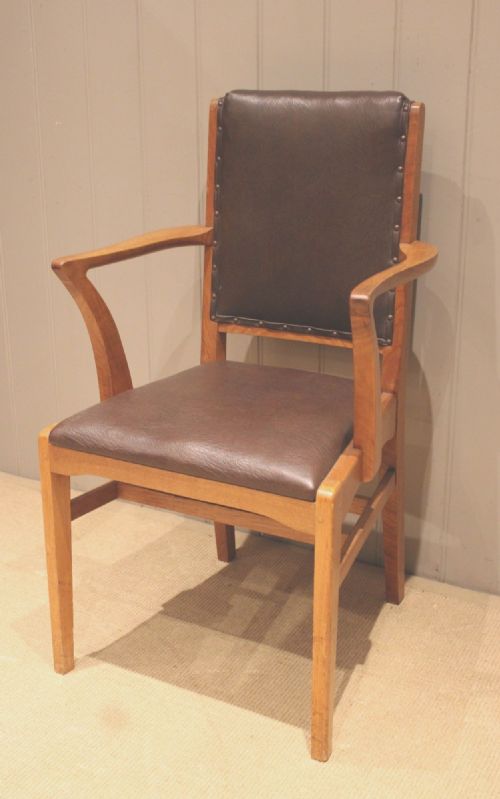


Brown Leather Swivel Armchair
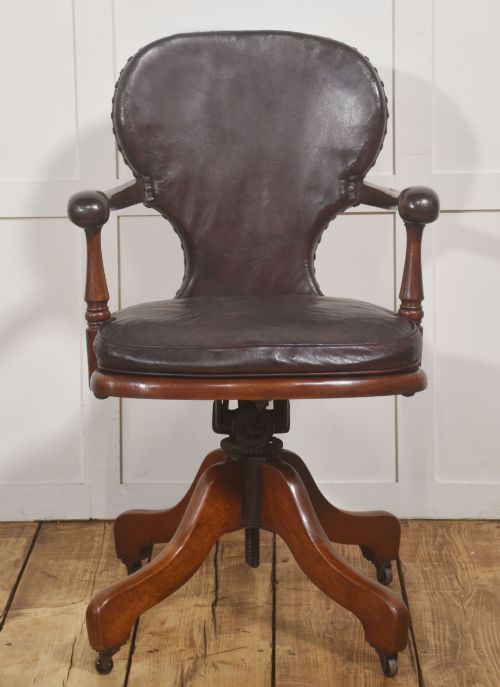
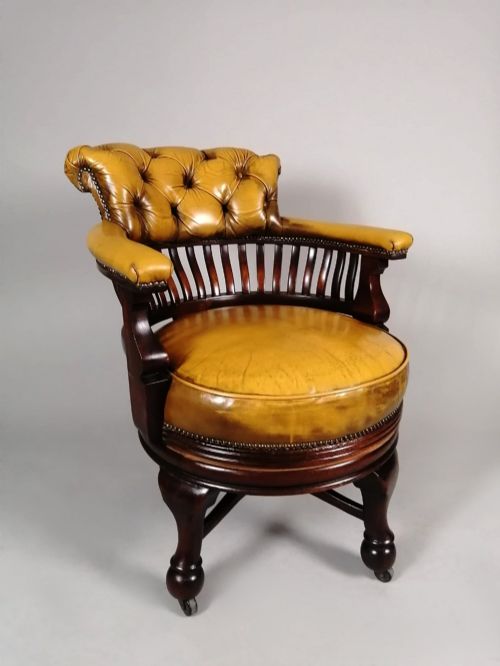
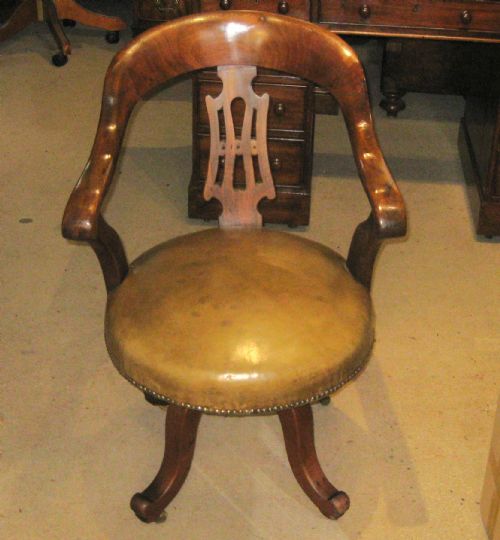
A brown leather swivel armchair brings rich historical character and functional rotation to a study, built across periods from the Victorian era to the mid-twentieth century.
Brown Leather Swivel Armchair
A brown leather swivel armchair encompasses desk chairs, office chairs, and lounge chairs designed with revolving mechanisms and upholstered seating. These pieces appear across the nineteenth century, the Edwardian period, and into the nineteen-sixties, reflecting changing workspace demands.
Makers and manufacturers span traditional British cabinetmakers to international designers such as Fritz Hansen and workshops like Kendrick and Jefferson. Dating ranges from eighteen-eighty through to nineteen-sixty-five, uniting diverse styles through the shared function of swivel mobility.
Materials and construction
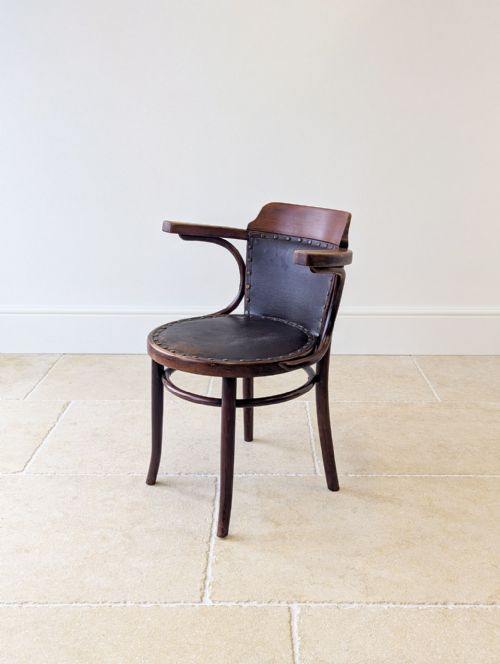
Timber frames form the backbone of these chairs, utilising oak, mahogany, walnut, satinwood, teak, and beech alongside cast iron, iron, and brass mechanical components. Bending techniques also appear in bentwood examples, while heavier frames receive deep hand-carving.
Upholstery relies primarily on leather seats and backrests, sometimes re-leathered during restoration work, paired with adjustable height mechanisms and revolving pivots. Brass castors and iron swivels provide the mobility characteristic of these working chairs.
Brown Leather Swivel Armchair Retail Price Guide 2026
Typical asking prices for brown leather swivel armchair among the pieces listed under this phrase on Sellingantiques today, from the lower quarter to the upper quarter. They describe what is for sale here now, not the wider market.
Periods represented span from the nineteenth century through the Edwardian era up to mid-century modern production.
Assessing quality in swivel seating
Quality rests in the integrity of the revolving mechanism and the robustness of the timber frame, whether carved oak or polished mahogany. Superior examples maintain smooth rotation and stable height adjustment without excessive play in the spindle.
The grade of leather upholstery and the precision of joinery separate standard production pieces from fine workshop creations or designer iterations like the Fritz Hansen egg chair. Finer specimens display harmonious grain matching, careful inlay work, and durable hardware.
Kendrick and Jefferson·Fritz Hansen
The Brown Leather Swivel Armchair Glossary
- Revolving desk chair
- A seating form designed to rotate on a central spindle, facilitating movement around a workspace. These typically feature wooden frames with leather seats.
- Ship's chair
- A sturdy seating variety often constructed from heavy oak with carved details and inset leather, built to withstand maritime environments. They incorporate secure frames suited to movement.
- Bentwood
- Wood softened through steaming and bent into curved shapes, as seen in Thonet designs. This technique allows for graceful structural lines without traditional heavy joinery.
- Satinwood
- A lustrous hardwood used for decorative inlays and cabinetwork. It provides a pale, contrasting border against darker timbers like mahogany.
- Planter's chair
- An armchair featuring extended arms designed for relaxation, often associated with colonial production in teak. These offer deep seating proportions.
Brown Leather Swivel Armchair: Frequently Asked Questions
How do I date an antique swivel chair?
Dating relies on examining the construction methods, timber choices, and mechanical hardware under the seat. Victorian and Edwardian examples often display hand-turned spindles and solid oak or mahogany frames.
Later mid-century pieces shift toward moulded shells, cast aluminium bases, and distinct upholstery profiles. Comparing the castor types and fastener fixings helps narrow the manufacturing decade.
Were all brown leather swivel chairs used at desks?
While the majority function as desk or office chairs, the inventory also includes ship's chairs, lounge chairs, and planter's chairs. Maritime examples were built for stability on vessels rather than writing desks.
Mid-century lounge chairs serve relaxation purposes rather than administrative tasks. The frame proportions and arm design indicate the intended room and activity.
How should I care for vintage leather upholstery?
Vintage leather benefits from gentle cleaning and occasional conditioning to maintain suppleness and prevent cracking over time. Avoiding direct sunlight and excessive heat sources protects the hide from drying out.
Mechanical swivel components require periodic checking and light lubrication to ensure smooth rotation without straining the wooden base.
What is the difference between a desk chair and a ship's chair?
Desk chairs prioritize upright posture and ease of movement around a study, typically featuring lighter frames and adjustable height columns. Ship's chairs emphasise robust construction, heavy carving, and secure floor anchoring or weighty bases.
Both incorporate leather seating elements, but ship's chairs reflect nautical utility and heavier timber scantlings.