




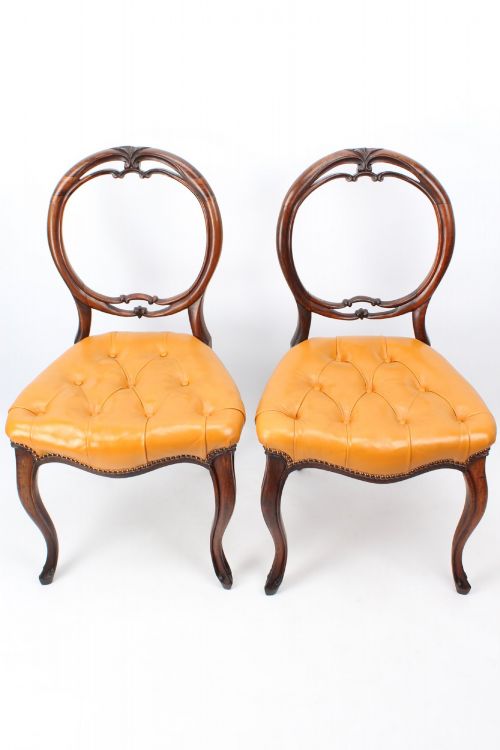
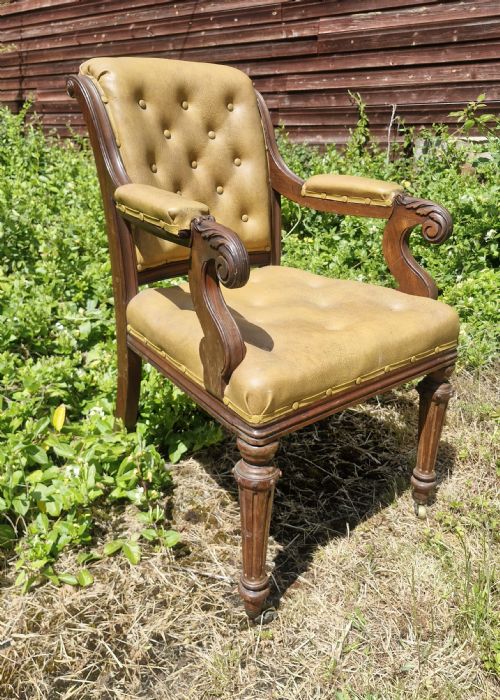
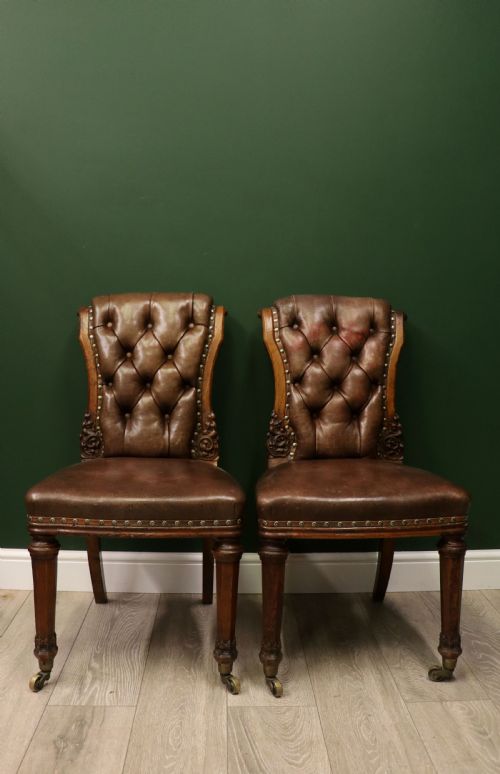
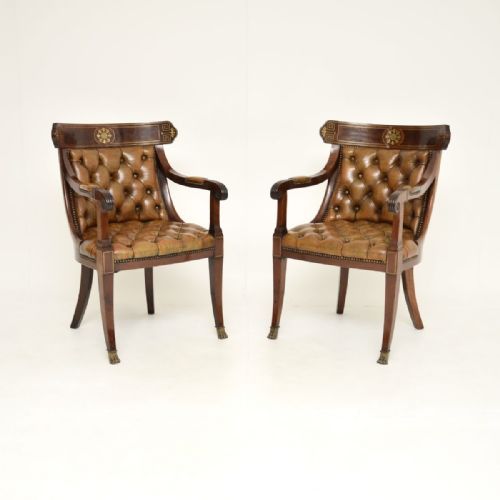
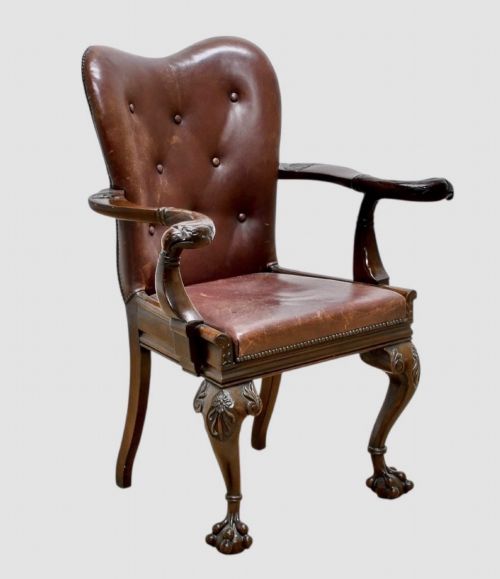


Button Leather Desk Chair
A button leather desk chair brings deep-buttoned comfort and rich wood grain to a study, offering sturdy support for daily work.
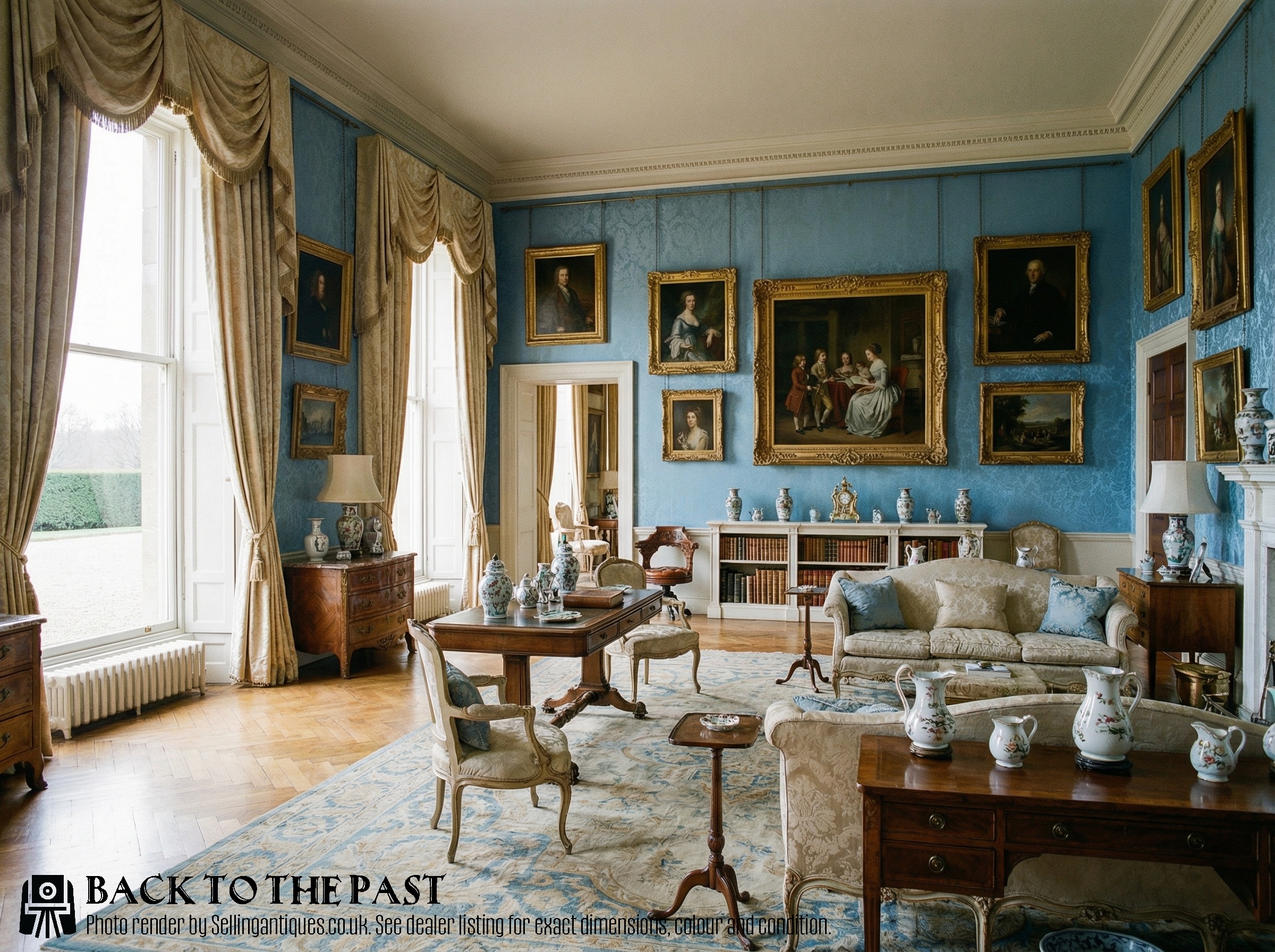
Button Leather Desk Chair
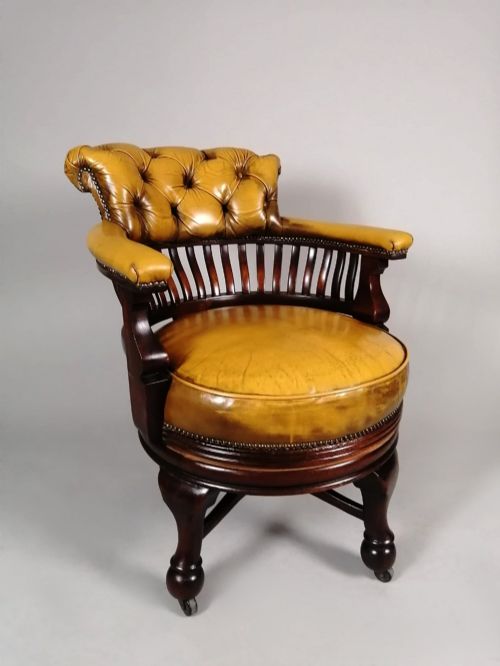
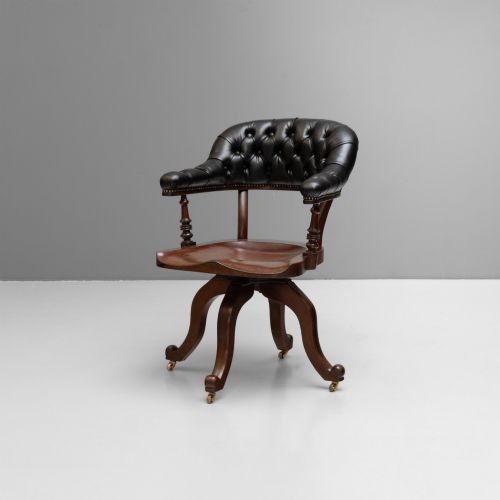
A button leather desk chair sits at the intersection of practical office seating and period library furniture, designed for long hours at a writing table. The form typically balances a supportive upholstered back with a sturdy wooden frame, often standing on revolving swivel mechanisms or robust legs.
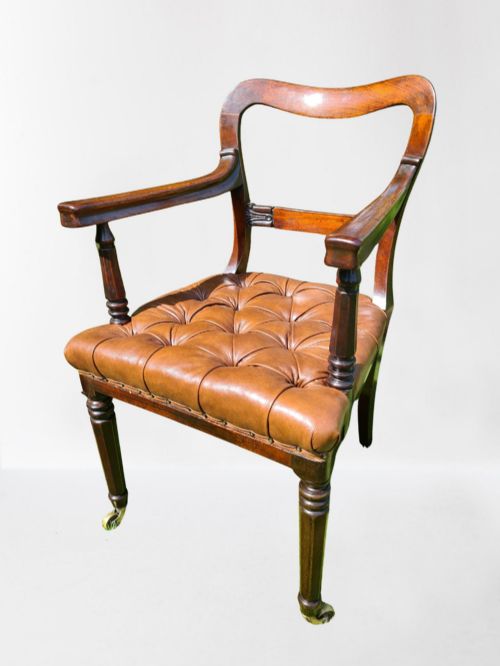
Victorian and nineteenth-century examples dominate the selection, alongside pieces from the Regency, William IV, and Edwardian eras. Buyers encounter various timber frames, most frequently mahogany, oak, and walnut, paired with dark or coloured leather hides.
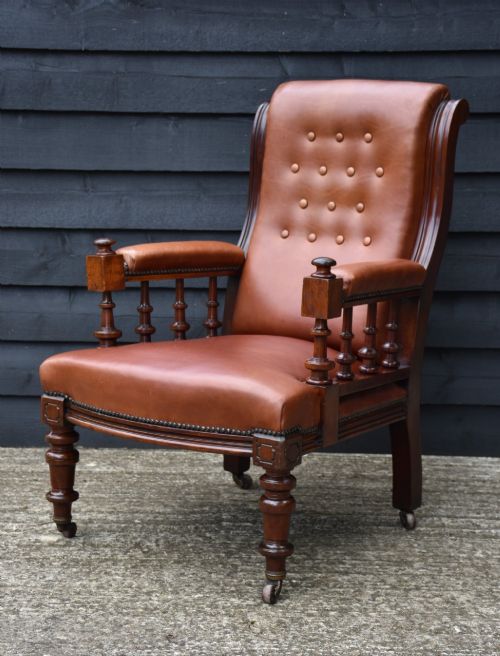
The typology spans stationary library armchairs, swivel office seats, and captain's chairs with deep buttoning. These pieces were built for studies, boardrooms, and country house libraries, where durability mattered as much as formal appearance.
How they were made
Makers constructed the structural frames of these chairs from dense hardwoods like mahogany, oak, walnut, and rosewood, often incorporating brass castors and metal swivel mechanisms in revolving office variants. Timber components were joined using traditional mortise and tenon methods to withstand constant rotation and weight.
Upholsterers applied horsehair or similar stuffing over webbing or springs, securing the leather with individual metal tacks. Deep buttoning was created by pulling twine through the padding to form the characteristic diamond pattern, holding the hide tight against the frame.
The listings feature swivel and stationary desk chairs constructed from mahogany, oak, walnut, and rosewood across the nineteenth and early twentieth centuries.
What varies in quality
Quality rests in the integrity of the timber framing and the original mechanics of the swivel or tilt action, where smoother movement signals superior workmanship. The depth of the carved details on the mahogany or oak arms also separates standard utility chairs from finer library pieces.
The grade and condition of the leather upholstery dictate much of the distinction at the upper end of the scale. Supple hides with natural patination and neatly executed buttoning hold more distinction than replacement leather coverings applied during later restorations.
The Button Leather Desk Chair Glossary
- Buttoning
- A method of upholstery where twine is pulled through padding and secured to create a diamond pattern with recessed buttons. This technique keeps the stuffing evenly distributed.
- Captain's chair
- A sturdy timber armchair with a rounded backrest supported by small spindles, often adapted with a padded seat for office use. These frequently feature low profiles to fit beneath writing desks.
- Revolving mechanism
- The iron or brass swivel assembly fitted beneath the seat to allow rotation and sometimes tilt adjustments. Original working mechanisms are valued by collectors.
- Library armchair
- A generous, comfortable seat designed for reading rooms, typically featuring upholstered arms and a wide back. They prioritize extended seating comfort over compact proportions.
- Bergère
- An enclosed armchair with stuffed upholstery and exposed wooden framing, sometimes incorporating cane panels on the sides or back. The style originates from eighteenth-century French seating designs.
Button Leather Desk Chair: Frequently Asked Questions
Are these chairs comfortable for daily work?
Most models feature sprung or stuffed seats and supportive curved backrests designed for extended sitting periods. The inclusion of arms and deep padding makes them well-suited for modern home offices.
Heavier revolving versions offer mobility and adjustable positioning, though stationary library armchairs provide a more rigid, fixed seating posture.
How do I identify a Victorian desk chair?
Victorian examples frequently utilise mahogany or oak frames with darker leather upholstery, often displaying turned legs or castors. They commonly feature deep buttoning on the backrest and sturdy joinery characteristic of nineteenth-century production.
Earlier Regency pieces tend to show more refined brass inlay or lighter rosewood grains, while later Edwardian models introduce alternative turnings and lighter timber finishes.
Did these chairs always swivel?
Original office and captain's chairs from the nineteenth century onward often incorporated iron or brass swivelling and tilting mechanisms. However, many library armchairs and side chairs were built with stationary four-leg frames.
Revolving versions are particularly associated with clerks' desks and study rooms where movement was essential for reaching different surfaces.
How should I care for the leather?
Leather upholstery benefits from occasional conditioning with specialist balms to keep the hide supple and prevent cracking. Keeping the chair away from direct sunlight and heat sources preserves the natural colour and finish.
Gentle dusting with a soft cloth prevents abrasive particles from wearing into the grain over time.