



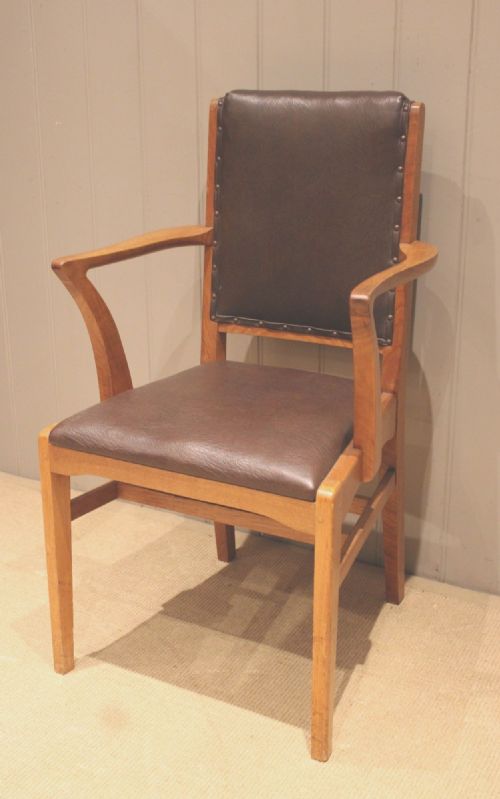


Vintage Oak Swivel Seat
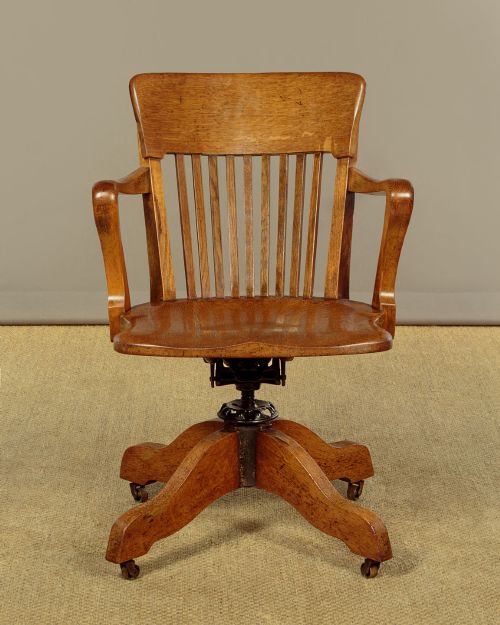
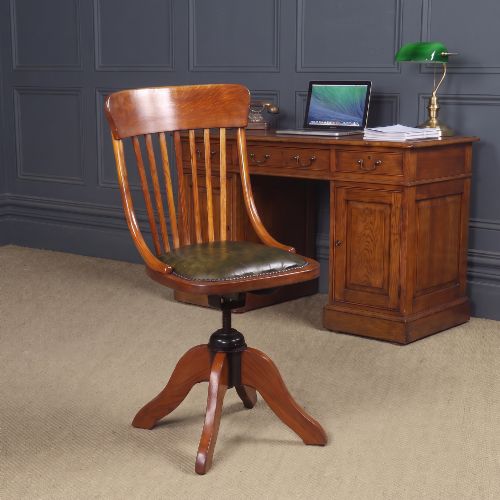
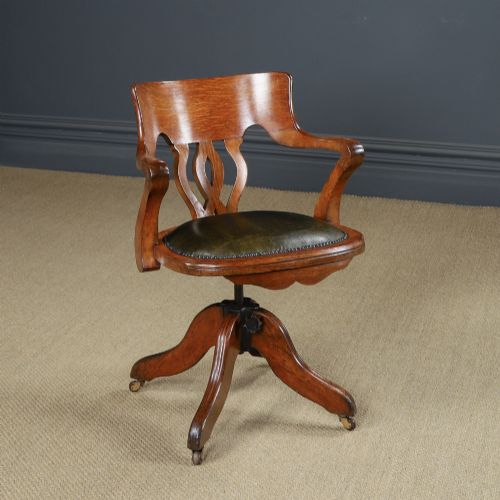
A vintage oak swivel seat brings sturdy revolving utility and classic timber character straight into a study or workspace.

Vintage Oak Swivel Seat
A vintage oak swivel seat combines solid timber construction with a rotating mechanism designed for working at a desk or table. You will most frequently encounter desk chairs and office chairs dating from the Victorian and Edwardian periods up through the nineteen-thirties.
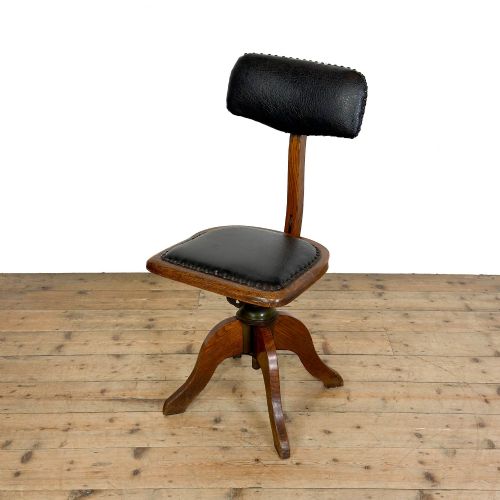
These pieces range from heavily carved Victorian maritime examples and Gothic Revival armchair designs to simple industrial workshop stools and machinist models. The common thread is the combination of sturdy oak frames with functional height adjustment or revolving movement.
Origins span standard domestic and office environments to ships and specialised workshops, giving each piece a distinct utilitarian history. Most examples rely on straightforward revolving mechanisms paired with timber, leather, or hide seats tailored for daily use.
Materials and construction
The primary structure relies on solid oak, frequently paired with secondary timbers like beech or supported by cast iron and brass components within the swivel mechanism. Metal hardware underpins the revolving action and height adjustment, ensuring mechanical durability.
Upholstered variants incorporate leather, green leather, tan hide, or fabric pads secured over the wooden base. Carved details and bentwood elements appear across Victorian and Edwardian iterations, reflecting the prevailing joinery standards of each decade.
Vintage Oak Swivel Seat Retail Price Guide 2026
Typical asking prices for vintage oak swivel seat among the pieces listed under this phrase on Sellingantiques today, from the lower quarter to the upper quarter. They describe what is for sale here now, not the wider market.
Some chairs spent their earliest days aboard passenger liners rather than dry land.
Evaluating craftsmanship and condition
Quality rests in the robustness of the revolving mechanism and the integrity of the timber joints under rotational stress. Superior examples maintain smooth movement without excessive wobble in the central screw or pedestal base.
Finer pieces display crisp carving, well-fitted upholstery such as genuine leather or hide, and carefully turned spindles rather than purely utilitarian assembly. The weight and grain selection of the oak further distinguish standard workshop items from high-grade office furnishings.
Evertaut Industrial Workshop
The Vintage Oak Swivel Seat Glossary
- Swivel seat
- A chair or stool fitted with a mechanism that allows the top to rotate independently of the base. This design facilitates movement between different areas of a desk.
- Revolving office desk arm chair
- A seated furniture form featuring armrests and a rotating spindle, built for administrative or professional work. These often include leather upholstery.
- Gothic Revival
- A design style drawing inspiration from medieval architecture, characterised by pointed arches, heavy proportions, and elaborate tracery carved into the timber. It appears frequently on Victorian seating.
- Industrial workshop chair
- A robust, utilitarian seating form built for factory or technical environments, often featuring adjustable iron columns and minimal ornamentation.
- Bergere swivel chair
- A revolving seat incorporating woven cane panels within the wooden frame. This adds a lighter texture to the dense oak construction.
Vintage Oak Swivel Seat: Frequently Asked Questions
How do I adjust the height?
Many vintage swivel seats operate on a central threaded screw column where turning the seat clockwise or anticlockwise raises or lowers the deck.
Other industrial models utilise metal levers or pins to secure the vertical position of the column.
Were these used in offices?
Numerous examples originated as revolving office desk arm chairs intended for clerks, administrators, and professionals.
They provided mobility within a workspace before modern pneumatic height adjustment existed.
Can I use one at a modern desk?
These seats adapt well to contemporary workspaces, provided the static or adjustable height matches your desktop clearance.
Checking the dimensions of the armrests ensures the chair slides neatly beneath modern desk frames.
How do I date an oak swivel seat?
Dating relies on stylistic clues such as Gothic Revival carvings, Edwardian turnings, or industrial iron components.
Patent dates stamped on the iron mechanism or the specific combination of oak and cast iron also point to a manufacturing era.