

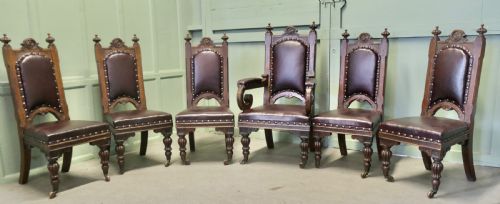
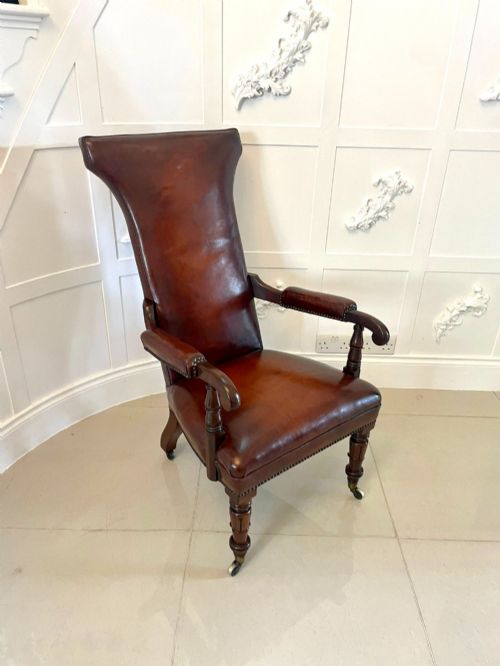
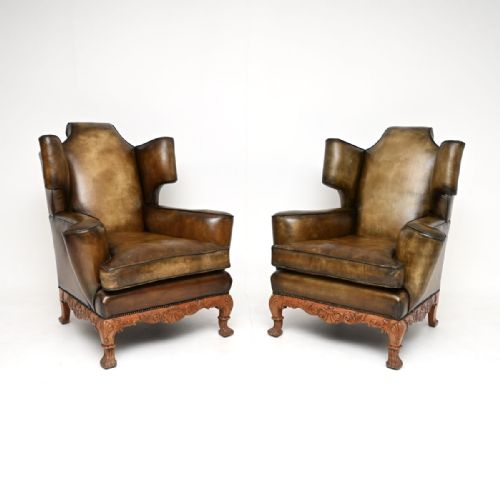
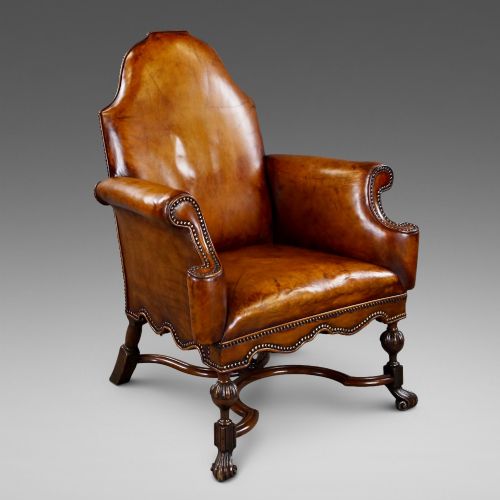


Brown Leather High Chair
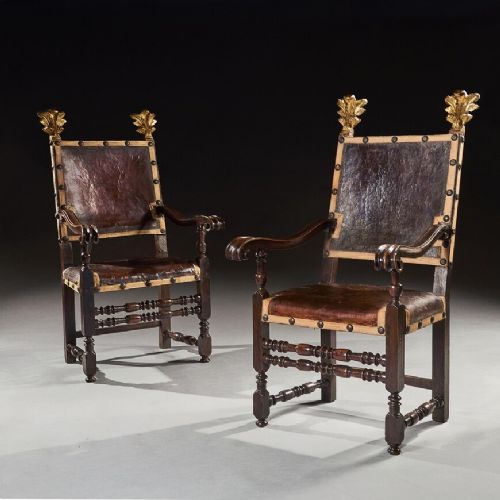
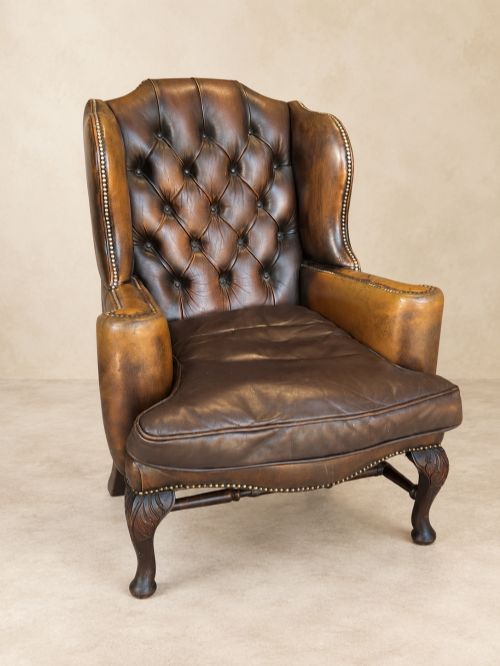
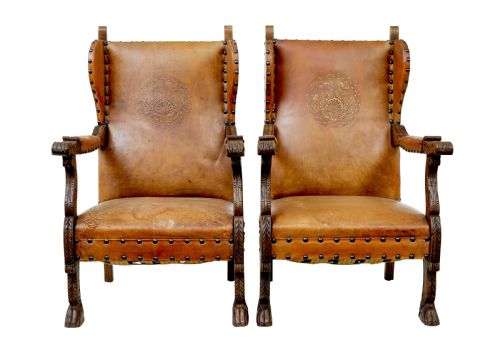
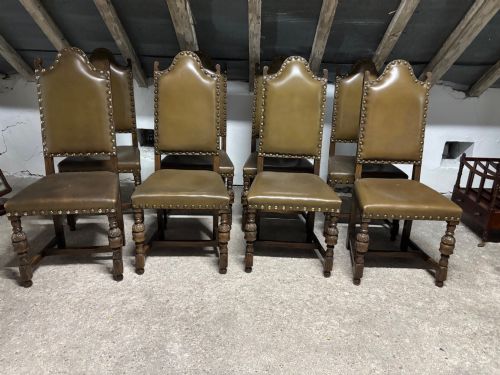
A brown leather high chair brings sturdy comfort and period character to a room, offering robust seating designed for elevated stature.
Brown Leather High Chair
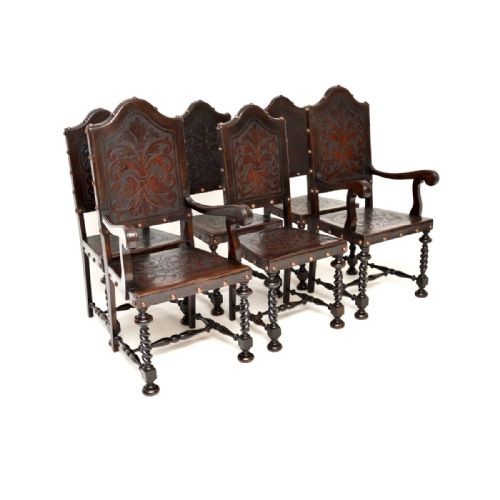
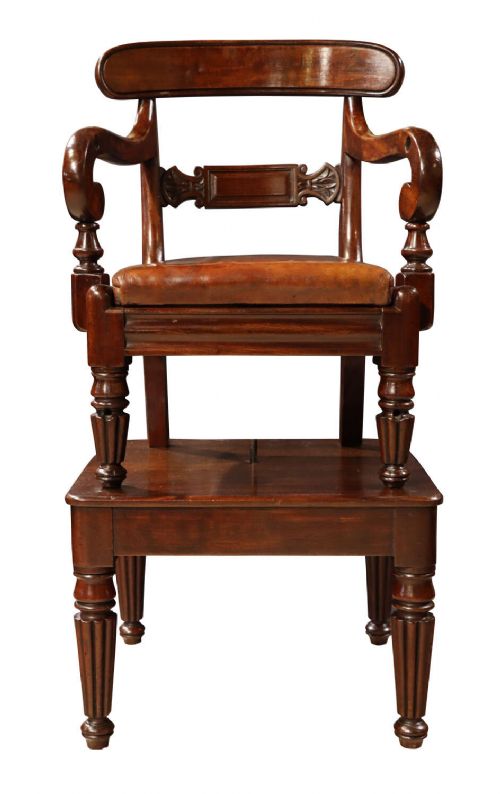
When searching for a brown leather high chair, buyers encounter elevated seating forms primarily rooted in nineteenth century and early twentieth century periods. These pieces draw upon styles such as Victorian, Gothic Revival, and William IV, combining practical height with traditional framing.
How they were made
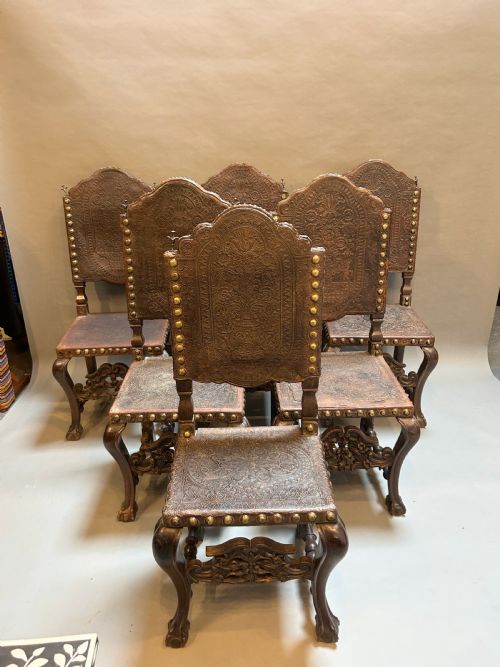
Maker construction relies heavily on durable hardwoods like oak, mahogany, walnut, and fruitwood, providing a strong structural skeleton. Artisans stretched tanned leather over frames, frequently securing the material with brass studs or applying full buttoning techniques.
Surface treatments involve hand dyeing the hide to achieve deep brown and tan tones, while frames show carved ornamentation, paneling, or turned supports characteristic of period cabinetmaking.
Listings feature eighteenth-century through twentieth-century periods, utilising oak, mahogany, walnut, and brass alongside leather.
What varies in quality
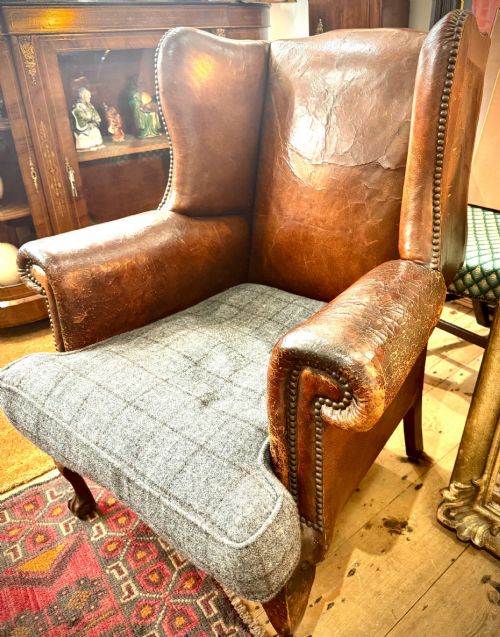
Quality rests in the integrity of the timber frame and the depth of the leather hide. Superior examples exhibit substantial hardwood construction, skilful hand-carved detailing, and hide that displays natural patination rather than surface cracking.
The precision of joinery and the authenticity of period upholstery methods distinguish finer items from standard utility pieces. Excellent specimens maintain structural stability alongside well-preserved surface textures.
A.W.N. Pugin·Robert Mouseman Thompson·Shoolbred
The Brown Leather High Chair Glossary
- Metamorphic
- Describing furniture designed to transform into multiple functional forms, such as a high chair converting into a low stroller or table.
- Buttoned
- An upholstery method where depressions are created in the leather using tufting threads or buttons pulled tight against the padding.
- Wingback
- An armchair featuring protective side panels designed to shield the occupant from drafts near a fireplace.
- Library chair
- A heavy, comfortable seating form intended for reading rooms, frequently framed in mahogany or walnut with leather upholstery.
- Patina
- The deep sheen and surface alteration developed on timber and leather through decades of handling, age, and exposure.
Brown Leather High Chair: Frequently Asked Questions
What periods do these chairs date from?
The pieces span various eras, with significant representation from the nineteenth century, Victorian period, and early twentieth century. Makers drew upon earlier Georgian, Regency, and seventeenth-century stylistic influences.
Craftsmen utilised traditional timbers and leather working methods appropriate to each respective decade of production.
How were high chairs used historically?
Elevated seating served multiple domestic functions, ranging from specialised dining and library use to nursery applications. Metamorphic designs allowed single items to serve both high and low seating purposes.
Sturdy timber frames and supportive leather backs provided functional elevation for daily tasks in period households.
Which woods are most common?
Oak and mahogany appear frequently across the inventory, alongside walnut, fruitwood, and general hardwood timber. These materials provided the necessary structural strength for elevated chair frames.
Cabinetmakers selected specific woods to match prevailing architectural styles, such as oak for Gothic Revival pieces and mahogany for Regency designs.
How do I care for antique leather?
Maintaining vintage hide requires gentle cleaning and regular conditioning to prevent the natural material from drying out. Avoiding direct sunlight helps preserve the hand-dyed brown tones.
Proper humidity levels in the room protect both the leather upholstery and the underlying timber frame from warping.