
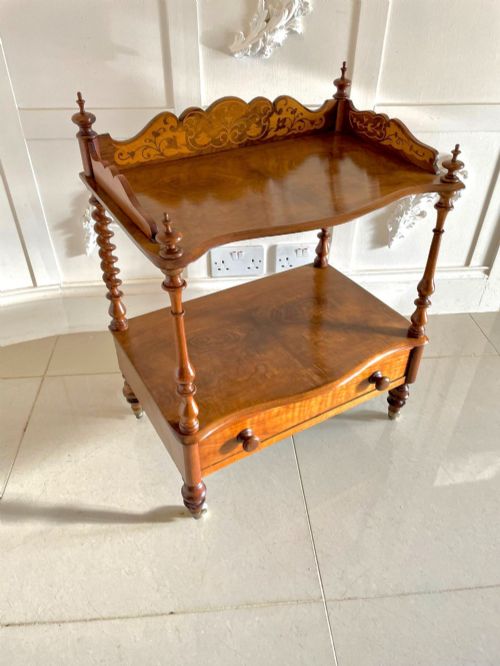
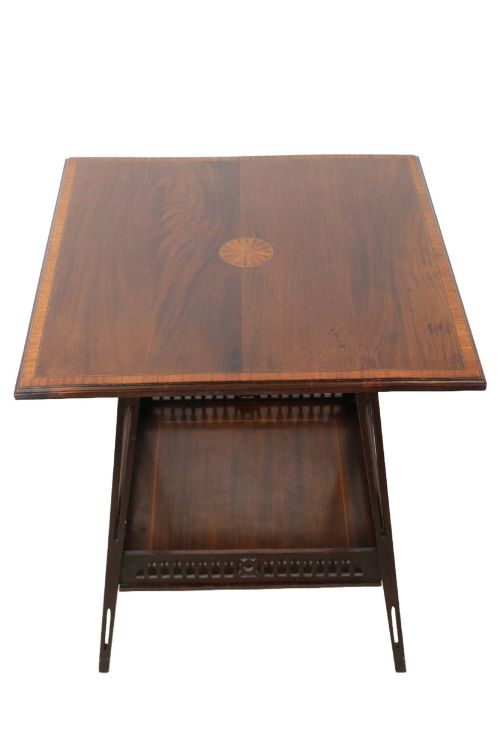
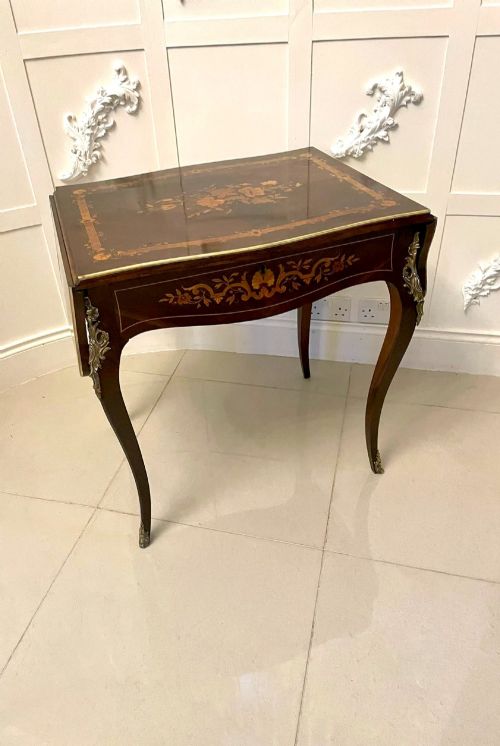
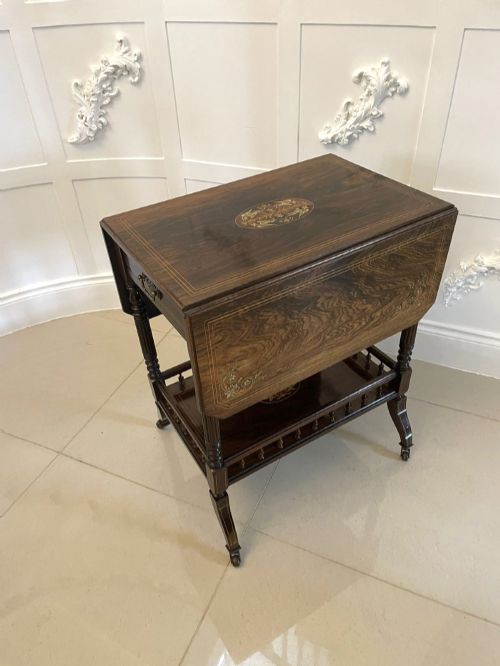


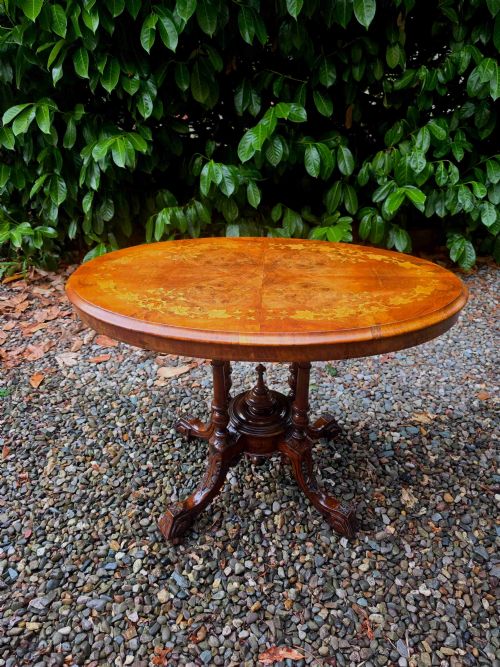
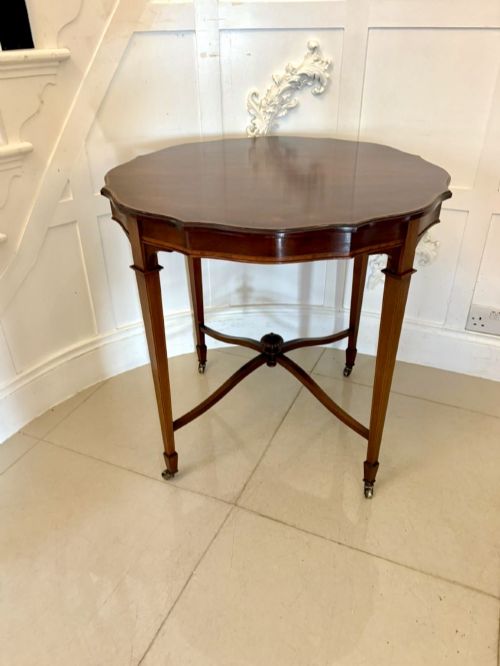
Brown Inlaid Occasional Table
A brown inlaid occasional table provides a compact surface for a lamp or book while introducing decorative timber work to a room.
Brown Inlaid Occasional Table
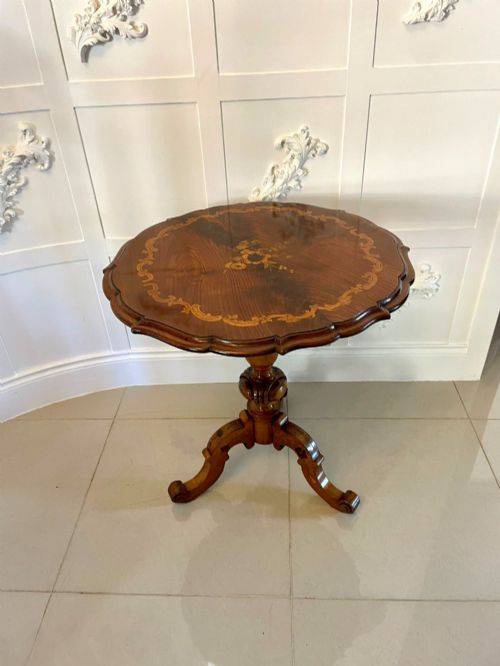
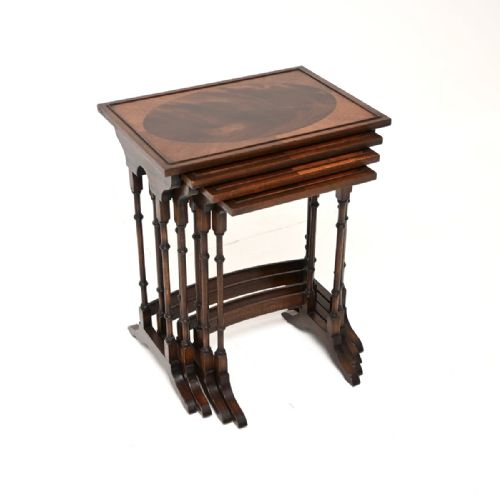
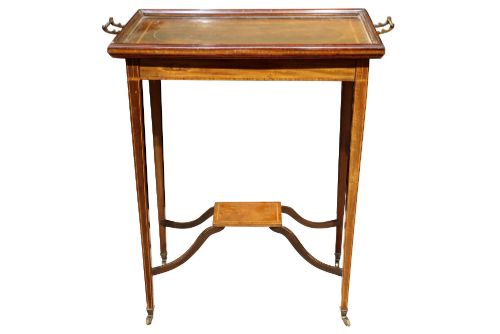
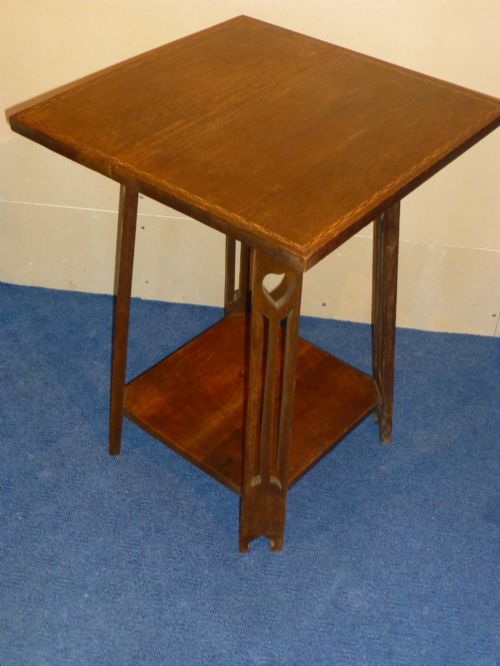
A brown inlaid occasional table encompasses everything from Victorian burr walnut lamp tables to Edwardian mahogany tray top designs and Georgian style pieces. These smaller tables served various domestic purposes, functioning as side tables, centre tables, games tables, and nests of tables. The evidence shows examples stretching from the 18th century through the Victorian and Edwardian eras into the early 20th century.
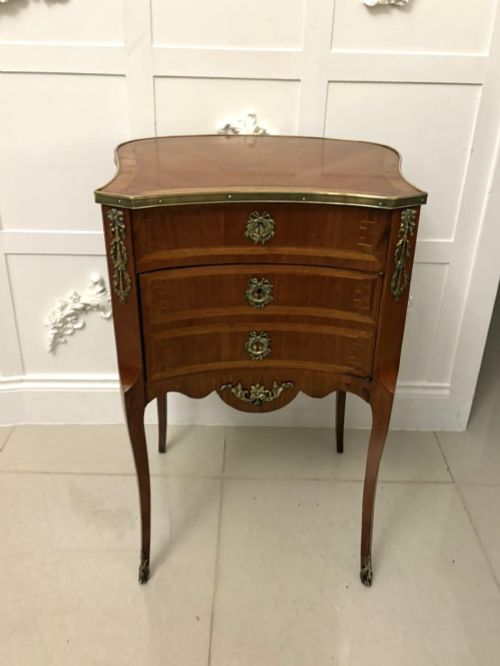
The version most commonly met on this page is the Edwardian or Victorian mahogany or walnut table featuring contrasting wood inlay. These pieces range from simple occasional stands to more elaborate French Louis XV style marquetry tables and Arts & Crafts specimens. Buyers encounter circular, oval, kidney-shaped, and octagonal formats designed to fit easily beside seating or in corners.
Materials and construction
Cabinet makers utilised foundational timbers such as mahogany, walnut, burr walnut, rosewood, and oak to build the primary carcass and legs. Surface decoration relied on wood inlay, marquetry, and specimen veneers including satinwood, boxwood, and fruitwood to create contrasting patterns and pictorial motifs. Some specialised regional pieces incorporate mother of pearl or brass details into the timber surface.
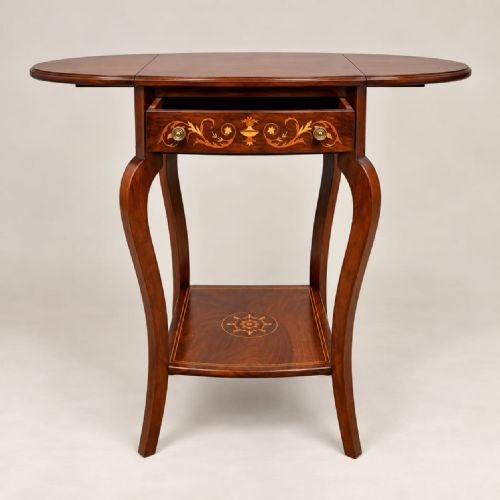
Tables were constructed using traditional joinery appropriate to the period, with turned or tapering legs supporting the top. Drop-leaf, folding, and nesting mechanisms required precise carpentry to ensure stability when open or closed. Tops often feature decorative banding or central medallions set flush into the primary wood.
Listings feature 19th-century, Victorian, and Edwardian pieces constructed from mahogany, walnut, and rosewood.
Judging quality
Quality rests upon the selection of timber and the precision of the inlay work rather than the mere presence of decoration. Superior examples display carefully matched veneers, such as burr walnut or figured mahogany, alongside tightly fitted wood inlay that remains flush with the surrounding surface. Lesser pieces show coarser contrasting timbers and simpler, stamped rather than hand-cut patterns.
The refinement of the frame and legs dictates the overall standard of the piece. Master craftspeople delivered stable structures with balanced proportions, clean turning, and well-executed joinery. Poorer versions rely on heavier, uninspired framing that lacks the elegance found in exhibition or quality domestic pieces.
Trevor Page & Co·Liberty & Co·William Birch
The Brown Inlaid Occasional Table Glossary
- Inlay
- The technique of inserting pieces of contrasting material into a depressed wooden matrix to form a decorative design. This creates a smooth, flush surface.
- Marquetry
- Elaborate veneer work arranged in pictorial or geometric patterns across the entire surface of the table top. It differs from simple inlay by covering the ground timber completely.
- Lamp table
- A small freestanding occasional table designed specifically to hold a lighting fixture. These often feature circular or oval tops supported by a central pedestal or four slender legs.
- Sutherland table
- A narrow drop-leaf table with folding flaps supported by swinging legs. It folds down to a very slim profile for storage against a wall.
- Burr walnut
- A highly prized timber taken from the growth excrescences of walnut trees, yielding intricate swirling grain patterns. It is frequently utilised for high-status Victorian occasional tables.
Brown Inlaid Occasional Table: Frequently Asked Questions
What is a brown inlaid occasional table used for?
These versatile pieces serve primarily as small movable stands for lamps, drinks, or decorative objects within a reception room. Their compact dimensions allow them to sit beside armchairs or sofas without dominating the floor space.
Historically, specific variants accommodated board games, tea service, or correspondence. Today, they function effectively as accent furniture that breaks up large expanses of flooring.
How do I identify a Victorian table?
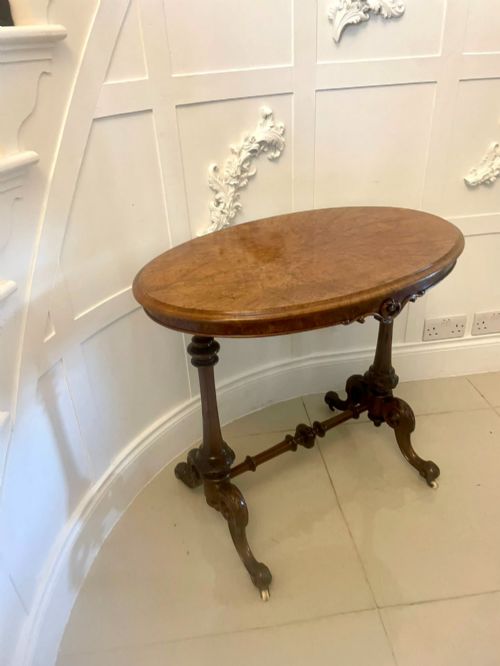
Victorian examples frequently employ rich dark timbers such as burr walnut and rosewood, often enhanced with elaborate marquetry or central inlaid motifs. The construction tends to be solid and substantial, reflecting mid to late 19th-century domestic tastes.
Leg configurations often include turned pillars on platforms or sturdy cabriole supports. Examining the secondary timbers beneath the top helps confirm the period of manufacture.
What distinguishes Edwardian tables?
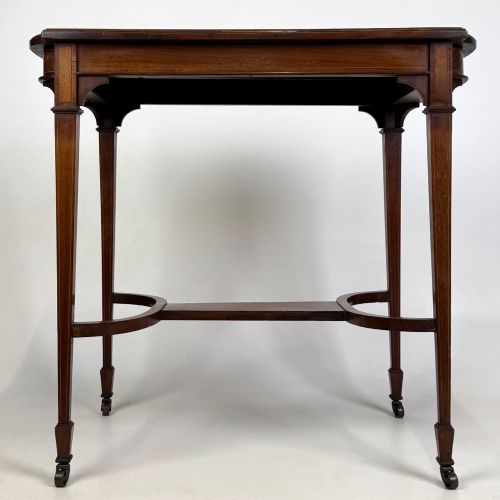
Edwardian pieces typically showcase lighter mahogany or satinwood timbers paired with delicate satinwood or boxwood stringing and shell motifs. The aesthetic leans toward refined, slender proportions influenced by Sheraton and Hepplewhite revivals.
Common formats include tray-top edges and nests of tables designed for flexibility in smaller drawing rooms. The overall impression is lighter and airier than heavy Victorian equivalents.
How should I care for an inlaid surface?
Protect the timber and delicate inlay by keeping tables away from direct sunlight and strong heat sources, which can cause wood to warp and veneer to lift. Dust gently with a dry or very slightly damp soft cloth.
Apply a quality natural wax polish periodically to nourish the grain and maintain the lustre of the timber. Avoid placing damp glasses or unshielded hot items directly onto the polished surface.