


Brown Hardwood Occasional Table
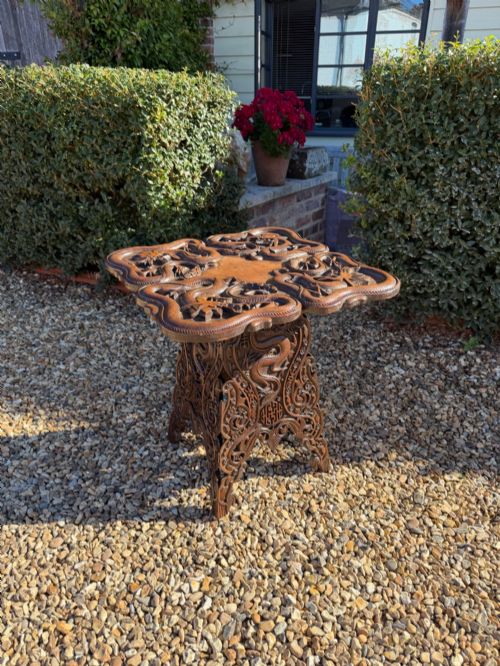
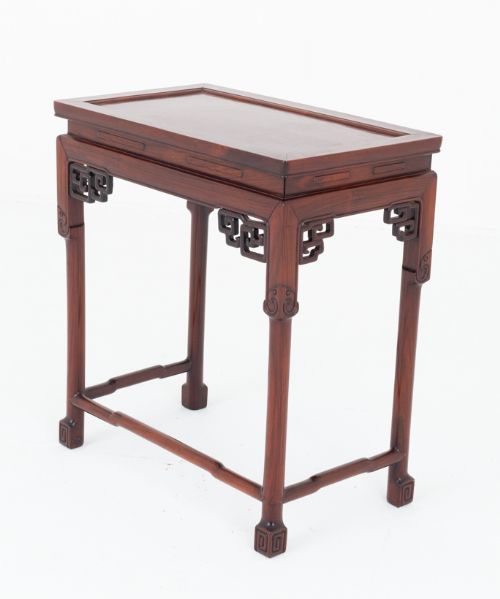
A brown hardwood occasional table brings sturdy utility and rich regional carving into a sitting room.
Brown Hardwood Occasional Table
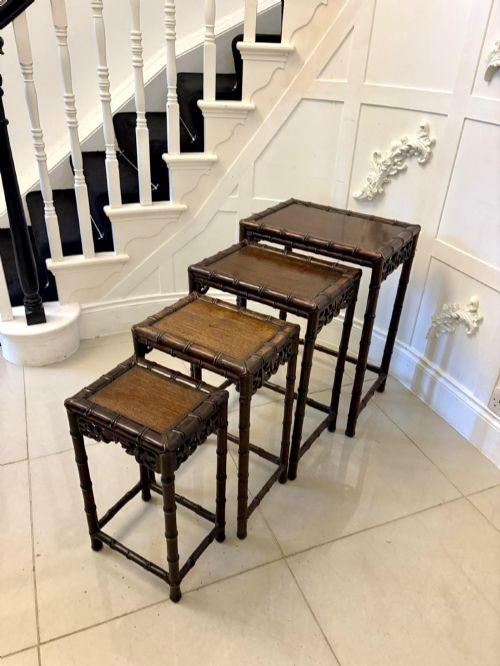
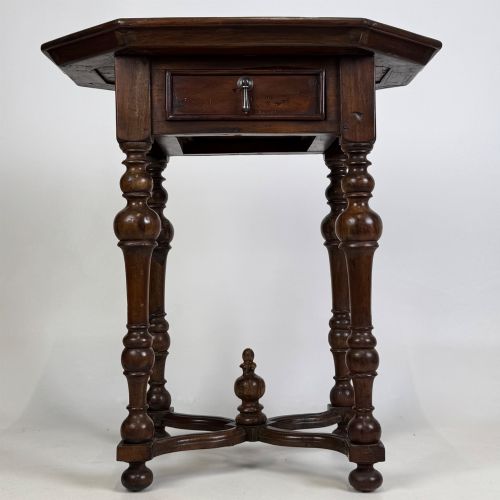
A brown hardwood occasional table encompasses versatile side pieces, coffee tables, plant stands, and nests designed for flexible placement around a room. The selections here span the nineteenth century into the early twentieth century, drawing heavily from Anglo-Indian, Chinese export, and broader Oriental traditions.
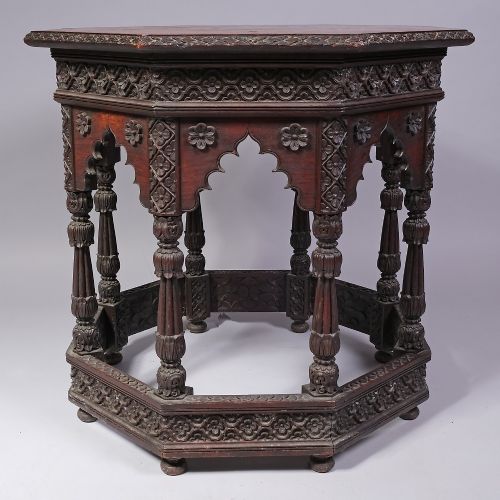
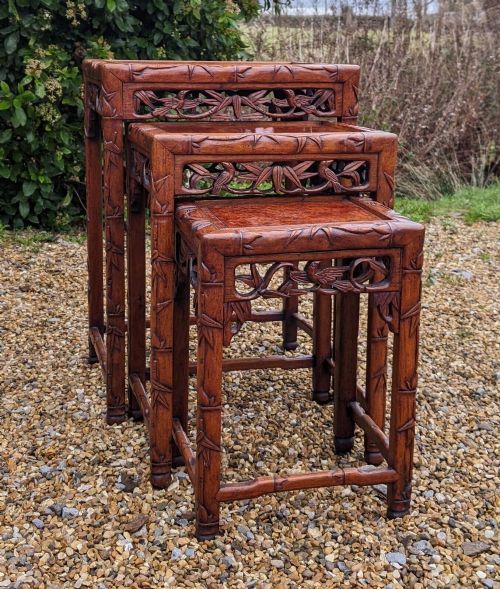
Buyers will frequently encounter nesting sets, folding campaign frames, and intricately carved low or octagonal tables. These forms served colonial homes, Victorian parlours, and Edwardian drawing rooms as movable surfaces for tea, lamps, and display.
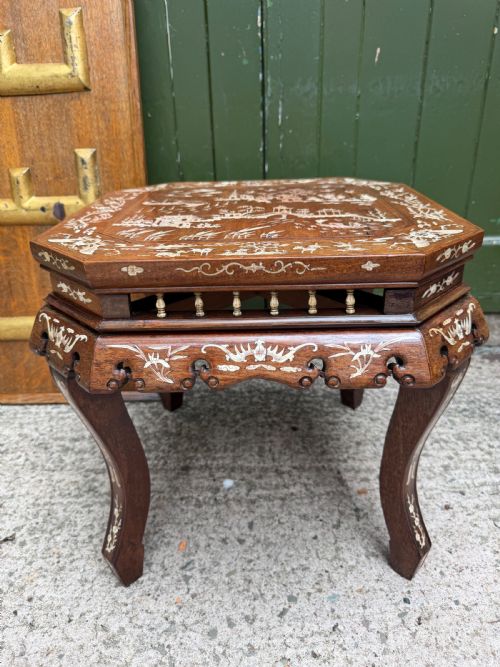
Origins stretch from regional Indian workshops in Bombay and Burma to Chinese export hubs utilising dense timber. The variety ranges from plain folding stands to heavily figured tables featuring animal motifs and inlaid surfaces.
How they were made
Cabinetmakers utilised dense native timbers such as teak, rosewood, padauk, huanghuali, and hongmu, selecting them for their heavy weight and deep grain patterns. These durable hardwoods were often paired with contrasting decorative elements like bone, marble, brass, and copper tops.
Construction techniques relied on traditional joinery alongside intricate hand-carving and inlay work. Artisans chiselled detailed foliage, dragons, and figurative elephant supports directly into the solid timber, while folding mechanisms and nesting designs required precise carpentry to ensure smooth daily operation.
The listings span the nineteenth century through the 1930s, featuring hardwoods like teak, rosewood, and hongmu alongside marble and bone inlays.
What varies in quality
Quality rests primarily in the crispness of the hand-carved detail and the selection of the timber. Dense woods displaying exceptional natural grain and deeply undercut relief work separate standard production pieces from finer examples.
The integrity of the construction and the cleverness of folding or nesting mechanisms dictate functional success. Tightly fitted joints, well-matched timber sets, and stable frames distinguish superior workshop output.
Liberty of London
The Brown Hardwood Occasional Table Glossary
- Hongmu
- A dense Chinese hardwood often translated as red wood, highly prized for furniture making. It provides a heavy, durable structure with a dark reddish-brown hue.
- Anglo-Indian
- A style of furniture produced in India during the British colonial period, typically combining British form requirements with traditional local carving. These pieces frequently feature dense floral or animal motifs.
- Nest of tables
- A graduated set of smaller tables designed to slide neatly beneath one another when not in use. They offer flexible surface space in compact living areas.
- Campaign table
- A portable folding table designed for easy transport by military officers or travellers. These pieces feature collapsible stands and sturdy joints built for movement.
Brown Hardwood Occasional Table: Frequently Asked Questions
What is an occasional table?
An occasional table is a small, movable piece of furniture designed for specific, intermittent use around the home. These versatile items function as side tables, plant stands, or lamp tables.
Historically, they could be easily shifted to accommodate tea service or social gatherings in Victorian and Edwardian reception rooms. Their compact nature makes them practical for modern living spaces needing flexible surface areas.
How do I identify Anglo-Indian tables?
Anglo-Indian tables typically feature dense, deep hand-carving depicting regional flora, fauna, or figural supports such as elephants and camels. They are constructed from native hardwoods like rosewood or padauk.
Many originate from the nineteenth century, reflecting the tastes of the British colonial period. Their distinctive craftsmanship blends traditional Indian woodworking skills with British furniture forms.
Are nesting tables practical?
Nesting tables offer exceptional space-saving practicality by stacking multiple surfaces into the footprint of a single small table. They can be pulled out separately when entertaining guests.
Originating in various Oriental and Western workshop traditions, these sets balance utility with decorative craftsmanship. They suit sitting rooms where surface space needs to expand and contract quickly.
How do I care for hardwood tables?
Hardwood tables require stable indoor humidity away from direct heat sources to prevent the timber from splitting. Regular dusting with a soft, dry cloth preserves the polished surface.
Avoid using harsh chemical polishes that can build up on antique finishes over time. Natural beeswax applied sparingly helps nourish dense timbers like rosewood and hongmu.