
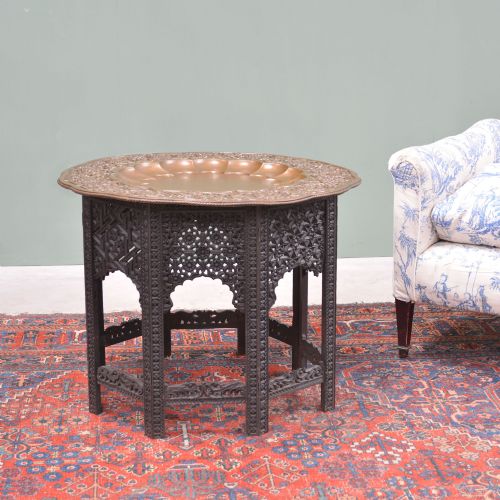


Folding Teak Coffee Table
A folding teak coffee table brings versatile surface space and rich craftsmanship into a sitting room.
Folding Teak Coffee Table
A folding teak coffee table represents a practical category of low occasional furniture originating from the nineteenth and early twentieth centuries. These pieces typically combine sturdy regional timbers with folding mechanisms designed for ease of movement and storage.
Most examples found within this selection emerge from Anglo-Indian and colonial traditions. They frequently adopt octagonal or circular formats, making them adaptable as side tables or low coffee tables in contemporary interiors.
How they were made
The construction relies heavily on durable timbers such as teak and hardwood, often enriched with contrasting materials. Artisans integrated brass inlay and intricate carved ornamentation across the surfaces of these folding items.
Folding mechanisms range from X-frame bases to removable tray tops resting on collapsible fretwork stands. This clever joinery allowed domestic portability long before modern flat-pack furniture appeared.
Some of these clever folding stands were packed into colonial trunks to travel thousands of miles before ever holding a cup of tea.
What varies in quality
Quality rests primarily in the crispness and depth of the carving and the precision of any metal inlay work. Richer examples display dense, deeply undercut floral or geometric motifs across the entire top.
The integrity of the folding mechanism and the grain density of the timber also separate ordinary utility pieces from finer decorative works. Intact hinges and tight joints ensure the table remains stable when open.
The Folding Teak Coffee Table Glossary
- Anglo-Indian
- Furniture made in India during the British colonial period, often combining European forms with local carving traditions. These pieces frequently utilise native hardwoods and brass work.
- Hoshiarpur
- A town in Punjab renowned for intricate wood carving and inlay work using materials like brass and bone. Tables from this tradition feature dense geometric patterns across every surface.
- Campaign table
- Portable furniture designed to fold or dismantle easily for travel and military use. In domestic settings, these pieces offer practical space-saving utility.
- Tray top
- A removable upper section with a raised rim, designed to lift off a folding base. This feature allowed the surface to double as a serving tray.
Folding Teak Coffee Table: Frequently Asked Questions
How do I fold these tables?
Most folding teak coffee tables rely on an interlocking X-frame base that collapses flat once the top is removed or tilted. Simply lift the upper section from the hinges or fold the scissor base inward to store the piece.
Take care to support the joints during this movement to avoid straining the aged timber or decorative hinges.
Are these tables sturdy enough for daily use?
These tables provide a stable surface for everyday items like books and cups, provided the folding mechanism is fully engaged and secure. The solid teak and hardwood construction handles normal domestic weight easily.
Avoid placing excessive downward force on the outer edges of folding models to protect the vintage joints.
How do I clean brass inlay on teak?
Dust the carved surfaces regularly with a soft, dry brush to prevent dirt from settling into the intricate recesses. Polish the brass elements gently using a specialist metal cleaner applied with a cotton bud to avoid staining the surrounding wood.
Feed the dry teak periodically with a suitable furniture wax to maintain its deep natural lustre.
How can I tell the age of a folding table?
Dating relies on examining the timber species, the style of the hand carving, and the construction methods used in the folding frame. Nineteenth-century examples often display hand-cut joinery and darker patination on the hardwood.
Later pieces from the early twentieth century may incorporate simpler hardware while retaining traditional regional motifs.