

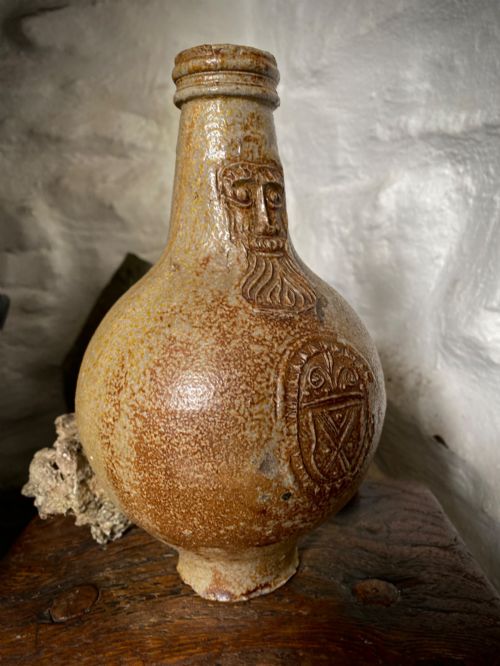
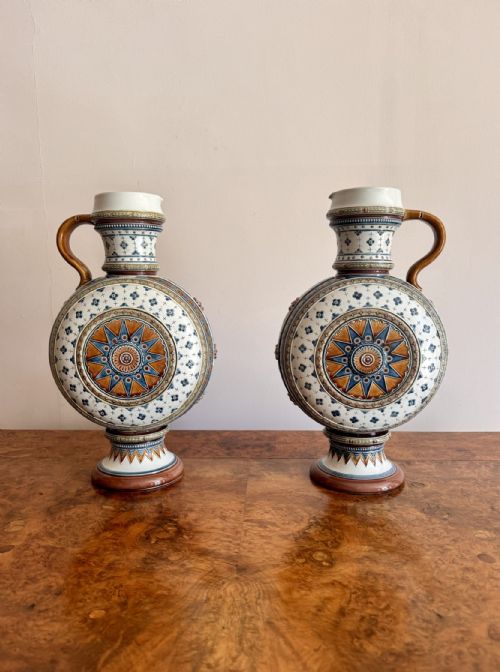
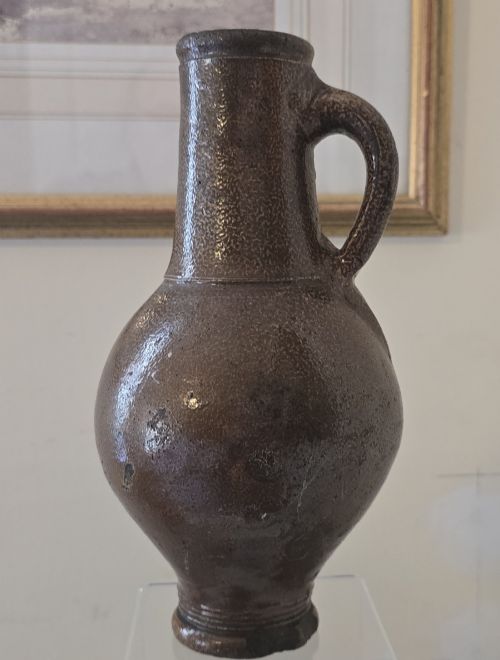
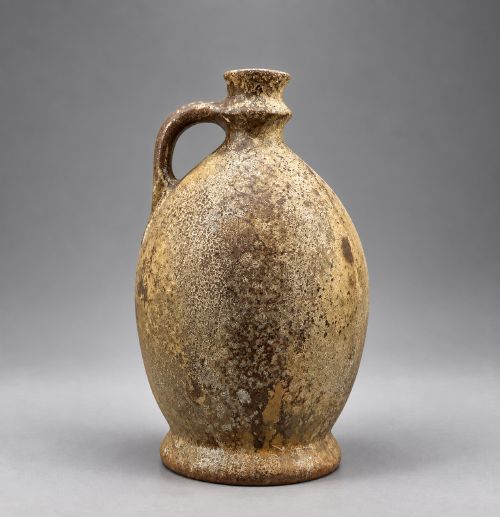
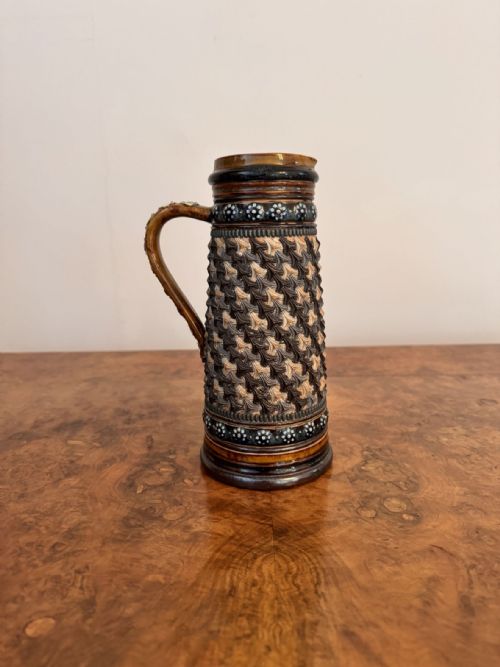
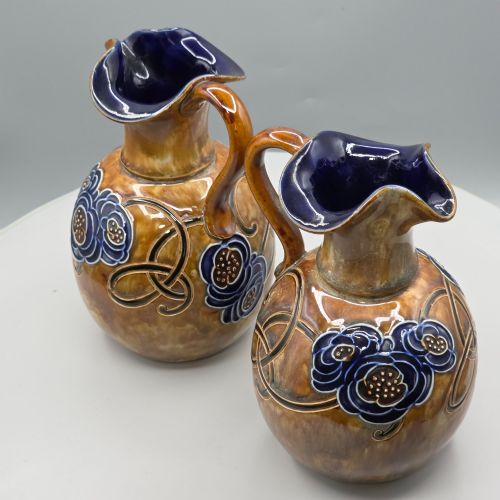
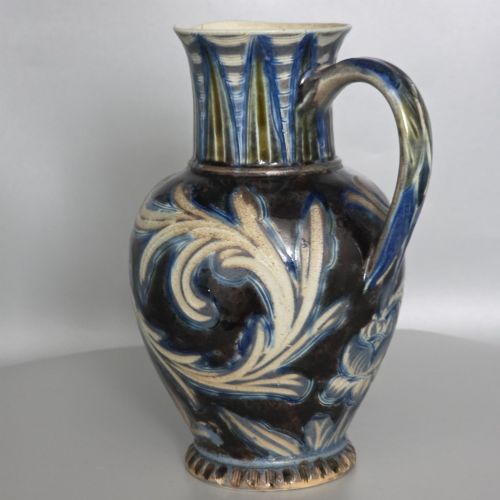
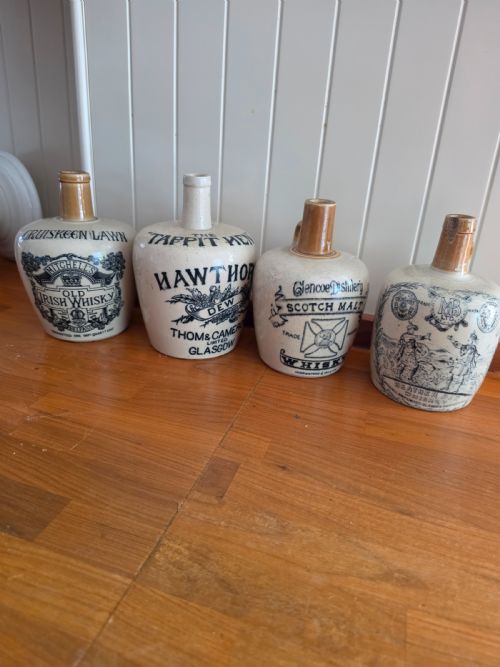

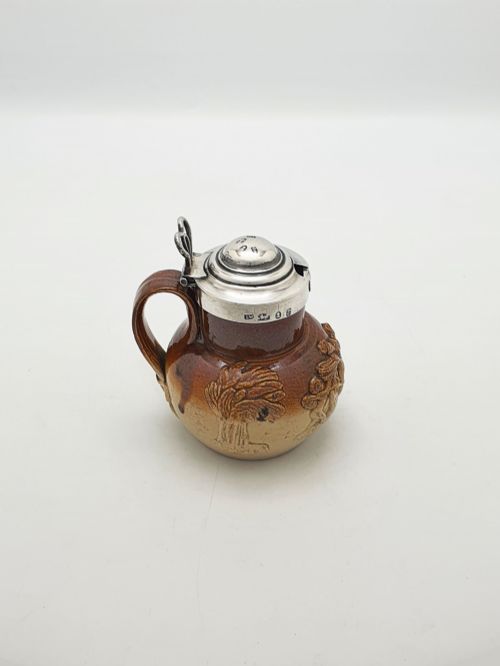


Brown Glazed Stoneware Jug
These brown glazed stoneware jugs bring dense, durable utility into a room, shaped by salt firing and nineteenth-century studio pottery traditions.
Brown Glazed Stoneware Jug
A brown glazed stoneware jug embodies the heavy utilitarian pottery produced across the nineteenth century, merging dense ceramic bodies with dark lustrous finishes. Collectors searching for a brown glazed stoneware jug will encounter salt-glazed vessels, harvest jugs, and whisky flasks primarily from Victorian workshops.
The selections span functional tavern ware and decorative art pottery, often featuring moulded details, incised patterns, or mounted silver rims. Most pieces originate from English potteries, particularly Doulton Lambeth, though continental and German flagons also appear within the records.
How they were made
Potters built these vessels using dense clay bodies fired at high temperatures until vitrified, ensuring the material remained completely impermeable to liquids. Salt was often thrown into the kiln during firing to produce a pitted, orange-peel texture characteristic of traditional salt glaze.
Applied brown glazes provided depth and colour to the surface, while decorative elements were achieved through incising, sprigging, or moulding before firing. Workshops frequently added sterling silver or silver-plated collars and hinged lids to finish the upper rims of finer pieces.
Brown Glazed Stoneware Jug Retail Price Guide 2026
Typical asking prices for brown glazed stoneware jug among the pieces listed under this phrase on Sellingantiques today, from the lower quarter to the upper quarter. They describe what is for sale here now, not the wider market.
Listings feature stoneware, earthenware, and ceramic pieces complemented by sterling silver and silver-plated hardware across various periods.
What varies in quality
Quality rests upon the crispness of the incised or moulded decoration and the depth achieved in the salt glaze surface. Earlier examples with detailed hand-carved ornamentation or documented artist involvement demonstrate superior craftsmanship compared to standard production wares.
The integration of precious metal mounts, such as hallmarked sterling silver collars, elevates a piece from a simple utility container to a polished tabletop object. Condition of the dense ceramic body and the uniformity of the brown glaze finish determine the overall presence of each vessel.
Royal Doulton·Doulton Lambeth·Mortlake
The Brown Glazed Stoneware Jug Glossary
- Stoneware
- A dense, hard ceramic fired at high temperatures until the clay body vitrifies and becomes non-porous. This material withstands heavy daily use without absorbing liquids.
- Salt glaze
- A glassy, textured finish created by throwing common salt into the kiln at peak temperature, reacting with the silica in the clay. It produces a distinctive orange-peel surface.
- Harvest jug
- A large vessel traditionally used during agricultural harvest celebrations, frequently decorated with hunting scenes or applied relief figures. These often feature rich brown tones.
- Puzzle jug
- A drinking vessel with a perforated neck and multiple spouts designed to confound the drinker unless they discover the hidden trick to imbibe the liquid safely.
- Slipware
- Pottery decorated with slip, which is liquid clay applied to the damp body before firing to create contrasting surface patterns or designs.
Brown Glazed Stoneware Jug: Frequently Asked Questions
How were these jugs originally used?
These robust vessels served primarily for storing and pouring liquids such as ale, wine, water, and whisky in domestic or tavern settings. Larger examples functioned as flagons or harvest jugs for communal gatherings and agricultural celebrations.
Over time, many transitioned into decorative display pieces, particularly as studio pottery and art pottery movements gained popularity during the Victorian era.
How can I tell the period?
Dating relies on examining the manufacturing marks, stylistic indicators, and the presence of specific artisan stamps on the base or body. Victorian pieces often carry factory stamps from firms like Doulton Lambeth alongside registration diamonds or dates.
Earlier examples from the eighteenth century typically exhibit hand-thrown irregularities, simpler salt glaze finishes, and heavier loop handles without modern factory hallmarks.
Can I still use them for drinks?
While the vitrified stoneware body remains structurally sound and impermeable, historic pieces are generally collected as display objects rather than functional tableware. Older glazes and added silver mounts require careful handling that everyday dining use might compromise.
Those wishing to utilise them should inspect the interior for any hairline cracks and ensure the piece has no historical repairs that could weaken under liquid pressure.