


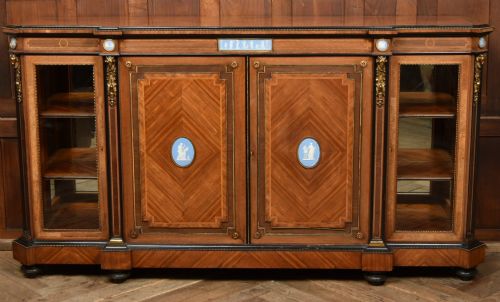
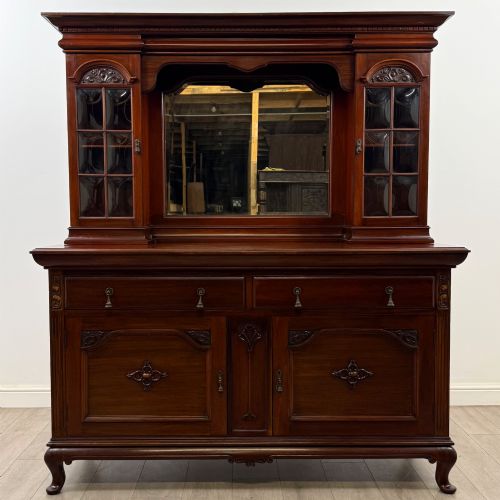
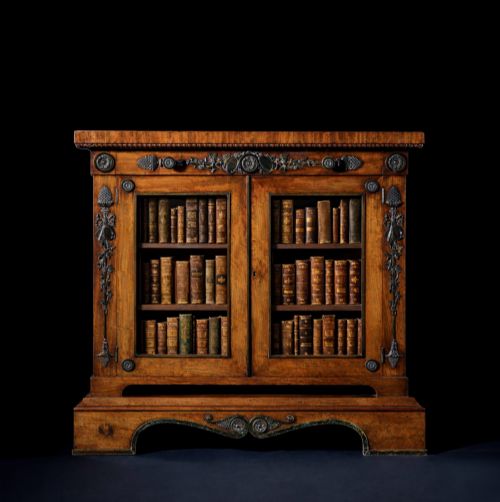
Brown Glazed Credenza
These brown glazed credenza options bring structured storage and display space to a room, offering rich timbers and glass fronts for showing curated items.

Brown Glazed Credenza
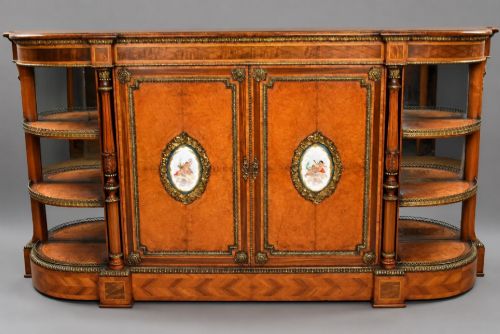
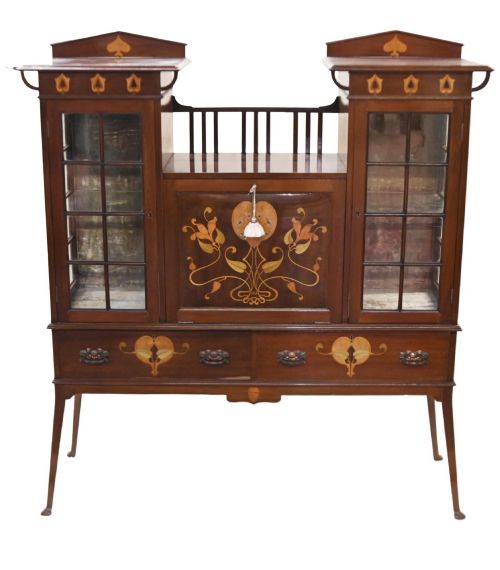
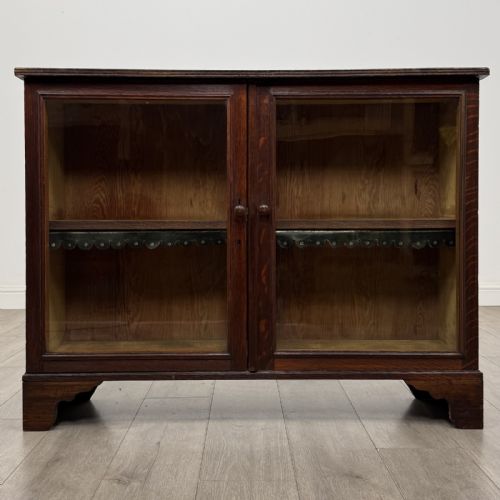
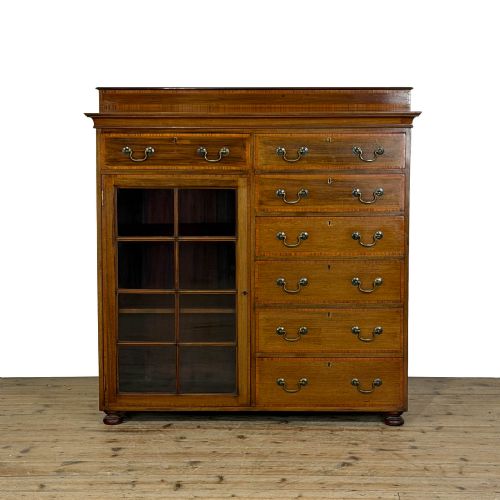
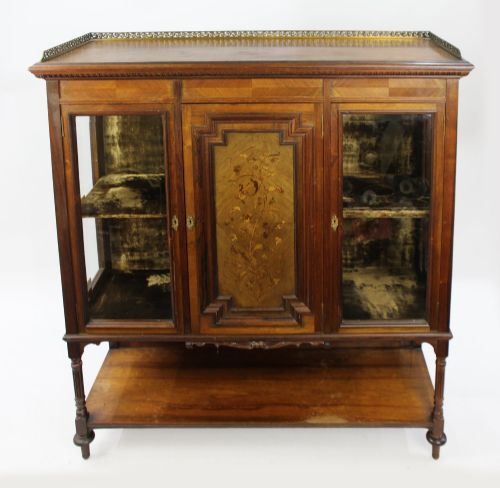
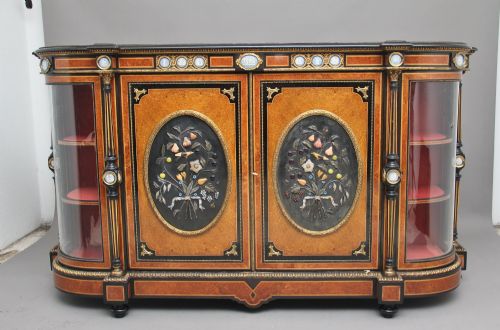
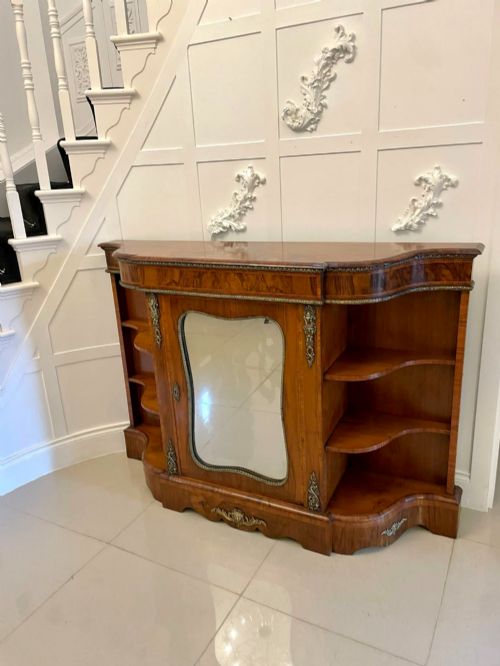
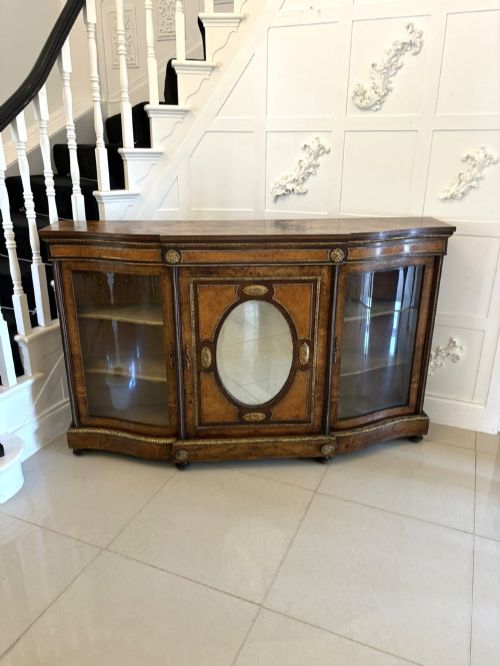
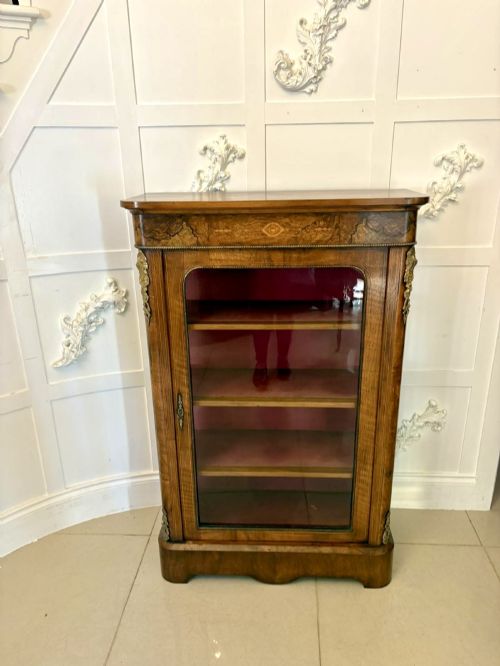
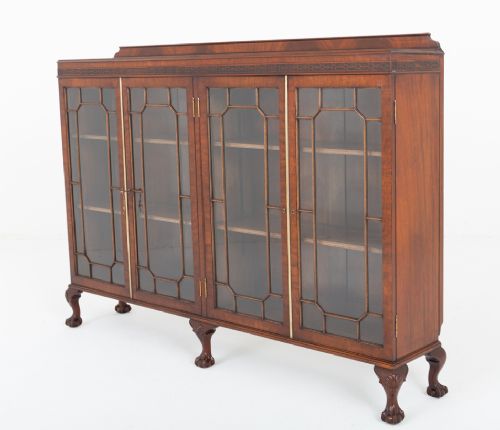
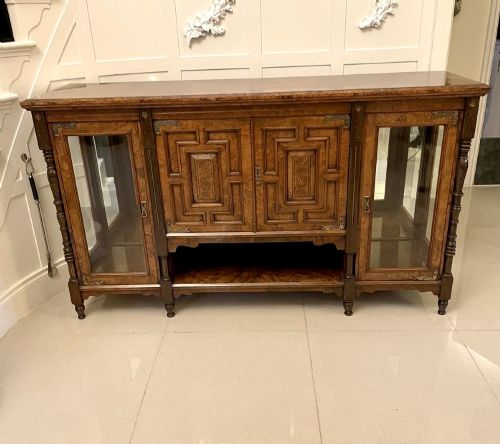
A brown glazed credenza encompasses low display furniture, pier cabinets, and breakfront bookcases designed to house collections while anchoring a room. These brown glazed credenza examples draw heavily on Victorian and Edwardian periods, utilising walnut, mahogany, and rosewood forms.
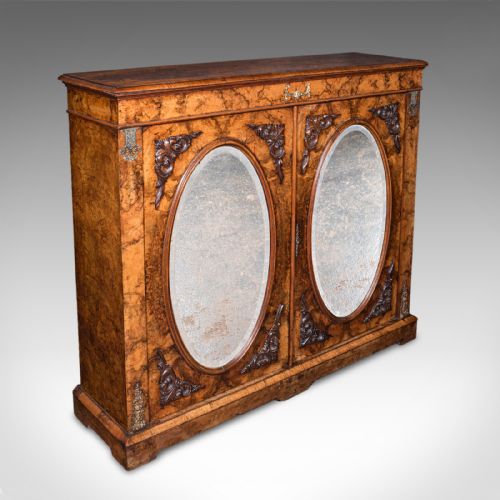
The selection ranges from compact pier cabinets to expansive exhibition-quality credenzas with glass doors. Most pieces on this page originate from the nineteenth century, showcasing deep brown tones through burr walnut and mahogany timbers.
How they were made
Cabinet makers built these pieces using solid timber frames overlaid with figured veneers such as burr walnut and mahogany to create rich surface patterns. Glass panels were fitted into wooden doors to protect contents while maintaining visibility.
Metal mounts in ormolu and brass alongside marquetry inlay provide decorative contrast to the dark wood bodies. Mirror backs and velvet linings frequently appear inside the glazed display compartments.
Brown Glazed Credenza Retail Price Guide 2026
Typical asking prices for brown glazed credenza among the pieces listed under this phrase on Sellingantiques today, from the lower quarter to the upper quarter. They describe what is for sale here now, not the wider market.
The listings span from the Regency period through the Victorian era and into early twentieth-century Arts and Crafts and Edwardian revivals.
What varies in quality
The sophistication of the timber veneer and the precision of the marquetry define the tier of a piece. Finer examples display symmetrical burr walnut figures and intricate inlaid details across the entire body.
Mount quality separates standard utility furniture from exhibition pieces. Cast ormolu mounts, porcelain plaques, and original mirrored glass elevate the execution.
Collinson & Lock·Edwards & Roberts
The Brown Glazed Credenza Glossary
- Credenza
- A low cabinet or sideboard designed for display and storage, often featuring glass-fronted side doors flanking a central cupboard. This form became central to formal nineteenth-century dining and drawing rooms.
- Burr Walnut
- Timber taken from the warted growths on walnut trees, yielding highly swirling and mottled grain patterns. Cabinet makers prized this wood for high-status Victorian veneer work.
- Ormolu
- Gilded bronze used for decorative mounts and feet on cabinet furniture. It provides a bright metallic contrast against dark timbers.
- Marquetry
- The art of applying small pieces of veneer to a structure to form decorative patterns or pictures. Craftsmen used various tinted woods to achieve tonal depth.
- Pier Cabinet
- A narrow display cabinet built to stand against the wall space between windows. These tall, slender units typically feature a single glazed door.
Brown Glazed Credenza: Frequently Asked Questions
Where should I place a credenza?
These cabinets suit dining rooms, long hallways, or living spaces where low furniture preserves wall space. Their glazed fronts allow you to display ceramics or books away from dust.
Ensure adequate floor clearance so doors can swing open fully without hitting surrounding furniture or architectural mouldings.
How do I identify a Victorian piece?
Victorian examples rely heavily on burr walnut veneers, dark mahogany, and applied marquetry or ormolu mounts. Look for heavier proportions and rich, dark patination typical of nineteenth-century workshops.
Interior linings often feature period textiles like velvet, while back panels utilise tongue-and-groove timber boards appropriate to the era.
How do I care for walnut veneer?
Keep walnut furniture away from direct sunlight and strong heat sources to prevent the timber and underlying glue from drying out. Dust regularly with a soft, dry cloth rather than using silicone sprays.
Maintain stable room humidity to protect delicate marquetry and prevent the wood veneer from lifting over time.