





Brown Geometric Kilim
A brown geometric kilim brings tribal craft into a room, offering flatwoven texture and earthy patterns from nomadic weavers.
Brown Geometric Kilim
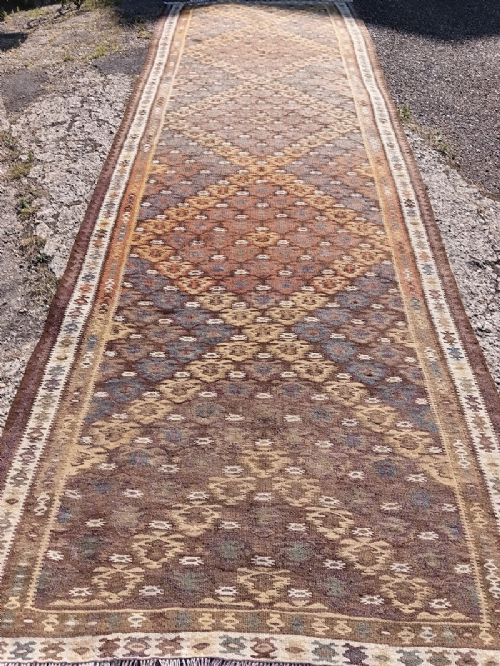
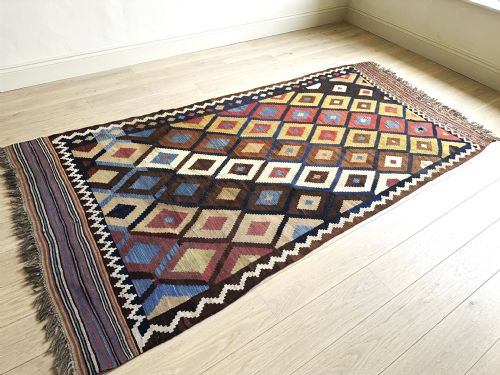
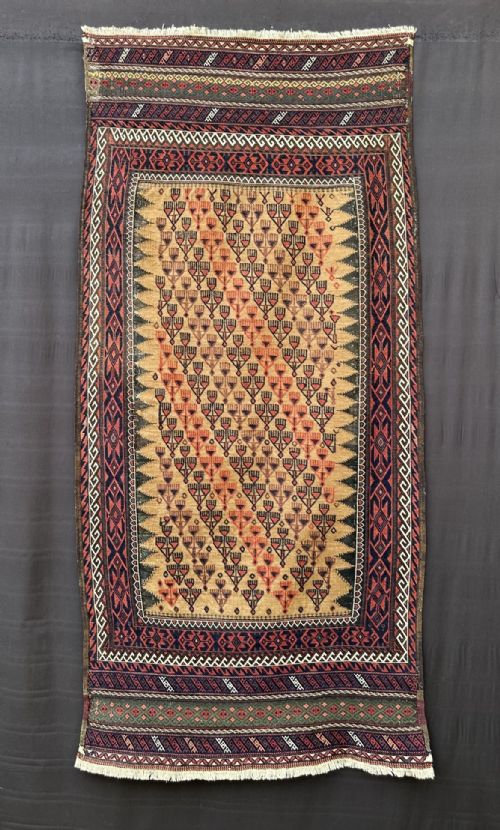
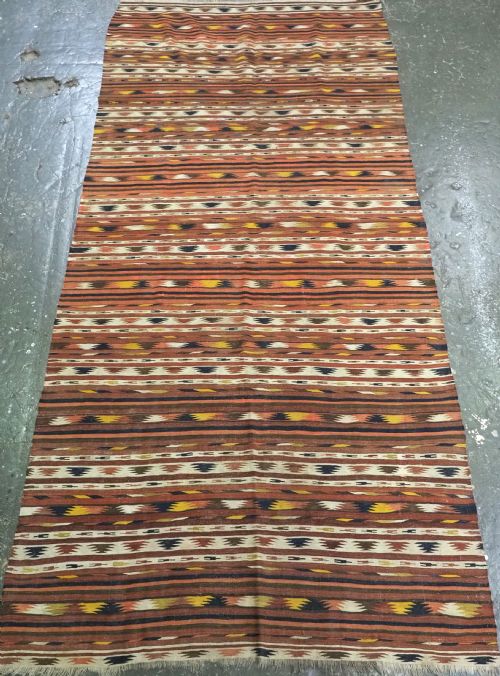
A brown geometric kilim represents flatwoven textile traditions created by tribal and nomadic groups across Persia, Anatolia, Central Asia, and the Caucasus. These pieces include utilitarian flatweaves, storage bag panels, and prayer rugs produced between the late nineteenth century and the mid-twentieth century. Buyers encounter formats ranging from small hanging panels to room-sized kilims.
Materials and construction
Weavers constructed these textiles primarily using wool, hand-spun wool, and cotton foundations, occasionally incorporating camel hair for natural grounds. Natural dyes provided the deep earthy palette characteristic of these flatweaves.
The production relied on interlocking wefts to create sharp colour transitions and geometric motifs. Artisans worked on portable vertical or horizontal looms, resulting in durable flatwoven surfaces without knotted piles.
Brown Geometric Kilim Retail Price Guide 2026
Typical asking prices for brown geometric kilim among the pieces listed under this phrase on Sellingantiques today, from the lower quarter to the upper quarter. They describe what is for sale here now, not the wider market.
Listings span from the 1870s to the 1940s, featuring wool, cotton, and camel hair across Anatolian, Persian, and Central Asian tribal traditions.
Evaluating the pieces
Quality rests on the tightness of the weave and the precision of the geometric lines. Finer weaves demonstrate greater skill in handling slit-tapestry junctions and maintaining structural integrity across the panel.
The choice of materials and the depth of natural dyes influence the visual impact. Pieces featuring hand-spun wool and camel hair show superior tactile qualities compared to later or simpler iterations.
The Brown Geometric Kilim Glossary
- Kilim
- A flatwoven textile produced without a pile by interlocking coloured wefts. These rugs form the core of nomadic and tribal weaving traditions.
- Weftwork
- The horizontal threads woven across the warp to create patterns and structure in a flatweave. Banded weft work adds texture and visual rhythm to the surface.
- Camel hair
- Animal fibre utilised in its natural undyed brown shade for backgrounds and structural strength. It imparts a distinct soft tone to tribal textiles.
- Slit-tapestry
- A weaving technique where the weft turns back at the boundary of a colour motif, leaving a small slit in the fabric. This method defines the sharp geometric designs seen in tribal flatweaves.
- Mafrash
- A rectangular storage bag face or panel woven by nomadic tribes. These panels often get repurposed into small kilims or wall hangings.
Brown Geometric Kilim: Frequently Asked Questions
What is a brown geometric kilim?
A brown geometric kilim is a flatwoven textile made by tribal groups using natural materials like wool and camel hair. These pieces feature angular motifs and earthy tones derived from traditional dyeing methods.
Created across regions from Anatolia to Central Asia, they functioned as floor coverings, storage containers, or covers in nomadic dwellings.
How were these kilims used originally?
Nomadic and village communities utilised these flatweaves for daily domestic purposes, including bedding, animal transport bags, and floor insulation. Their durable structure suited the mobile lifestyle of tribes such as the Qashqa'i and Timuri.
Over time, panels were also adapted for decorative purposes inside tents and permanent dwellings.
How do I care for a vintage kilim?
Regular gentle vacuuming without a rotating brush helps remove embedded dust and protects the flatwoven fibres. Professional cleaning specific to antique textiles ensures the wool and natural dyes remain stable.
Keeping the piece out of harsh direct sunlight prevents the earthy brown tones and vegetable colours from fading.
How can I tell different tribal styles apart?
Tribal styles differ through specific structural traits, colour palettes, and regional geometric vocabulary. For instance, pieces associated with Turkmen or Baluch makers display distinct banded weft work and specific village motifs.
Examining the weave density and the use of materials like camel hair offers further clues to the origin of the textile.