


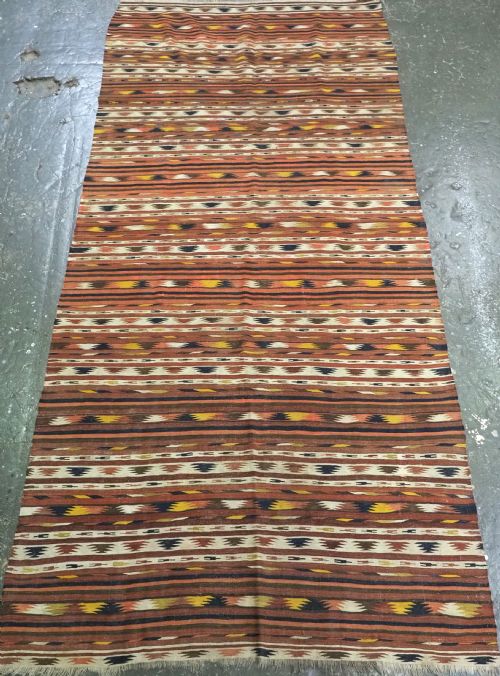


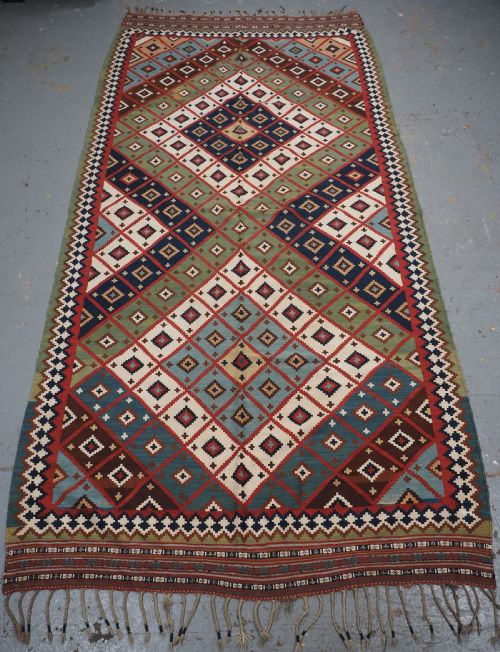


19th Century Kilim Runner
A 19th century kilim runner brings flatweave tribal geometry into a hallway, offering crisp geometric designs and durable wool construction.
19th Century Kilim Runner
A 19th century kilim runner provides a flatwoven floor covering shaped for corridors and narrow spaces, originating from tribal and regional weaving traditions. These pieces include examples from Anatolia, Central Asia, the Caucasus, and Persia, made by weavers working in distinct regional styles.
The selection here encompasses specific regional forms such as Turkish Malatya and Reyhanli pieces, Uzbek tribal work, and Caucasian flatweaves. Buyers encounter banded designs, multi-strip constructions, and specialised tribal formats like Sofreh dining cloths alongside traditional runners.
Dating ranges primarily from the late 19th century into the early decades of the 20th century, capturing nomadic and village production. Each piece displays the specific palette and structural quirks of its originating tribe or region.
How they were made
Weavers utilised hand-spun wool and cotton as the primary structural materials, occasionally incorporating camel hair for natural tonal variation. The flatweave technique involves interlocking weft threads over warp threads to build patterns without a pile.
Construction methods vary from single-panel looms to multi-strip assemblies joined down the length, as seen in Uzbek and Turkish Reyhanli examples. Natural dyes sourced from local plants and minerals provided the rich colours recorded in these textiles.
19th Century Kilim Runner Retail Price Guide 2026
Typical asking prices for 19th century kilim runner among the pieces listed under this phrase on Sellingantiques today, from the lower quarter to the upper quarter. They describe what is for sale here now, not the wider market.
Listings feature wool, cotton, and camel hair across pieces originating from Anatolian, Caucasian, and Persian tribal groups.
What varies in quality
Quality in a 19th century kilim runner rests on the tightness of the weave and the precision of the geometric execution. Finer weaves show greater structural integrity and allow complex banded designs to remain crisp.
The depth and preservation of the colour palette also separate examples, with saturated natural dyes elevating a piece. Furthermore, the originality of the tribal design and the intactness of the original edges dictate the standing of an individual textile.
The 19th Century Kilim Runner Glossary
- Kilim
- A flatwoven carpet or rug produced without a pile across various regions of the Near East and Central Asia. The slit-tapestry technique creates small gaps where different colour areas meet.
- Warp
- The stationary vertical threads stretched onto the loom before weaving begins. Weft threads are passed over and under these structural elements.
- Weft
- The horizontal threads that are passed through the warp to form the pattern and colour of the textile. In kilims, these threads are tightly packed to conceal the warp.
- Sofreh
- A flatwoven spread or cloth traditionally used for dining or food preparation among nomadic tribes. These functional textiles often share the geometric language of standard kilims.
- Banded design
- A decorative layout organised in horizontal stripes or bands across the length of the textile. This arrangement frequently appears in Caucasian and Turkmen flatweaves.
19th Century Kilim Runner: Frequently Asked Questions
How do I clean an antique flatweave runner?
Gentle surface vacuuming without a rotating brush attachment removes loose grit safely.
Professional specialist washing is recommended for deeper cleaning to protect natural dyes.
Can I place these textiles in heavy traffic areas?
These runners withstand moderate foot traffic in hallways and landings when paired with a quality underlay.
Placing a breathable pad underneath prevents slipping and reduces fibre friction against hard floors.
What indicates a piece originates from the Caucasus?
Caucasian pieces typically display sharp geometric motifs, saturated primary colours, and crisp contrasting borders.
The structural density and specific wool preparation also point toward Caucasian village workshops.
Why are some flatweaves constructed in strips?
Narrow vertical looms required weavers to produce narrow strips that were subsequently stitched together.
This technique permitted the creation of larger carpets and runners beyond the width limit of portable nomadic looms.