

Brown Elm Chairs
Brown elm chairs bring honest country character into a room, offering sturdy timber seats shaped by generations of domestic use.
Brown Elm Chairs
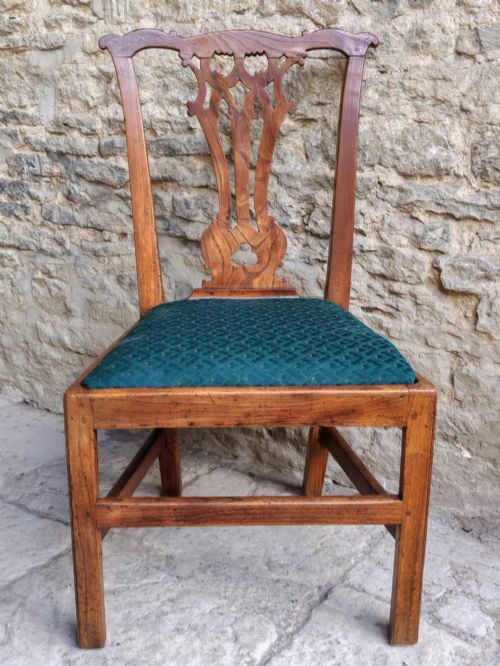
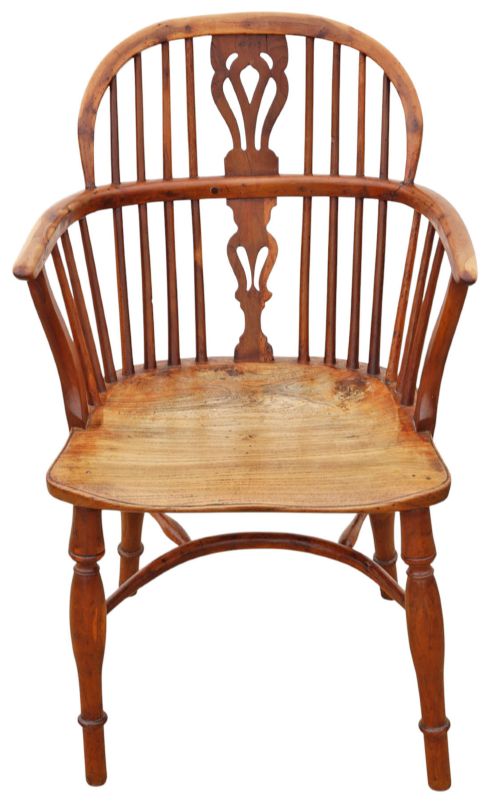
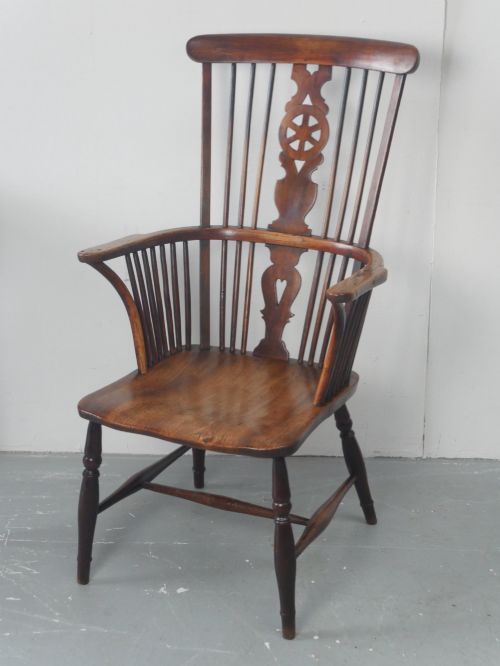
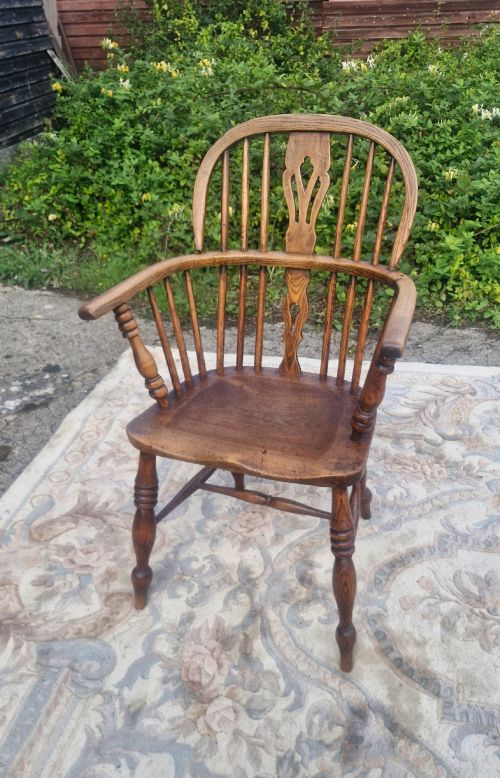
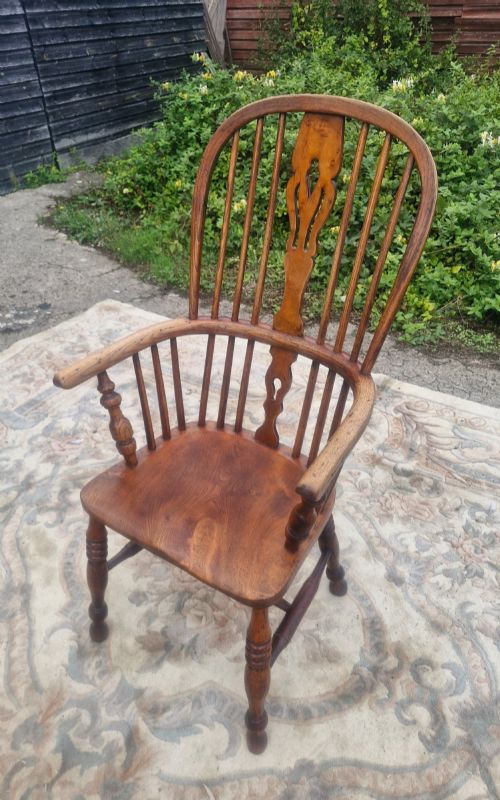
When you search for brown elm chairs, you encounter robust seating shaped largely by English country makers across the eighteenth, nineteenth, and early twentieth centuries. These pieces span utilitarian forms designed for everyday dining, writing, and relaxing in farmhouse kitchens and vernacular interiors.
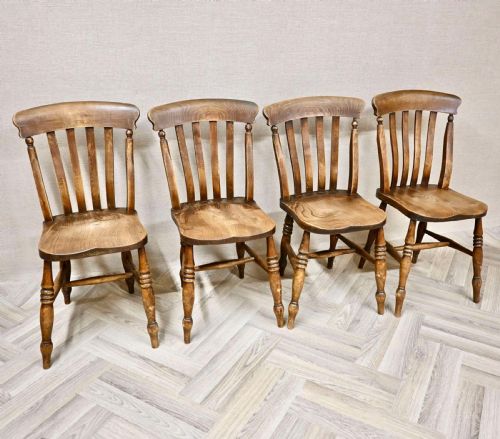
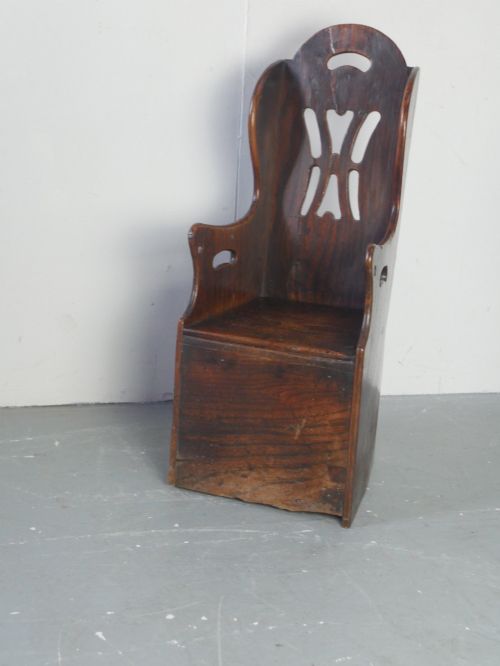
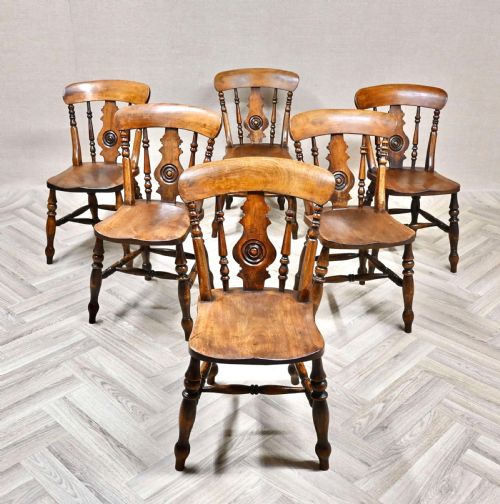
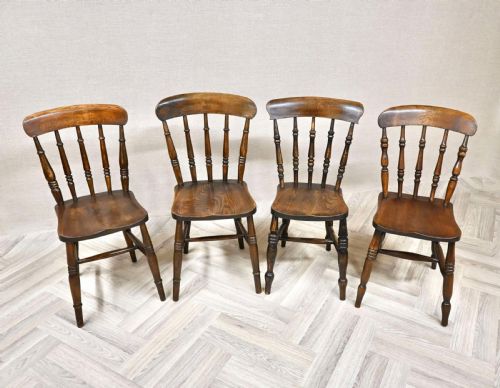
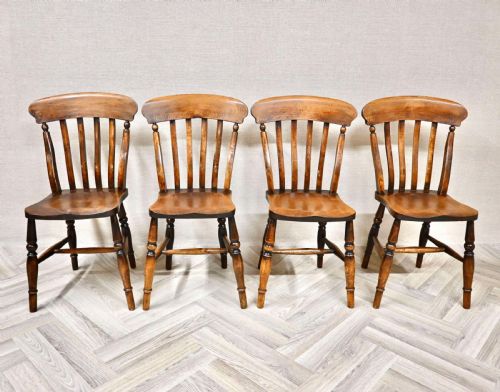
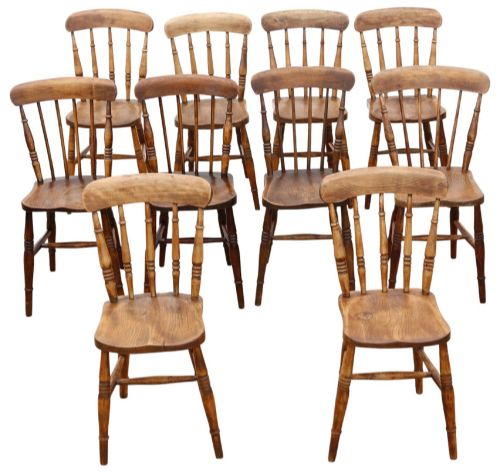
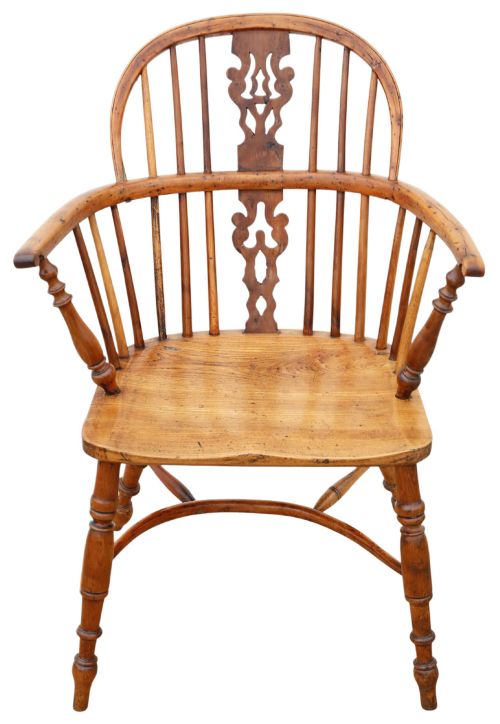
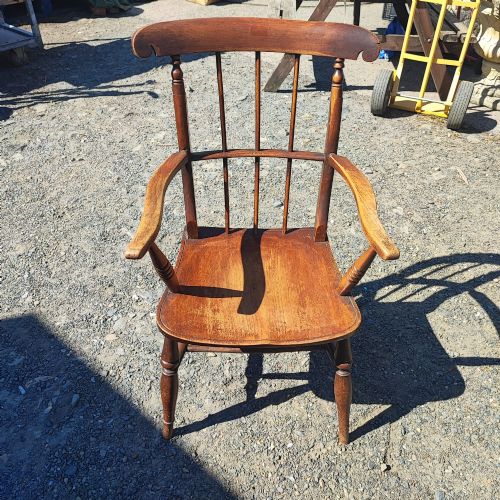
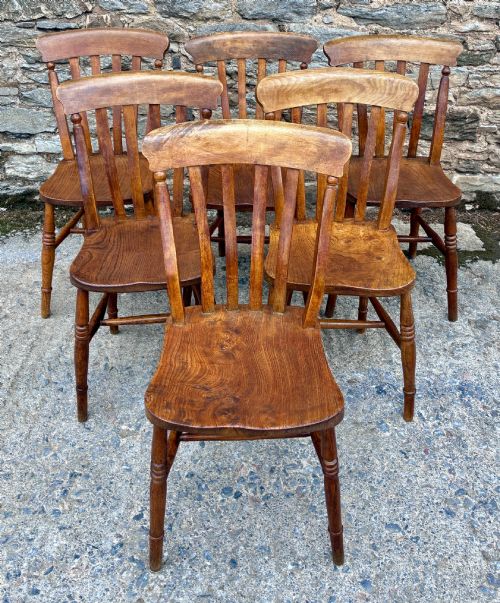
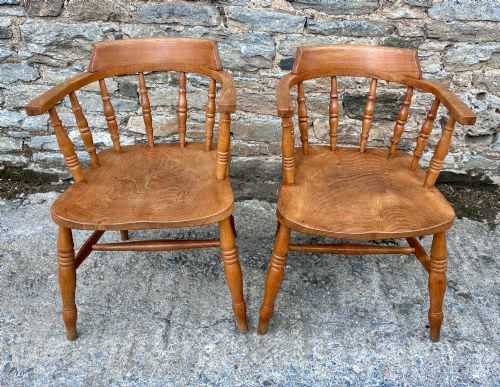
The selections on this page are most commonly found as Windsor armchairs, kitchen dining sets, Captains chairs, and lathback or wheelback variants. They range from compact childrens seats and side chairs up to large matched dining sets and settles.
Originating predominantly from regional English traditions, these brown elm chairs reflect vernacular styles such as Georgian country, Victorian rustic, and traditional country vernacular. They rely heavily on solid timber construction designed to endure heavy daily use.
How they were made
Makers built these chairs by combining solid elm for the saddle seats with supportive timbers like ash, beech, and oak for the spindles, legs, and bentwood bows. Elm provided a tough, interlocking grain that resisted splitting under the pressure of carved depressions and heavy daily wear.
Traditional Windsor construction involved boring holes directly into the solid plank seat to receive turned legs and back spindles, secured beneath with wedges. Steam bending shaped the continuous arm bows and high backs seen on many country armchairs and Captains chairs.
Many nineteenth-century kitchen chairs show distinct hollows worn into the elm seats by generations of restless sitters.
What varies in quality
Quality rests in the depth of the sculpted elm seat and the integrity of the structural joints uniting the mixed timbers. Superior examples display thick, deeply dished seats shaped by hand adzing, alongside well-turned spindles and balanced proportions that maintain stability over centuries.
The harmony of matched sets and the richness of the underlying timber patina separate standard utility seating from finer vernacular expressions. Original surface finishes and minimal past repairs distinguish pieces that retain their original structural character.
J SPENCER
The Brown Elm Chairs Glossary
- Windsor
- A chair built with a solid wooden seat into which the legs and back sticks are tenoned directly. This method creates a sturdy, resilient frame typical of English country furniture.
- Carver
- An armchair, frequently styled with open arms for use at the head of a dining table. These pieces often feature heavier turning and wider proportions than standard side chairs.
- Smokers Bow
- A low-backed Windsor armchair with a continuous curved arm rail and spindle back. These comfortable seats were common in nineteenth-century public houses and farmhouse parlours.
- Lathback
- A chair back constructed with flat wooden slats rather than rounded vertical spindles. This regional variation provides robust support and a distinct profile.
- Crinoline stretcher
- An arched hoop stretcher connecting the legs of a Windsor chair beneath the seat. This iron or wooden brace increases lateral stability.
- Patina
- The deep surface sheen and colour developed by aged wood through decades of handling and waxing. It indicates genuine age and continuous use.
Brown Elm Chairs: Frequently Asked Questions
What defines a Windsor chair?
A Windsor chair relies on a thick solid wooden seat that anchors the undercarriage legs and upper back spindles independently. This construction method dispenses with a heavy internal frame in favour of direct wood-to-wood joinery.
Such chairs typically feature bentwood bows or stick backs shaped for functional domestic or kitchen use.
Why is elm used for chair seats?
Elm timber possesses a famously tangled, interlocking grain structure that prevents it from splitting easily when nailed or bored. This property made it the preferred material for carved saddle seats that needed to bear weight without cracking.
Makers paired these durable elm seats with straight-grained ash or beech for the turned legs and spindles.
How do I date an elm chair?
Dating relies on observing tool marks, timber combinations, structural wear patterns, and regional style evolution from the eighteenth into the twentieth century. Earlier pieces often display hand-adzed seat bottoms and simpler turned components.
Later Victorian and Edwardian examples incorporate machine-turned parts and standardised factory assembly methods while retaining traditional forms.
Are these chairs suitable for daily dining?
These country chairs were originally built for heavy daily use in farmhouses, kitchens, and cottages, making them structurally robust for modern dining. Solid timber construction and pinned joinery ensure they handle regular sitting without difficulty.
Checking the stability of the leg joints and seat plate guarantees they will endure contemporary household routines.