

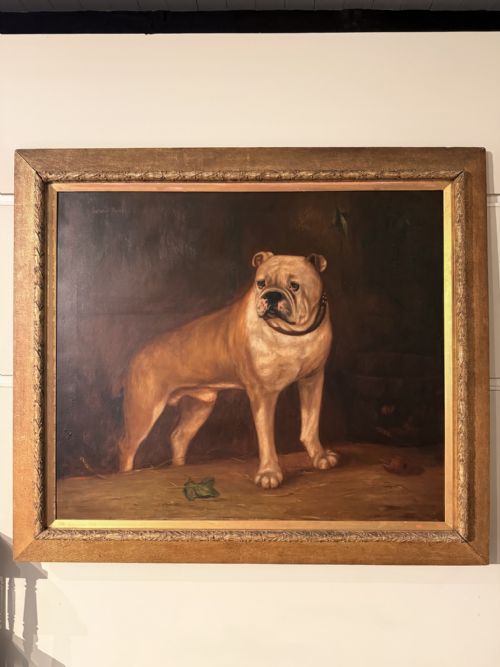

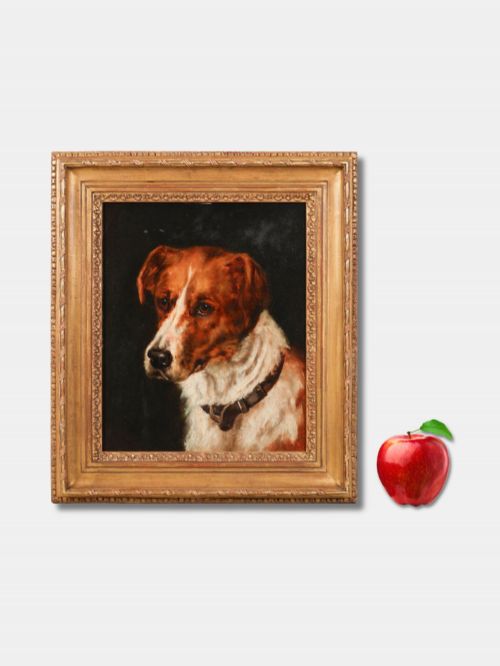


Brown Dog Oil Portrait
A brown dog oil portrait captures the distinct character and loyalty of canine subjects through traditional painted media from past centuries.
Brown Dog Oil Portrait
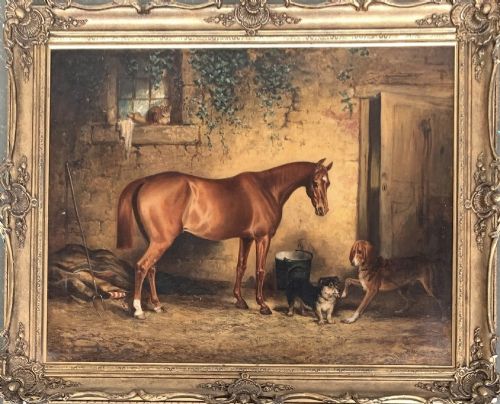
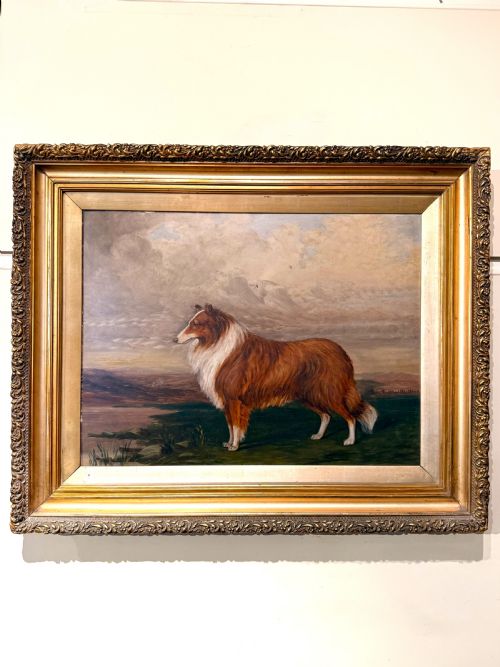
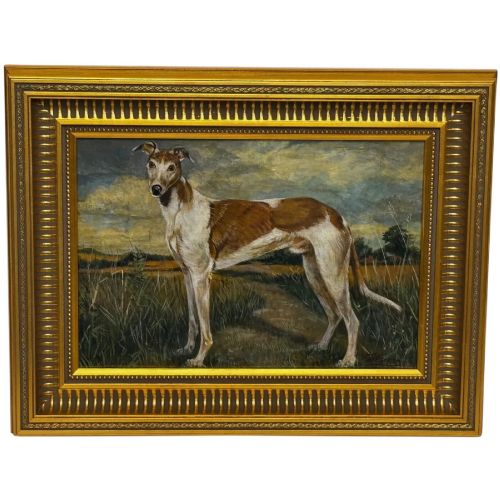
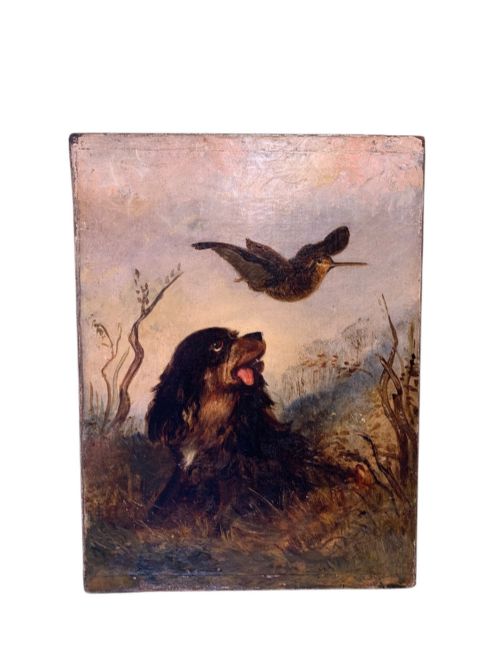
A brown dog oil portrait depicts individual or multiple dogs, ranging from spaniels and terriers to collies and hounds, rendered in pigment on canvas or board. These works emerge primarily from the nineteenth and early twentieth centuries, reflecting changing attitudes towards pets and sporting animals.
The most common examples encountered on this page date from the Victorian and Edwardian eras, executed in styles spanning British sporting art to academic animal painting. Canvases capture animals either in quiet domestic interior settings or within broader pastoral and hunting landscapes.
Materials and construction
Paintings utilise oil paint applied to prepared canvas, wooden panel, or artist board, sometimes secured within period giltwood frames adorned with gold leaf. Artists build depth through layered glazes and opaque brushwork to render the sheen of canine coats and texture of surrounding foliage.
Support materials vary according to the period, with early works employing hand-stretched linen canvas pinned to wooden stretchers, whilst later Victorian and twentieth-century examples frequently utilise commercial millboard or panel supports.
Listings span the seventeenth through the mid-twentieth century, employing oil paint on canvas, board, and panel within gilt frames.
Distinctions in quality
Quality rests upon the artist's anatomical precision and ability to convey the alert expression, intelligent eye, and physical stance of the specific breed. Superior compositions demonstrate careful handling of light across fur and fabric, avoiding stiff or disproportionate rendering.
The integrity of the original surface, stability of the paint layer, and authenticity of the period frame contribute significantly to the overall standing of an individual canvas within the tradition of animal painting.
Henry Barraud·Valentine T Garland·John Emms·Thomas Hicks·LM Webb·George E Sharpe·Henri Schouten·George Earl
The Brown Dog Oil Portrait Glossary
- Oil on canvas
- Pigment suspended in a drying oil medium applied to a woven fabric support. This combination allows for rich blending of tones and enduring flexibility.
- Giltwood
- Timber carved and coated with a thin layer of gold leaf or metallic powder. It provides a reflective decorative border designed to complement dark painted canvases.
- Naive school
- Art produced by painters lacking formal academic training, characterised by flattened perspective and direct charm. These works offer a sincere, unpretentious record of domestic life.
- Sporting art
- Depictions of hunting, racing, and working animals associated with rural pursuits. The genre demands rigorous attention to the correct conformation of hounds, horses, and guns.
Brown Dog Oil Portrait: Frequently Asked Questions
What dog breeds appear most often?
Terriers, spaniels, collies, and various hunting hounds dominate the surviving canine canvases from the nineteenth century onward.
Artists frequently recorded prized working dogs, family pets, and champions associated with rural estates or urban households.
How are these paintings framed?
Many retain their original nineteenth-century giltwood frames, which often feature moulded plaster ornamentation and gold leaf finishing.
Frames provide crucial structural context and help date the artwork alongside stylistic clues within the canvas itself.
Where were these portraits displayed?
Owners originally hung these works in country house libraries, sporting lodges, and Victorian parlours to celebrate valued companions.
Today, the pieces suit similar domestic environments, bringing historical depth and traditional animal subjects into modern rooms.
How do I identify the period?
Dating relies upon a combination of canvas preparation, framing style, costume clues in related figures, and the artist's recorded working dates.
Victorian and Edwardian works each display distinct approaches to background landscape and canine proportion.