
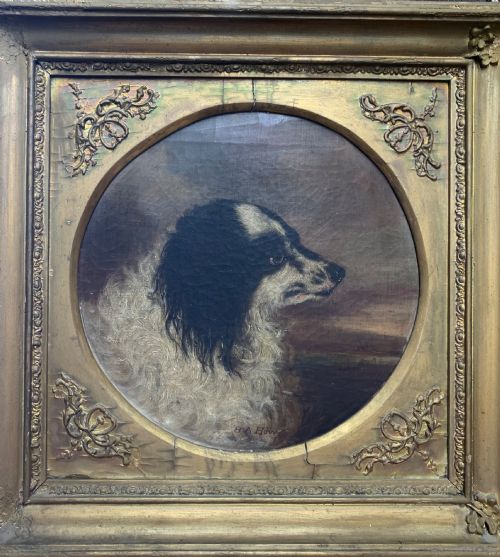
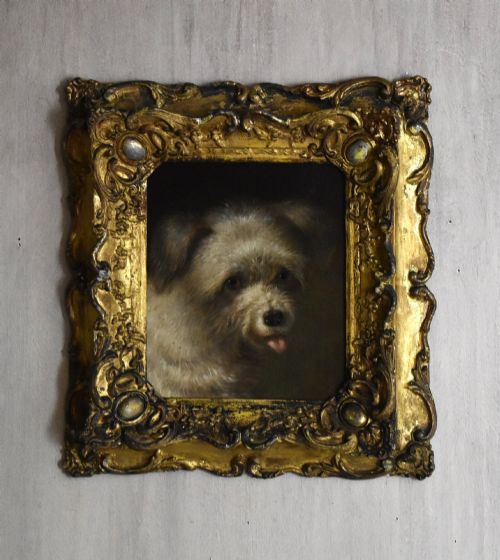
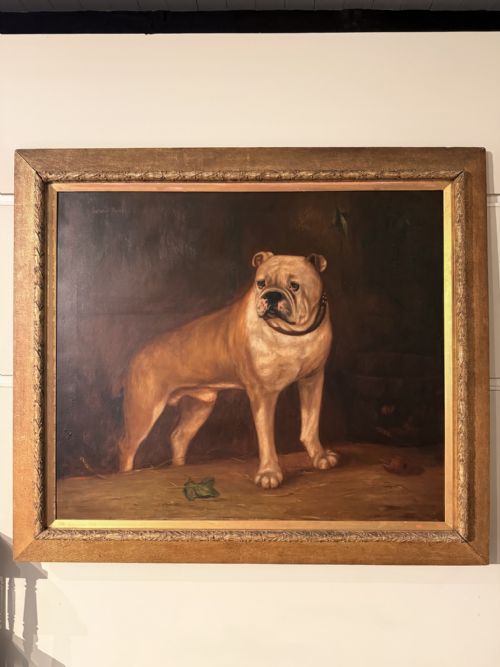
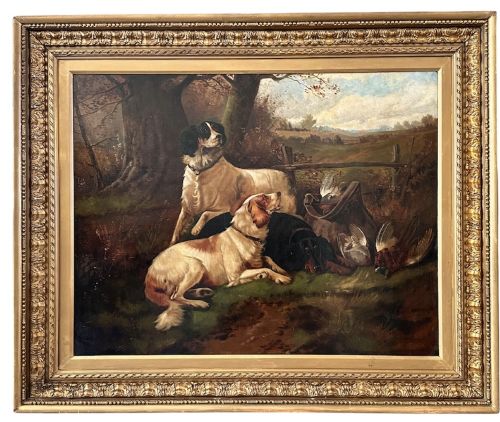
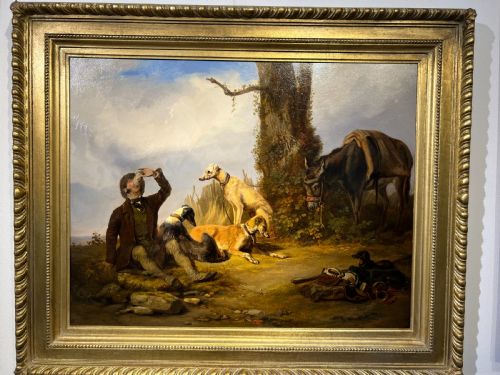
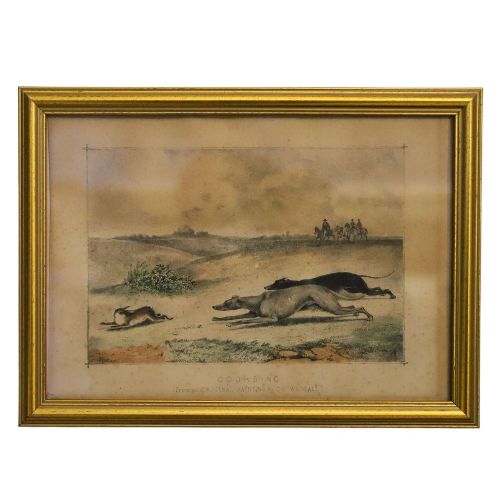

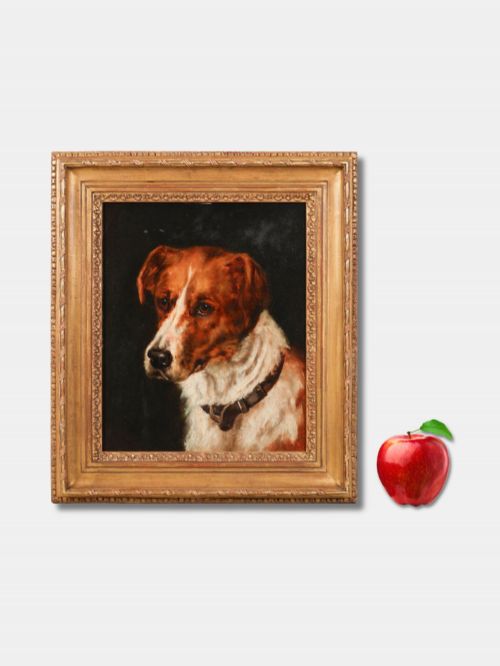
Gilt Framed Dog Artwork
These gilt framed dog artwork pieces capture canine character through centuries of portraiture, offering a glimpse into historic human-animal bonds.
Gilt Framed Dog Artwork
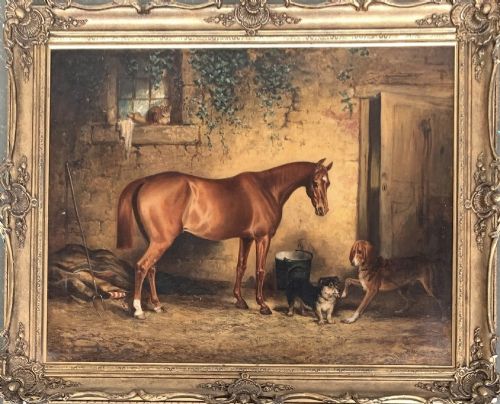
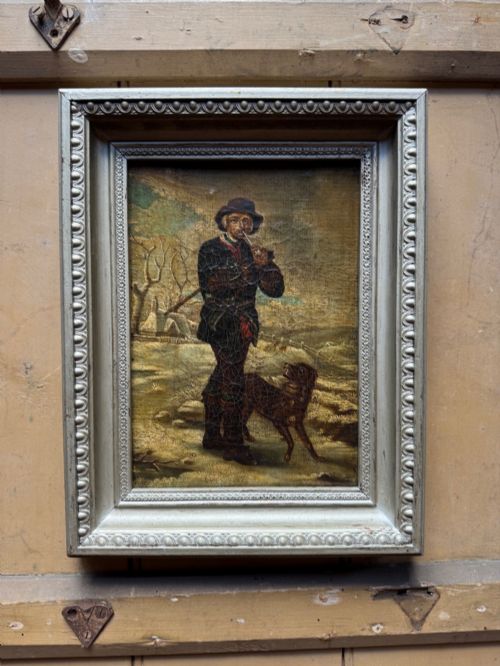
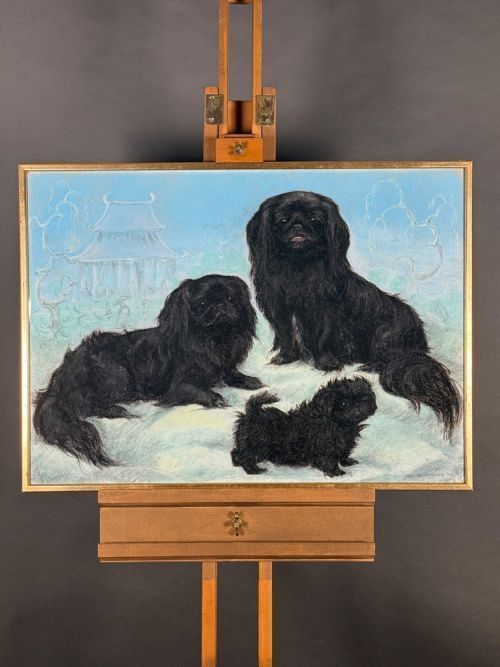
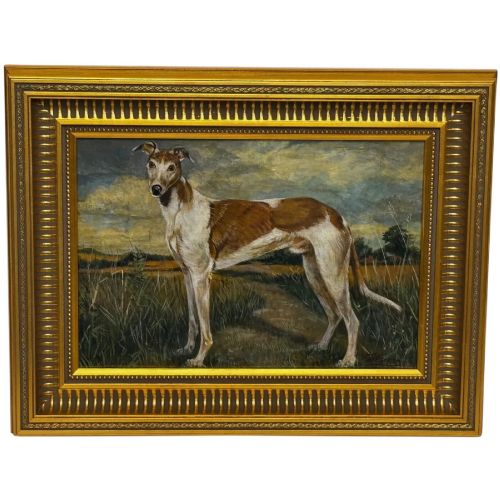
When searching for gilt framed dog artwork, collectors encounter oil paintings, watercolours, and needleworks depicting hounds, terriers, and gun dogs. These pieces range from intimate 19th-century studies to larger Victorian sporting scenes set within ornate wooden surrounds.
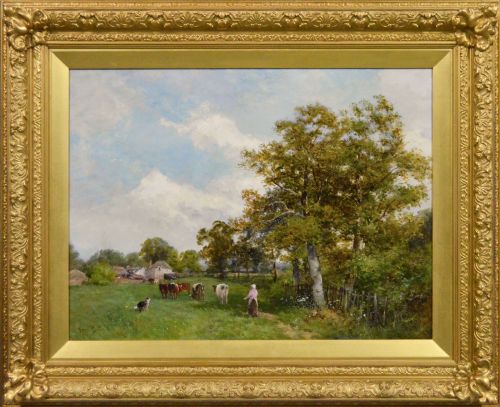
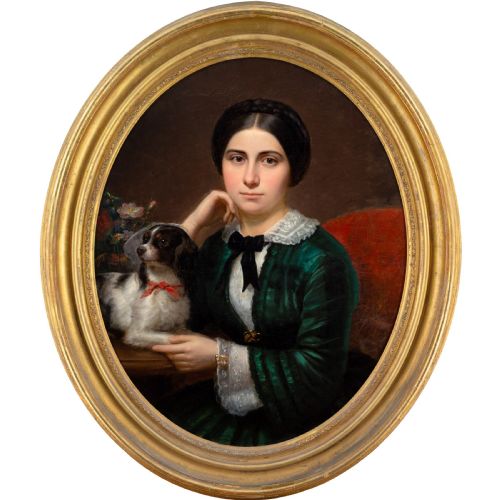
The selection leans heavily toward British and French portraiture from the Victorian and Edwardian eras. Canvases depict animals either alone in pastoral landscapes or alongside their owners, rendered in styles varying from folk art to academic realism.
Framing plays a defining role in this category, with original gilded wood and gesso enclosures complementing the painted subjects. Buyers select these works to bring historic animal portraiture into domestic spaces.
How They Were Made
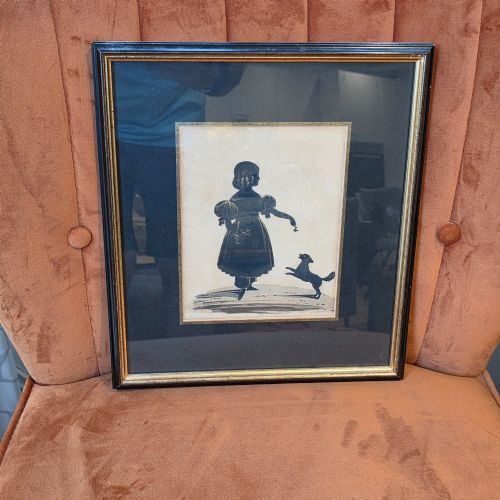
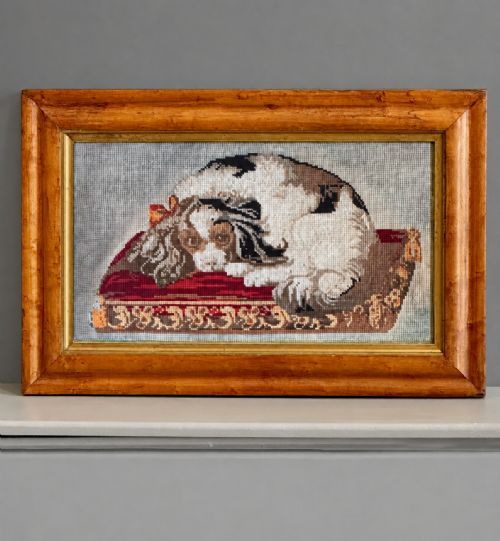
Artisans built these pieces using oil paint on stretched canvas or board, applying pigments to capture the texture of animal coats. Draughtsmen also utilised pastel on paper, cut paper silhouettes, and needlework with wool.
The surrounding frames consist of carved wood treated with gold leaf or giltwood finishes to create a reflective border. Glazing appears on works executed on paper or delicate textile mediums to provide protection.
Listings feature oil on canvas, pastel on paper, and needlework executed across the nineteenth and twentieth centuries.
What Varies in Quality
Anatomical precision and the handling of light separate standard decorative portraits from works by accomplished animal painters. The expression in the eyes and the rendered texture of fur indicate the skill of the hand behind the brush.
The integrity of the gilded frame influences the overall preservation of the object. Original period frames that retain their original gold leaf hold greater historical alignment with the artworks they enclose.
Henry Barraud·William James Hubard·David Bates·B A Howe·Martin Theodore Ward·John Sargent Noble·Sir Edwin Henry Landseer·C H Weigall·C R Breytle·Claude Cardon·Frans Snyders·John Emms·Arthur Wardle·William Barraud·Colin Graeme Roe·Valentine Thomas Garland·John Trivett Nettleship·Edwin Frederic Holt·John Alfred Wheeler·J Cecil Bradshaw
The Gilt Framed Dog Artwork Glossary
- Giltwood
- Wood carved and coated with gold leaf or a metallic substitute. This material provides the bright, reflective borders common on historic picture frames.
- Sporting Art
- Depictions of hunting, hounds, horses, and rural field sports. This genre flourished in British art throughout the nineteenth century.
- Berlin Work
- A style of counted-thread embroidery popular in the Victorian era. It utilised brightly coloured wools to stitch pictorial designs like spaniels onto canvas.
- Lithograph
- A print made from a flat stone or metal plate treated to retain ink. Artists used this method to reproduce popular sporting scenes for wider distribution.
- Provenance
- The documented history of ownership of an artwork. This paper trail helps establish authenticity and attribution to specific artists.
Gilt Framed Dog Artwork: Frequently Asked Questions
What periods do these pieces date from?
The selection spans from the seventeenth century through to the mid-twentieth century, with a concentration of works originating in the Victorian and Edwardian eras.
Individual pieces reflect the shifting artistic tastes of these periods, moving from formal academic portraiture towards freer Realist and folk art interpretations.
How were these artworks originally displayed?
Historic dog portraits typically hung in country houses, sporting estates, and domestic parlours alongside family portraits and landscape scenes. The gilt frames were chosen to catch the flickering light of candles and gas lamps.
Today, collectors place them in similar interior settings, often grouping several pieces together to create a traditional gallery wall.
Are all the dogs in these pieces named?
Some works identify specific animals belonging to notable figures, such as a lord's favourite hounds or a named pet like Mr Quiz. Other portraits depict generic working gun dogs, terriers, and spaniels representative of a breed.
Inscriptions on the reverse or within the composition occasionally record the name of the dog and its owner.
How can I distinguish a print from an oil painting?
Oil paintings display visible brushwork and texture where the paint sits raised upon the canvas or board. Prints lack this physical pigment depth and usually show a dot pattern or smooth surface beneath glass.
Examining the edge of the frame and the backing boards reveals whether the medium is an original canvas, a lithograph, or a textile needlework.