





British Canine Artwork
British canine artwork captures the personality and presence of dogs through oil paintings, watercolours, and etchings spanning the Victorian era into the twentieth century.
British Canine Artwork
British canine artwork encompasses oil paintings, watercolours, and drypoint etchings created by artists who recorded individual animals and working breeds across the nineteenth and twentieth centuries. These works range from grand portraits of named hounds to intimate studies of terriers and spaniels in domestic interiors or rural landscapes.
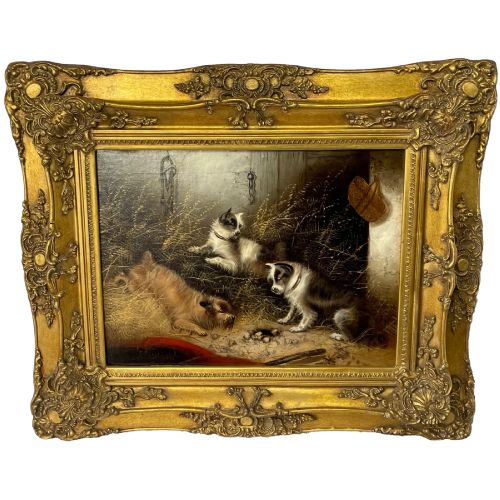
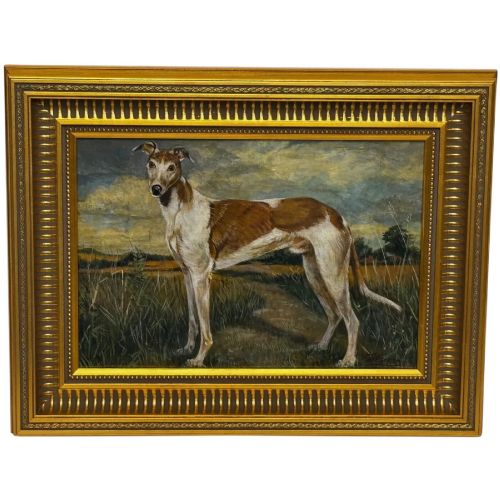
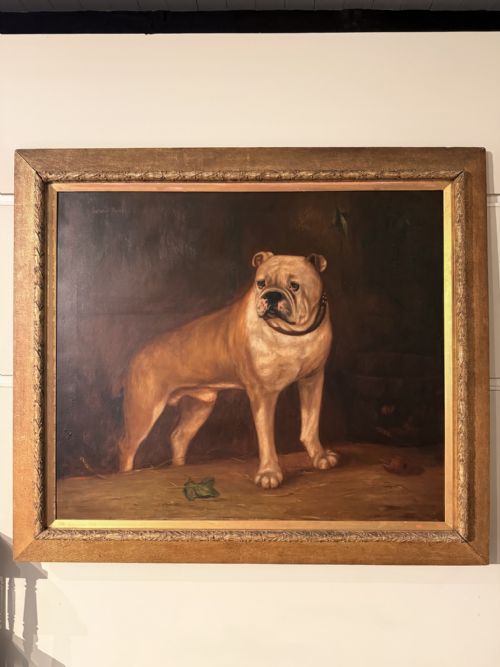
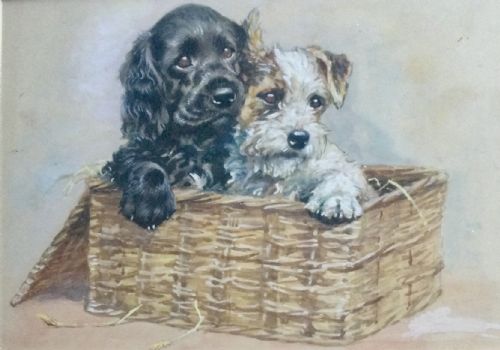
Buyers meet varied examples on this page, including Victorian oil paintings of collies and spaniels, Edwardian sporting dog portraits, and 1940s realisms depicting bulldogs. The pieces draw their character from traditional British sporting art and Victorian realism, focusing heavily on specific breeds and well-known working animals.
How they were made
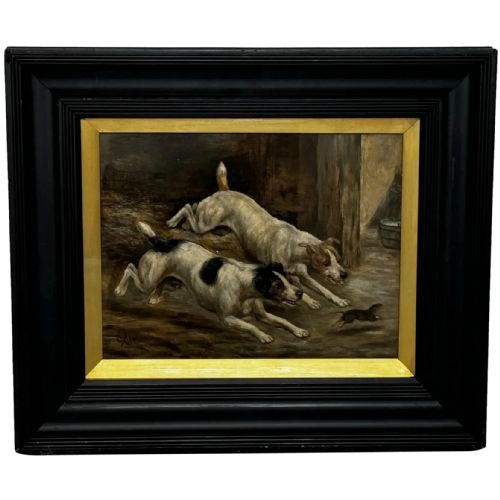
Painters built these canine portraits using oil paint or watercolour applied to canvas, board, or paper. Artists often framed these works with wood and gold leaf or gilt mouldings, giving the finished pictures a formal presentation suited to domestic display.
Printmakers utilised drypoint etching techniques on paper to produce detailed studies of dogs such as bulldogs. These printed works relied on precise incisions made directly into the plate, capturing the texture of coats and the expression of the subject.
Common breeds represented across these Victorian and twentieth-century paintings include collies, spaniels, terriers, bulldogs, and hounds.
What varies in quality
The distinction between standard works and exceptional pieces rests upon the artist's ability to render the anatomy, expression, and individuality of the dog rather than a generic representation. Master painters handled light and texture within the animal's coat with notable subtlety, bringing depth to the canvas.
Condition and medium also shape the standing of a piece, with original oil paintings and signed drypoint etchings holding distinct visual weight compared to later prints. The integration of the subject within its landscape or interior setting reveals the maker's compositional skill.
Valentine T Garland·John Emms·Arthur Wardle·William Barraud·John Trivett Nettleship·Sir Edwin Landseer·Florence Mabel Hollams·Philip Eustace Stretton·Samuel John Carter·Herbert Dicksee
The British Canine Artwork Glossary
- Drypoint etching
- A printmaking process where an artist scratches a design directly onto a metal plate with a sharp needle. This technique produces velvety lines that hold characteristic burr when inked.
- Sporting art
- A genre of painting and illustration dedicated to rural pursuits, livestock, and hunting dogs. In British traditions, it records prized animals alongside their owners or working environments.
- Oil on canvas
- Pigments bound with drying oils applied to a woven fabric stretched across a wooden frame. It serves as the primary medium for many traditional animal portraits.
- Victorian realism
- An artistic approach focusing on unidealised, accurate representations of everyday subjects and animals. It dominated nineteenth-century British painting styles.
British Canine Artwork: Frequently Asked Questions
How do I identify a Victorian dog painting?
Victorian dog paintings often feature realistic depictions of working or pet breeds within detailed interiors or pastoral landscapes, utilising oil on canvas or watercolour.
Clues to the period include the clothing of accompanying figures, the framing style, and the characteristic palette of nineteenth-century British sporting art.
What is a drypoint etching?
A drypoint etching is a print created by drawing directly onto a metal plate using a sharp point, which raises a ridge of metal called a burr.
When inked, this burr gives the printed lines a rich, velvety quality distinct from standard engraved lines.
Are these works original or reproductions?
The selection includes original oil paintings, watercolours, and period drypoint etchings created by named artists and schools.
Listings specify the exact medium used, distinguishing unique hand-painted or hand-etched works from later mass-produced prints.
How should I frame and display antique dog art?
Antique dog art is best housed in wooden frames, frequently incorporating gold leaf or gilt details that complement the traditional aesthetic of the period.
Display them away from direct sunlight to protect oil paint, watercolours, and paper from fading over time.