


Brown Ceramic Jug
These brown ceramic jug selections bring together functional vessels and decorative stoneware from the seventeenth century onwards.
Brown Ceramic Jug
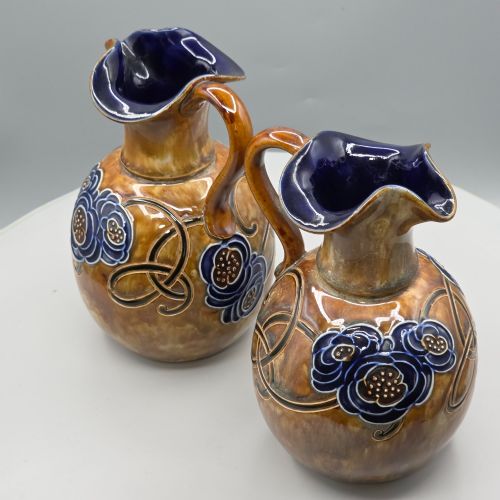
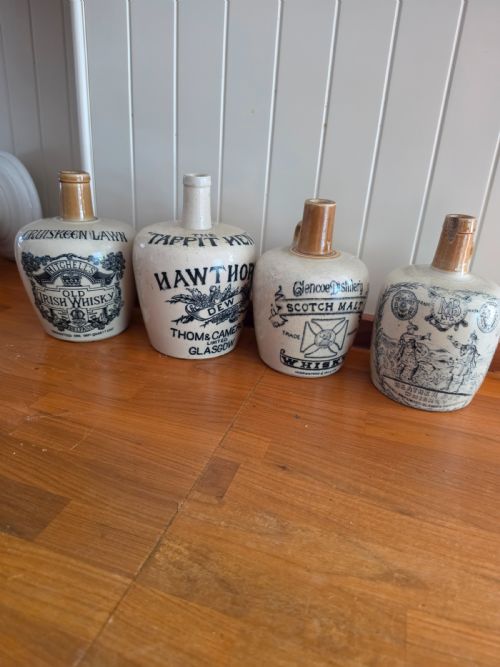
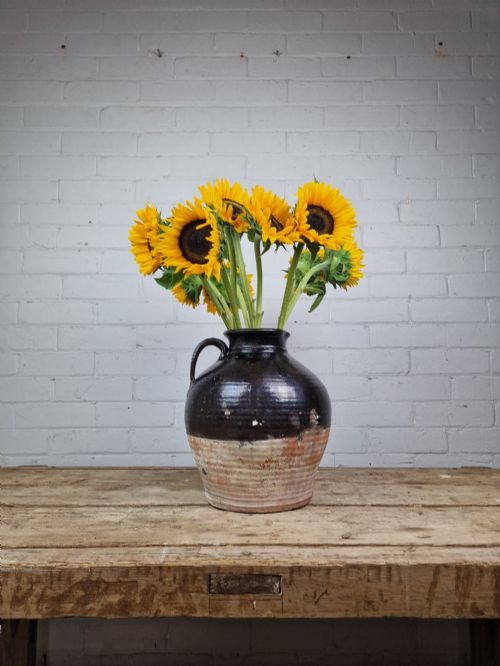
A brown ceramic jug encompasses utilitarian vessels, harvest flagons, and decorative pottery produced across the nineteenth century and earlier eras. Collectors encounter heavy stoneware flasks, salt-glazed vessels, and earthenware pitchers originating from English potteries and continental workshops.
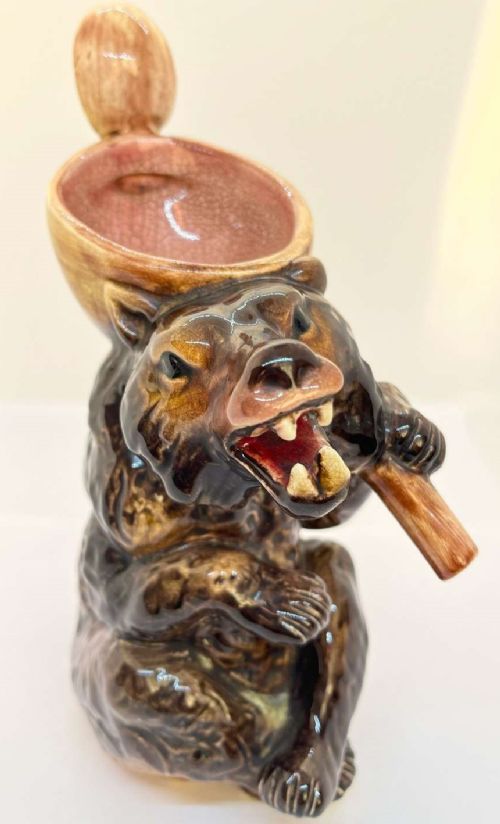
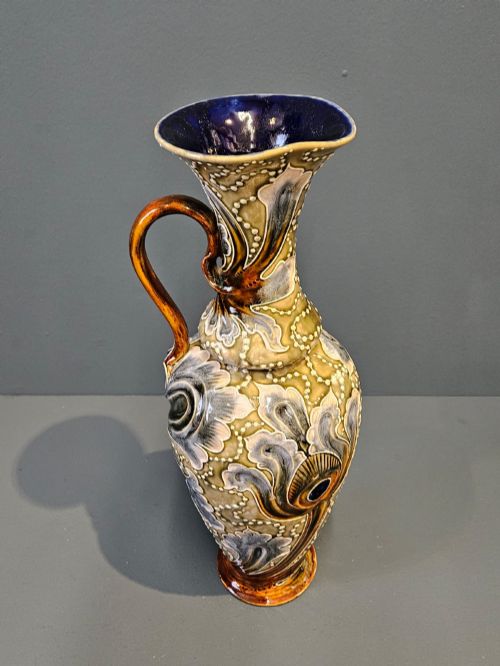
The objects span specialised forms including puzzle jugs, Toby jugs, character pieces, and majolica tablewares. Victorian examples often display incised ornamentation or applied motifs, while earlier specimens rely on simple salt glazes and slipware decoration.
Materials and production methods
Makers utilised dense clay bodies, including durable stoneware and earthenware, fired at high temperatures to achieve strength. Salt glaze and lead glaze techniques produced the characteristic glossy, textured surfaces seen on these historic containers.
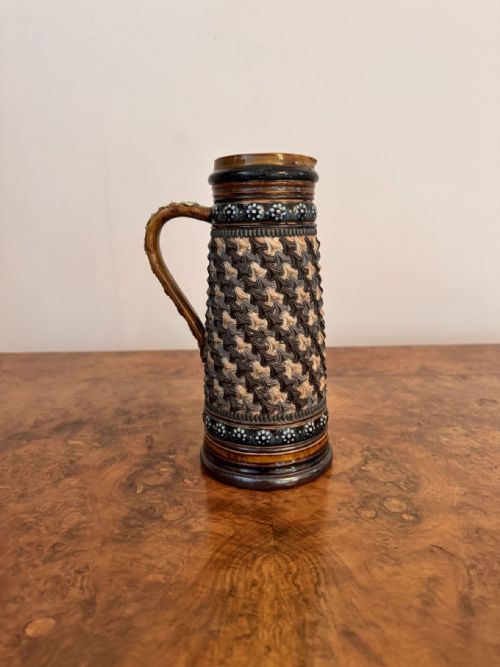
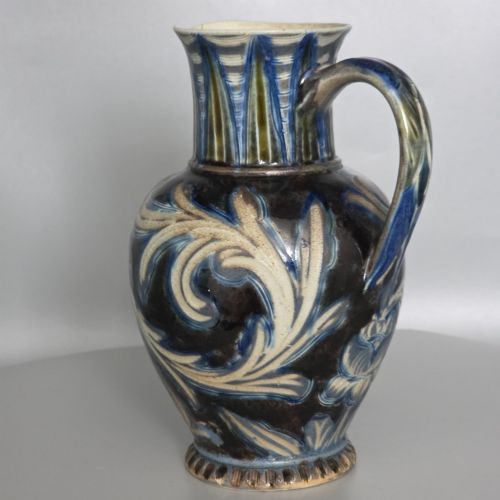
Many items incorporate applied relief decoration, incised patterns, or slip trailing executed by hand before firing. Workshops frequently added silver rims or hinged silver-plated lids to reinforce utilitarian vessels and elevate their appearance.
Assessing craftsmanship and condition
Superior examples display crisp incised detailing, well-defined moulded relief work, and even coloration across the ceramic body. Pieces bearing identifiable studio signatures or specific factory stamps command greater attention from collectors.
The integration of metal mounts, such as hallmarked silver rims or fitted lids, influences the desirability of a piece. Preservation of the original glaze texture and structural integrity remains central to the standing of any historical vessel.
Doulton Lambeth·George Jones·Holdcroft
The Brown Ceramic Jug Glossary
- Stoneware
- A robust, vitrified pottery body fired at high temperatures until non-porous. It resists liquids naturally without requiring an internal glaze.
- Salt glaze
- A glassy finish created by throwing common salt into the kiln during high-temperature firing, resulting in a pebbled texture.
- Slipware
- Pottery decorated with slip, a liquid clay mixture applied to the wet body before firing for contrasting lines.
- Puzzle jug
- A vessel featuring a perforated neck designed to frustrate drinkers by spilling unless liquid is drawn through a hidden straw tube.
- Toby jug
- A pottery pitcher moulded in the figure of a seated person, typically wearing eighteenth-century attire and holding a mug or drink.
Brown Ceramic Jug: Frequently Asked Questions
How were salt glazed jugs used?
Salt glazed vessels served primarily for storing and pouring liquids such as beer, water, wine, and oil in domestic settings. Their dense, non-porous walls kept contents secure without absorbing flavours.
Larger flagons functioned as transport containers for taverns and merchants. Smaller domestic pitchers were kept on tables for daily beverage service.
What is a puzzle jug?
A puzzle jug is a drinking vessel with a perforated neck that appears broken or impossible to drink from safely. Users had to figure out the secret pathway through the handle and rim to imbibe without spilling.
Potters created these novelty items for taverns and social gatherings to test the wits of patrons. They represent a playful side of historic ceramic manufacturing.
How do I date a stoneware jug?
Dating relies on observing manufacturing marks, glaze characteristics, and decorative styles tied to specific centuries or reigns. Early examples from the seventeenth and eighteenth centuries show heavier throwing lines and simple salt glazes.
Victorian pieces often feature stamped factory ciphers, incised floral patterns, or applied silver rims. Comparing the base and handle construction against known workshop periods provides further accuracy.
Can I use antique jugs for serving?
Historic vessels require careful handling and many collectors prefer to display them rather than put them back into daily service. Older earthenwares and porous clays can degrade or stain when exposed to modern liquids over time.
Stoneware is structurally robust, but metal rims and historic glazes need protection from harsh washing. Gentle cleaning with lukewarm water without soaking preserves the material.