
Brown Carved Wood Sculpture
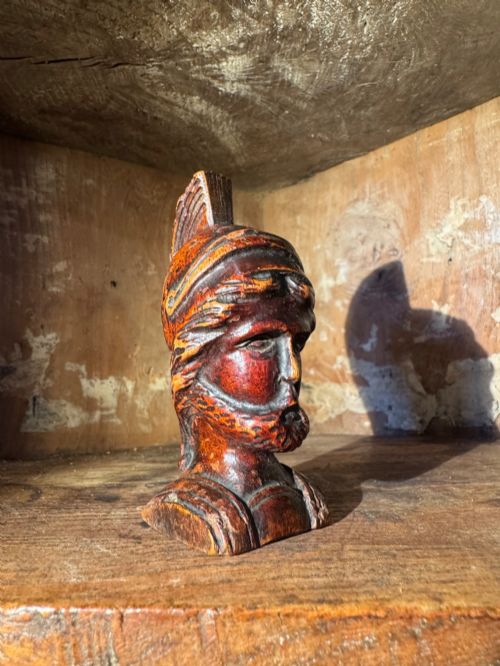
These brown carved wood sculpture pieces bring warmth and rich texture to a room, ranging from animal studies to devotional figures.
Brown Carved Wood Sculpture
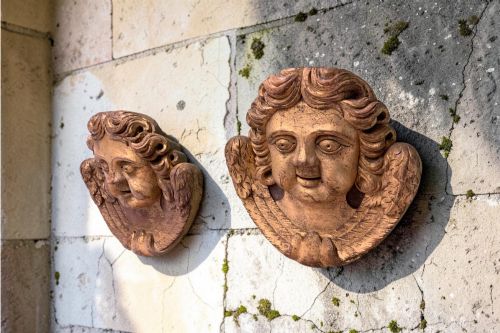
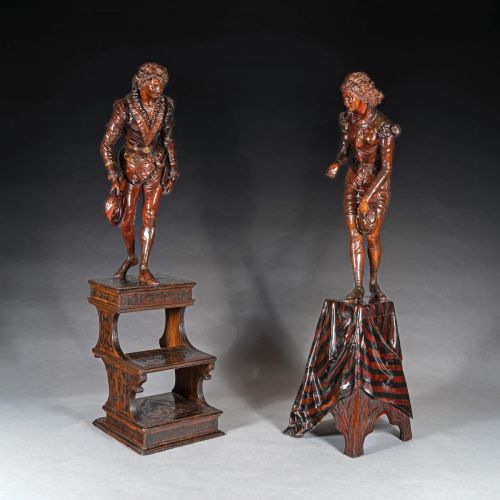
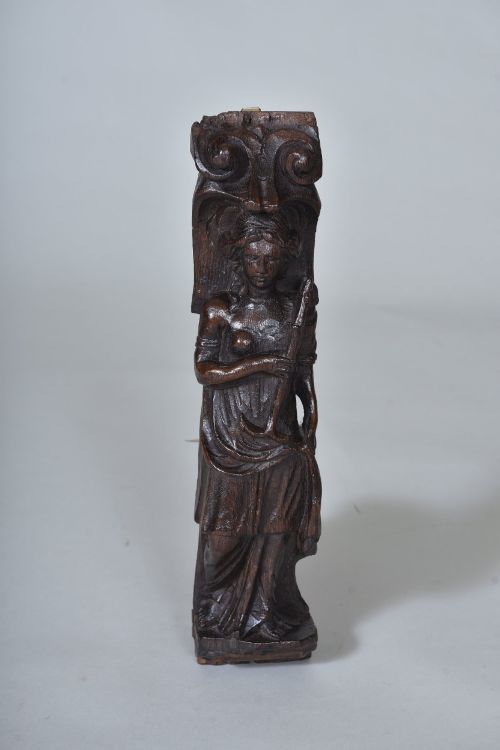
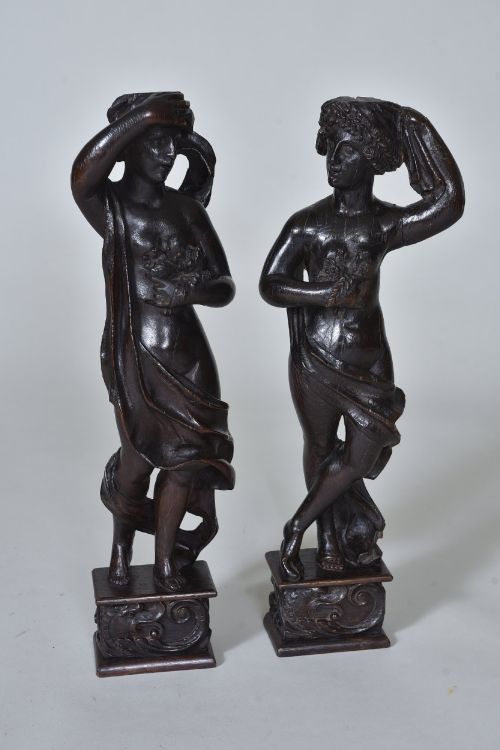
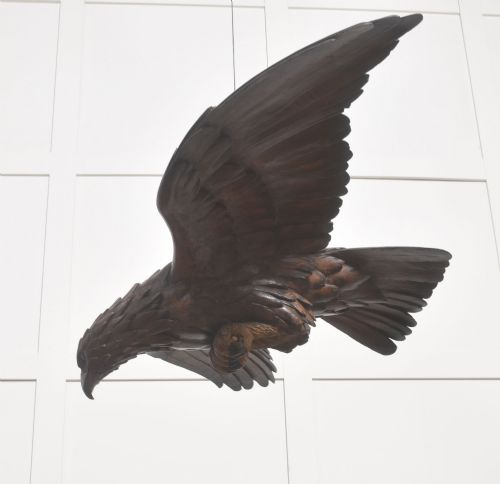
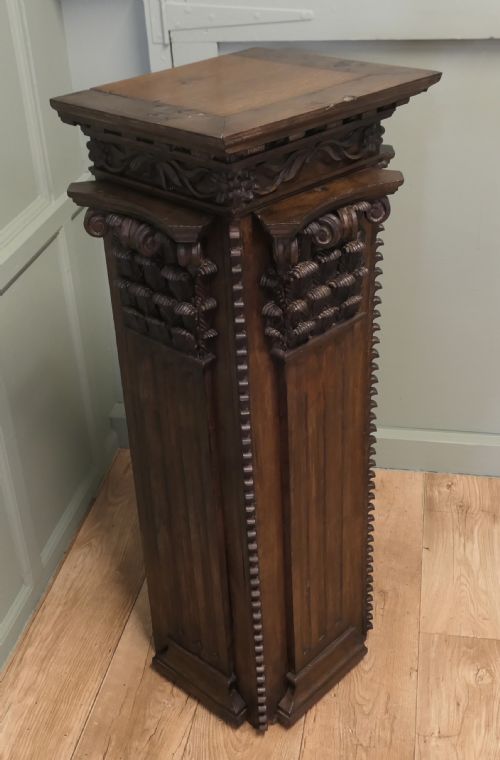
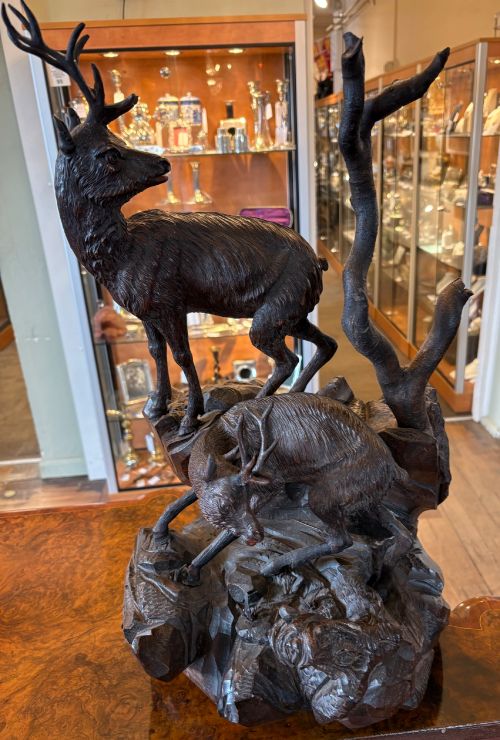
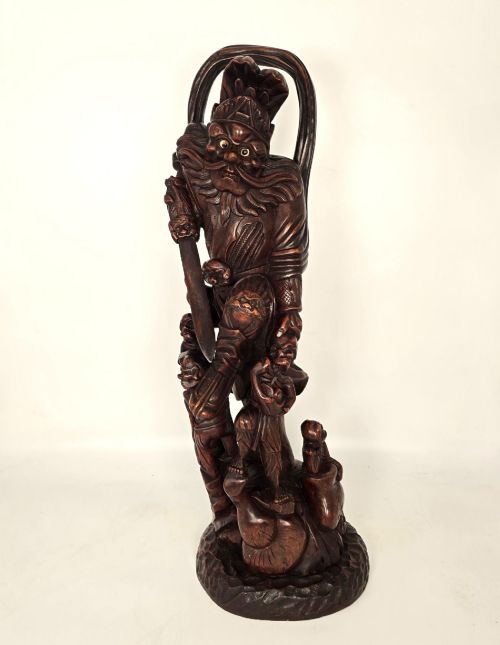
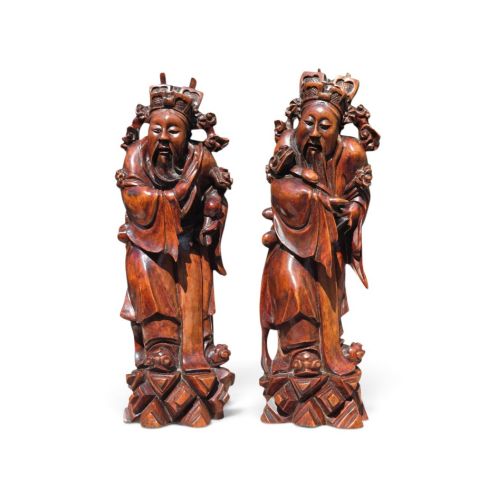
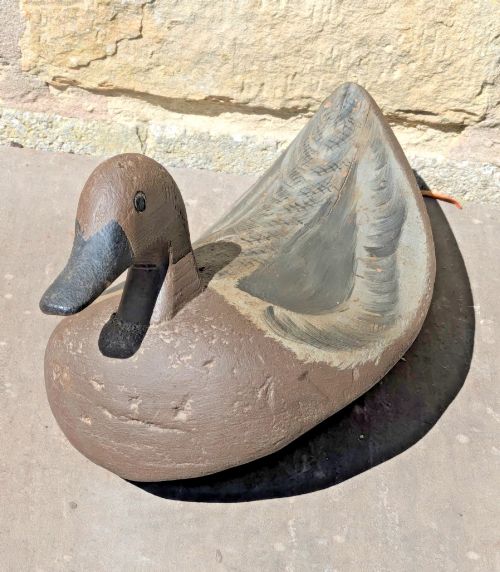
A brown carved wood sculpture encompasses a wide variety of forms, spanning centuries of global craftsmanship from European Black Forest animal groups to Chinese hardwood figures of immortals and guardians. When exploring this selection, buyers frequently encounter 18th and 19th-century works, including religious panels, decoy ducks, and pedestals.
The objects vary from small, intricate netsukes and bookends to monumental guardian figures and life-size saints. European pieces often draw on Gothic Revival or Baroque traditions, while Asian works utilise dense hardwoods to portray Daoist deities and wildlife with striking detail.
How they were made
Carvers shaped these pieces from timber such as oak, walnut, boxwood, linden wood, and exotic hardwoods, frequently employing hand chisels and gouges to build depth and texture. Grain direction dictated the limits of the carving, allowing artisans to achieve fine facial expressions in saints and realistic musculature in animals.
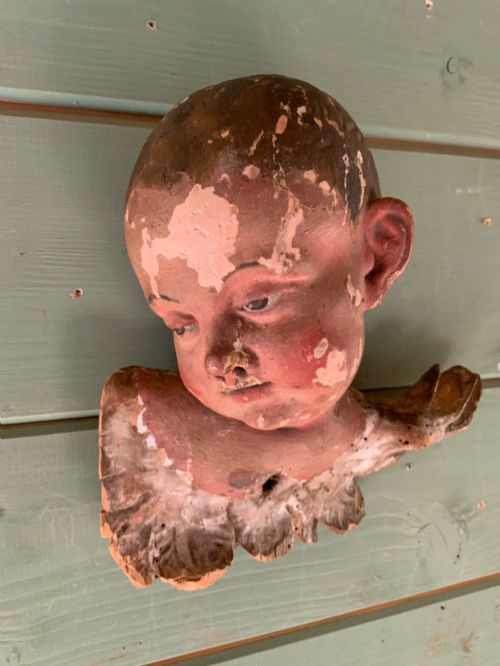
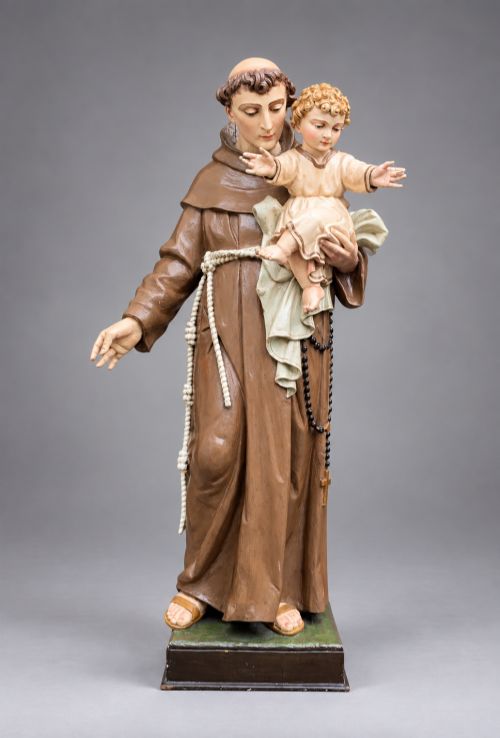
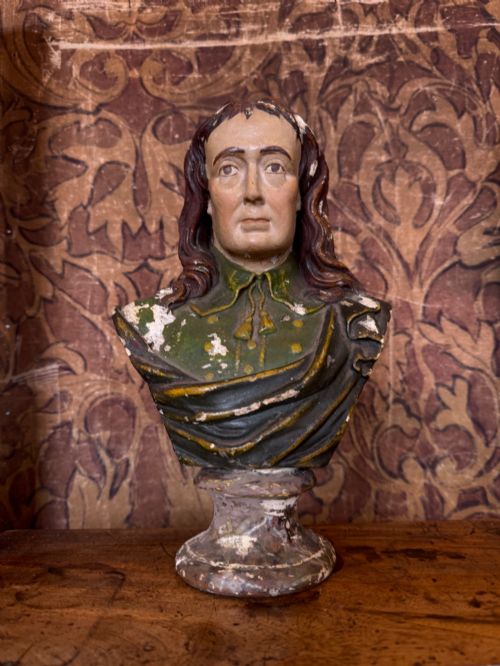
Surface treatments range from clear wax finishes that highlight the natural grain to polychrome paint and gesso applications. Certain devotional and folk art pieces incorporate hand-painted pigments over a carved wooden base to heighten realism.
The listings span multiple centuries, ranging from seventeenth-century oak panels to twentieth-century folk art decoys.
What varies in quality
The distinction between ordinary and exceptional carving lies in the precision of the toolwork and the animation of the subject. Master carvers captured movement, fabric folds, and anatomical accuracy with fluidity, whereas lesser pieces appear stiff and lack depth.
The choice of medium also dictates distinction, as dense hardwoods and finely grained boxwood permitted sharper, more enduring detail than coarser timbers. Original surfaces, retainable patination, and documented signatures further elevate the standing of a piece.
J Huggler
The Brown Carved Wood Sculpture Glossary
- Black Forest
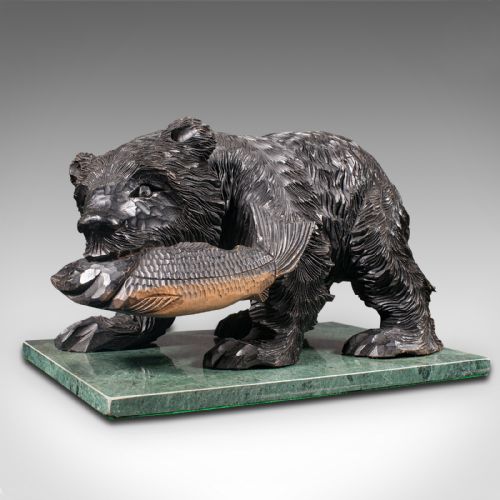
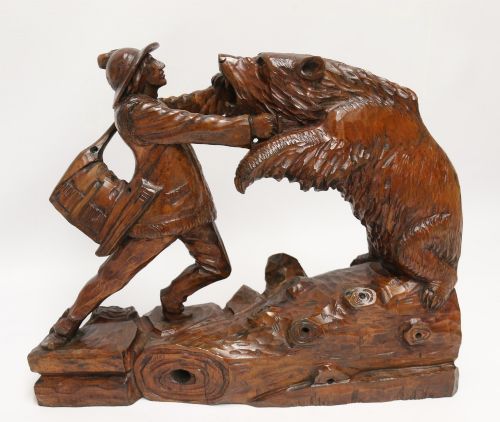
- A style of wood carving originating from the mountainous region of central Europe, famous for realistic depictions of bears, deer, and alpine wildlife. These works date predominantly from the nineteenth and early twentieth centuries.
- Polychrome
- A decoration style involving multiple colours applied to the surface of wood sculpture. This technique appears frequently on devotional figures and saints from earlier centuries.
- Hardwood
- Timber derived from broad-leaved trees, providing a dense and durable medium for intricate oriental and European carvings. Species such as walnut and oak fall into this category.
- Netsuke
- A small, intricately carved toggle traditionally used in Japan to secure small containers to kimono sashes. They are frequently fashioned from boxwood.
- Gesso
- A plaster-like mixture applied to wood surfaces to prepare them for painting or gilding. It provides a smooth base for polychrome details.
Brown Carved Wood Sculpture: Frequently Asked Questions
What is a brown carved wood sculpture?
A brown carved wood sculpture is a three-dimensional artwork shaped from timber by hand. These pieces range from decorative animal studies to religious figures and architectural panels.
Originating across various centuries and continents, they showcase distinct regional styles and woodworking traditions, using woods like oak, walnut, and exotic hardwoods.
How do I care for wooden sculptures?
Caring for these sculptures involves keeping them away from direct sunlight and sudden temperature changes. Stable indoor conditions prevent the wood from drying out or cracking.
Dusting gently with a dry, soft cloth preserves the surface patination. Avoid applying modern polishes or liquids unless the finish specifically requires conditioning.
Where were Black Forest carvings made?
Black Forest carvings were produced primarily in the mountain regions of Switzerland and Germany during the nineteenth century. Local artisans specialised in realistic animal sculptures and functional items like bookends.
These pieces gained widespread popularity among travellers and collectors for their naturalistic depiction of regional wildlife.
How can I tell the age of a carving?
Dating a wood carving involves examining the tool marks, timber type, and wear patterns on the base. Hand-cut tool marks differ significantly from modern machine-produced grooves.
Stylistic cues, period clothing on figures, and the natural ageing of the wood grain provide further clues to determine whether a piece is antique.