



Pair of Folk Art Sculptures
These pair of folk art sculptures are characterful hand-carved objects offering tactile charm and vernacular spirit for your mantelpiece.
Pair of Folk Art Sculptures
When you search for pair of folk art sculptures, you encounter diverse decorative objects shaped by hands outside the formal academic tradition, spanning the eighteenth century through to the early twentieth century. These objects emerge from English, French, Swiss, and American vernacular traditions, recording local character and regional materials.
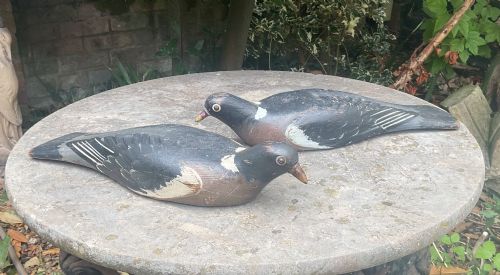
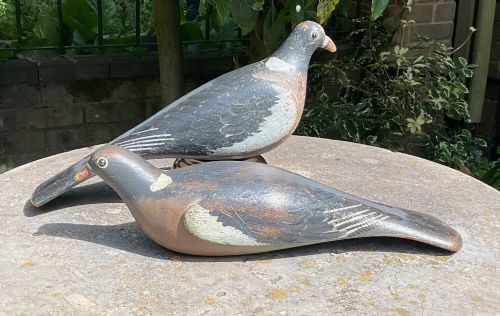
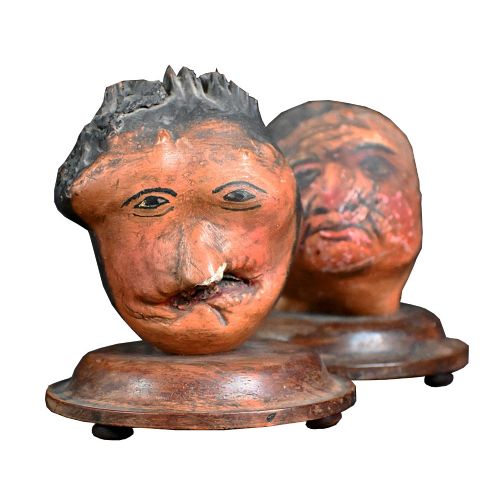
The selections available here lean heavily toward animal figures and human representations, including carved wooden decoy pigeons, carousel figures, Black Forest bears, fawns, cattle, and trade signs such as cigar store figures. Alongside these are carved limewood kings and queens, paper mache cows, and expressive heads.
Most pieces date from around nineteen hundred, reflecting a period of prolific vernacular carving in wood, painted timber, and polychrome finishes. Whether animal decoys or human figures, each pair brings a matched duality to a room, having served originally as shop signs, carousel decorations, or decorative mantel ornaments.
How they were made
Carvers shaped these sculptures predominantly from timbers such as limewood, linden wood, and general wood or timber, working directly with hand tools to establish expressive contours. The grain and natural properties of lime wood allowed artisans to achieve fine detail in subjects like Swiss Black Forest bears and fawns.
Many surfaces carry paint, polychrome wood finishes, or plain carved treatments that highlight the texture of the material. Alternative construction methods appear in specific examples, such as moulded paper mache utilised for animal figures.
Object types include decoys, trade signs, carved human figures, and animals spanning the eighteenth to twentieth centuries.
What varies in quality
Quality in these sculptures rests upon the vigour of the carving and the preservation of the original painted or polychrome surface. Stronger examples display confident tool marks and anatomical or facial character, whereas lesser pieces show static modelling and flat execution.
The integrity of the paired relationship matters greatly, as matched sets that retain their original corresponding poses or uniform wear carry greater visual harmony. Original surface patination and authentic early paint layers distinguish superior decorative objects from later or overly restored versions.
The Pair of Folk Art Sculptures Glossary
- Folk art
- Artistic work created within a traditional culture by self-taught or vernacular makers rather than academic institutions. These objects prioritise utility, character, and regional tradition over classical proportion.
- Polychrome
- Decorated or printed in several colours, frequently applied to carved wooden figures to enhance realism or decorative impact. This surface treatment appears on various animal and human sculptures in the collection.
- Decoy
- A carved or moulded figure, such as a wooden pigeon, originally utilised to attract birds during shooting. These working objects evolved into collectible decorative sculptures valued for their simple silhouettes.
- Limewood
- A pale, fine-grained timber favoured by carvers for its even texture and suitability for intricate detail work. It is particularly common in Swiss and European animal carvings.
- Trade sign
- An object displayed outside a shop or business, such as a carved American Indian figure, to advertise wares to the public. These large sculptures combine vernacular carving with commercial history.
Pair of Folk Art Sculptures: Frequently Asked Questions
Are these sculptures carved by hand?
The majority of pieces listed are hand carved from wood, timber, or limewood using traditional hand tools. Makers worked directly with the material to produce figures such as bears, fawns, and human representations.
Alternative construction methods also exist within the grouping, including moulded paper mache figures. Each technique reflects the vernacular production methods of its period.
How do I display a pair?
Matched pairs benefit from being placed together on mantelpieces, sideboards, or tabletops to maintain their visual dialogue. Their balanced forms allow them to anchor either side of a central decorative object.
Keeping them away from direct heat sources and strong sunlight protects the wood and painted or polychrome surfaces from fading and drying.
What periods do they come from?
The selection spans from the eighteenth century through the nineteenth century and into the early twentieth century. Pieces from around nineteen hundred represent a significant portion of the available animal and figurative carvings.
Earlier examples from the eighteenth century typically feature simpler wooden figures of kings and queens, while later nineteenth-century items include carousel figures and trade signs.
What is Black Forest carving?
Black Forest carving refers to Swiss and European wooden sculptures, particularly bears, fawns, and cattle, produced around the turn of the twentieth century. These pieces are celebrated for their expressive detailing of fur and anatomy in limewood.
They originated as regional souvenirs and decorative items, often signed by the workshops that produced them.