
19th Century Folk Art Carving
These pieces of 19th century folk art carving capture everyday utility and untutored domestic sculpture through idiosyncratic hand-worked timber.
19th Century Folk Art Carving
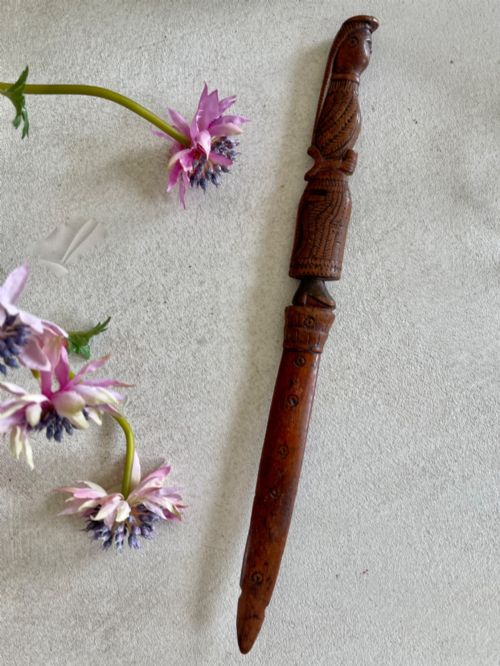
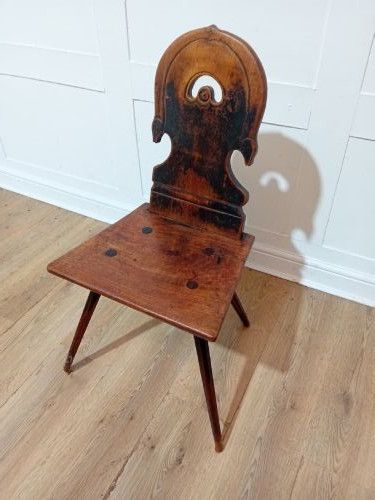
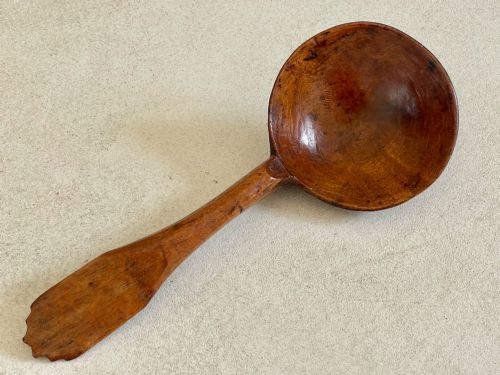
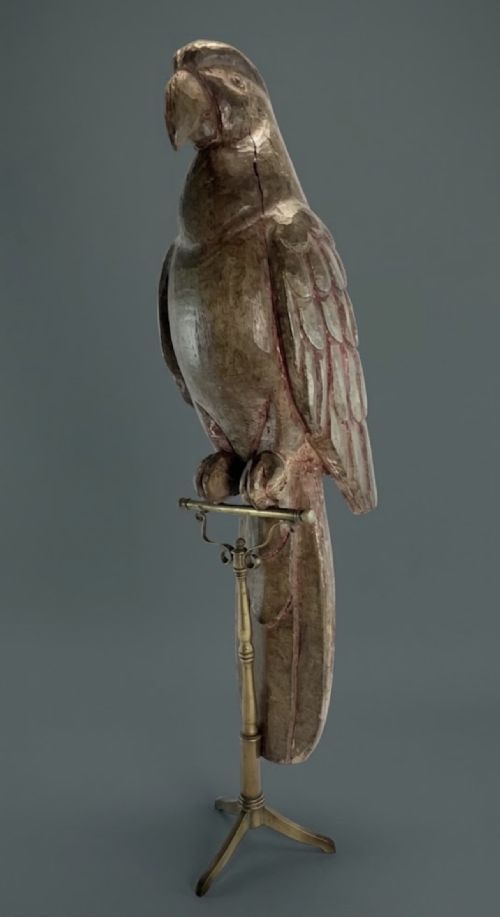
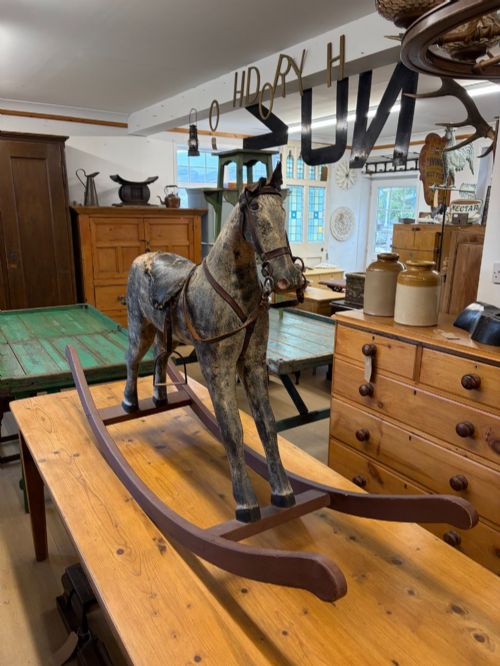
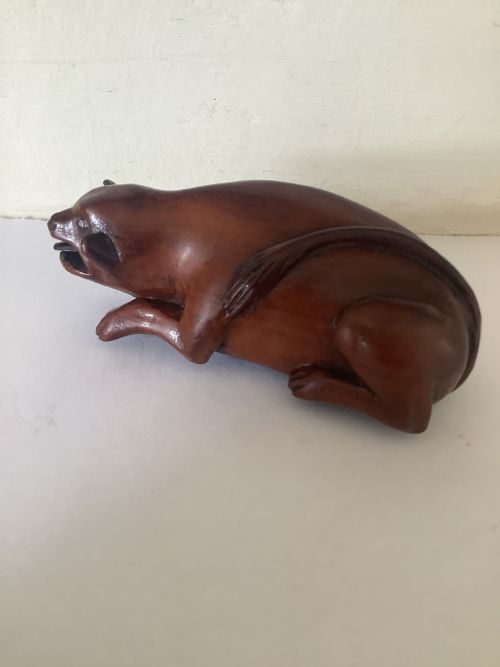
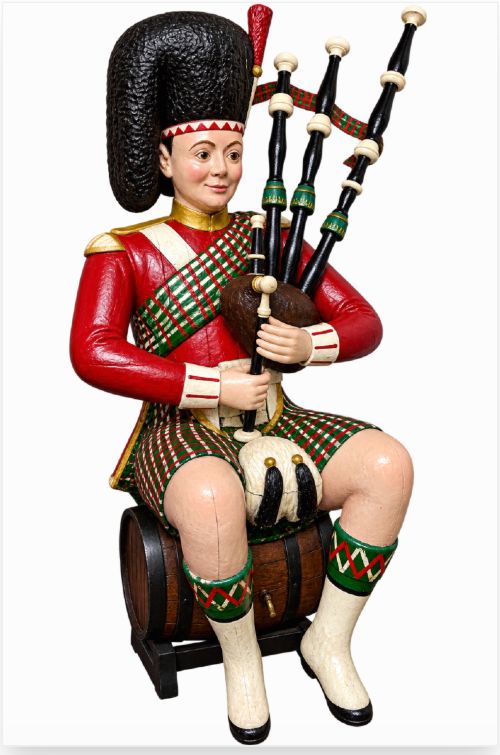
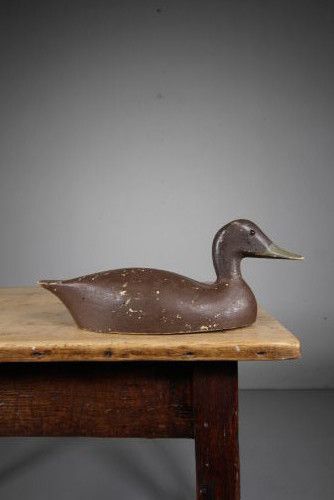
A 19th century folk art carving encompasses utilitarian treen, domestic sculpture, and personal objects shaped outside formal academic traditions. Buyers examining this page encounter practical household gear, such as knitting sheaths, snuff boxes, and nutcrackers, alongside decorative figures and animal sculptures.
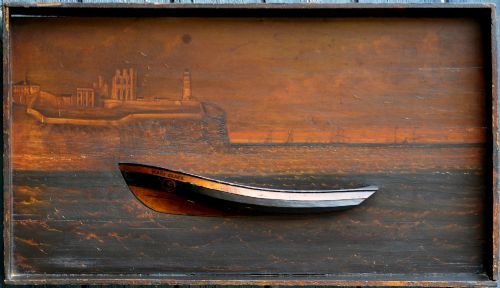
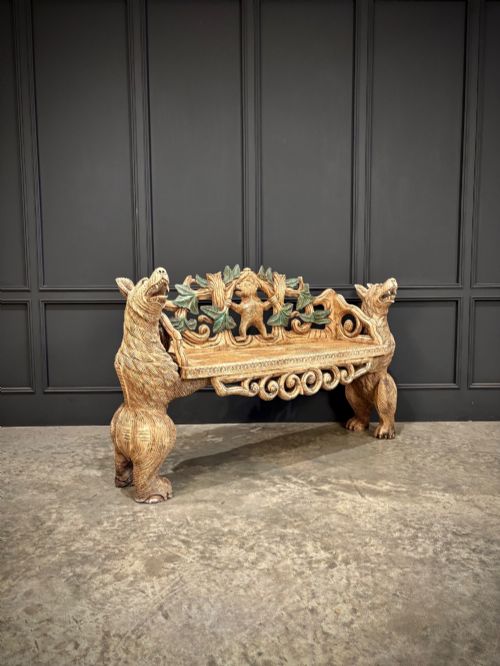
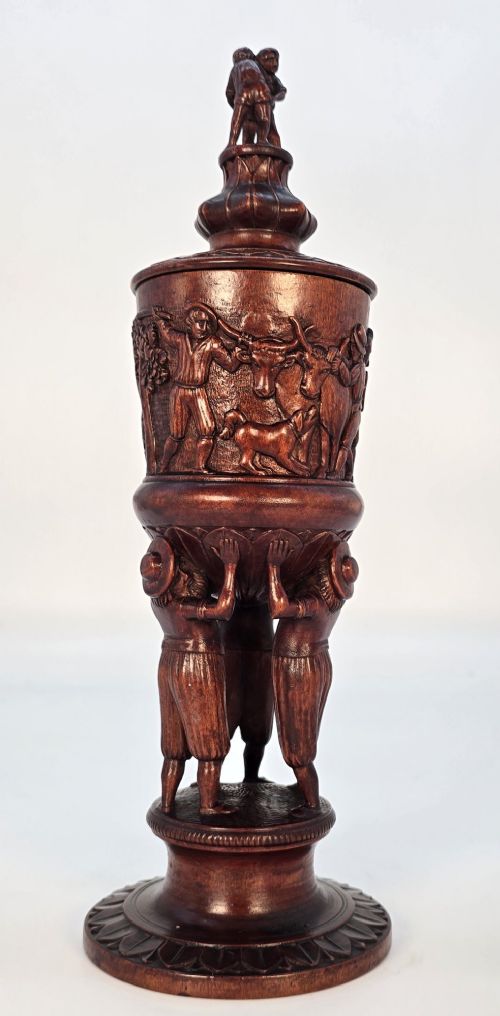
The objects frequently hail from British, Scandinavian, Swiss, and continental European workshops, reflecting regional domestic trades and rural pastimes. Common forms range from fruitwood pocket pieces to larger architectural carvings, animal figures, and framed dioramas.
Materials and construction methods
Makers utilised available timbers, relying heavily on dense hardwoods like fruitwood, walnut, and oak alongside softer woods suitable for pocket whittling. Surfaces frequently bear tool marks from gouges and knives, occasionally augmented with polychrome paint, brass fittings, bone inlay, or punchwork decoration.
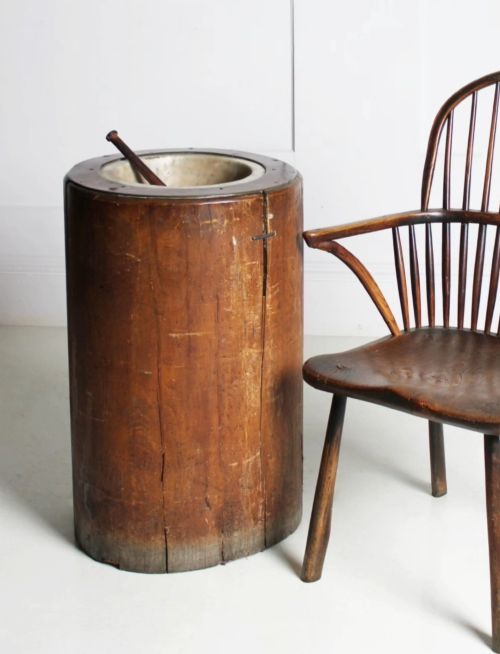
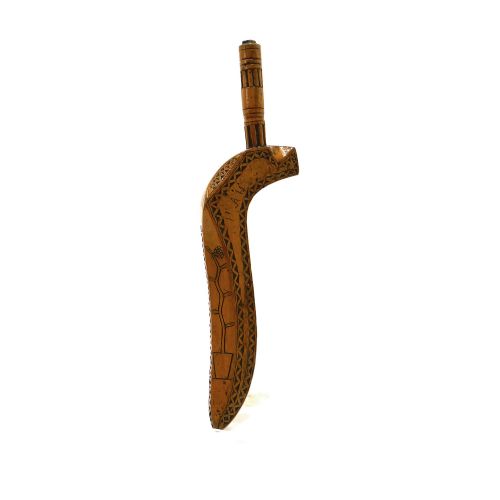
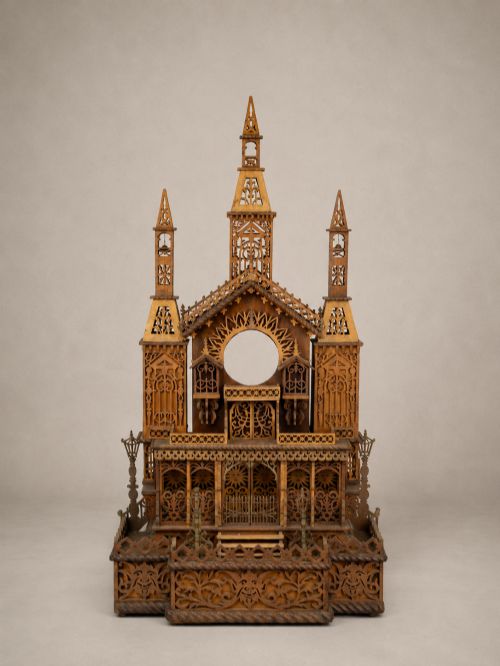
Structural assembly combines solid dugout construction with pegged joints and chip-carved surface embellishments. Decorative elements such as incised lines, pierced fretwork, and wax decoration define the utilitarian and ornamental items alike.
Listings feature utilitarian objects including knitting sheaths, snuff boxes, and nutcrackers alongside animal sculptures and dioramas.
Factors separating individual pieces
The strength of a carving depends on the confidence of the hand and the expressive weight of the naive form. Pieces showing deliberate proportion, clear tool discipline, and strong regional character stand apart from repetitive or plain execution.
Surface preservation and untouched patination dictate desirability, particularly where original paint, wax, or bone inlay remain undisturbed by modern intervention. Integrity of form, especially in complex items like novelty boxes or articulated sculptures, elevates the individual piece.
The 19th Century Folk Art Carving Glossary
- Treen
- Small handmade wooden household objects created for practical domestic use. Examples include bowls, boxes, and spoons shaped by country craftsmen.
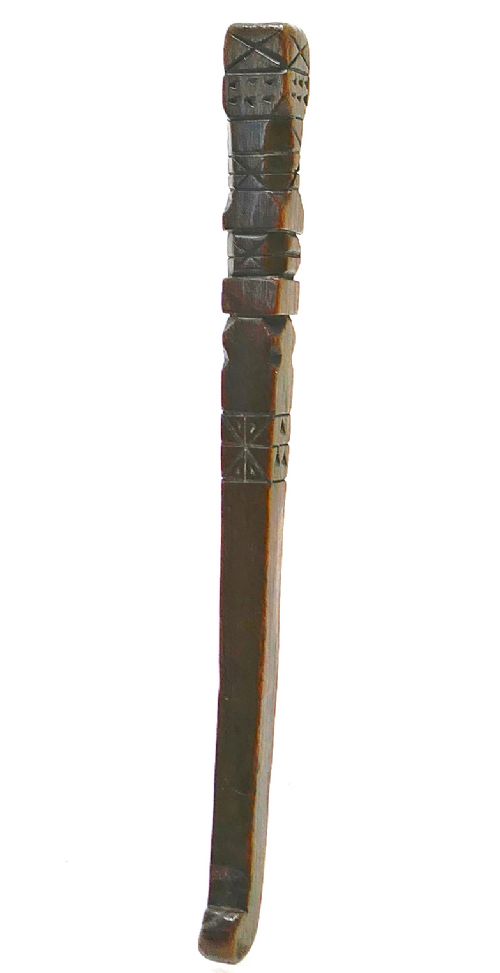
- Knitting sheath
- A pocket-worn wooden device tucked into a belt or apron string to hold a knitting needle steady. They frequently display punchwork and incised regional patterns.
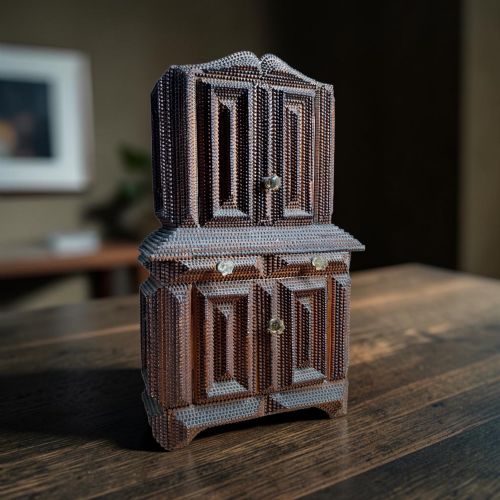
- Tramp art
- A style of chip-carving utilising scrap wood, cigar boxes, and pocket knives to build layered geometric objects. Pieces typically involve notched chip decoration.
- Mangle board
- A carved wooden board used with a roller to flatten domestic linen in Scandinavian households. They frequently feature horse head handles and detailed carving.
- Nutcracker
- A lever-operated or screw-driven household tool carved into human, animal, or grotesque figures. Walnut is a common timber for these functional sculptures.
19th Century Folk Art Carving: Frequently Asked Questions
How were treen and snuff boxes used?
Pocket boxes held ground tobacco for ingestion, while treen items served daily domestic duties in the kitchen, dairy, or fireside. Many objects carried sentimental value or served as courtship tokens.
Owners kept them close at hand in pockets or on cottage tables, wearing the timber smooth through continuous handling.
How do I care for antique wooden carvings?
Keep wooden pieces away from direct heat sources and sudden humidity shifts to prevent timber splitting. Gentle dusting with a dry cloth preserves the fragile historic surface.
Avoid modern polishes or harsh liquid cleaners that strip away the original patination accumulated over generations.
How can I tell regional styles apart?
Regional identity shows in the choice of timber, specific tool techniques, and traditional motifs unique to local cottage industries. Welsh items often feature chip-carved lovespoons, while Swiss and Black Forest pieces display deep walnut animal carving.
Scandinavian items frequently utilise painted decoration and geometric punchwork particular to northern European domestic craft.