
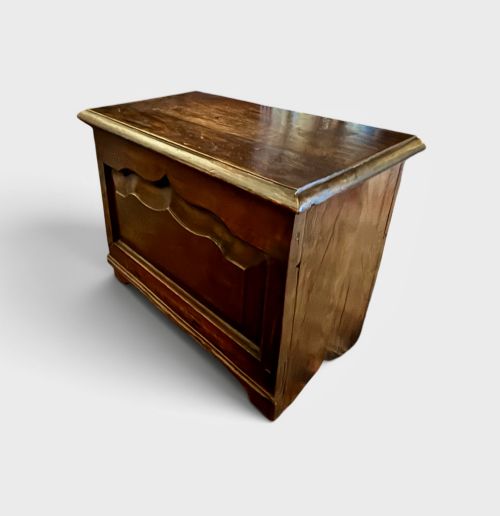
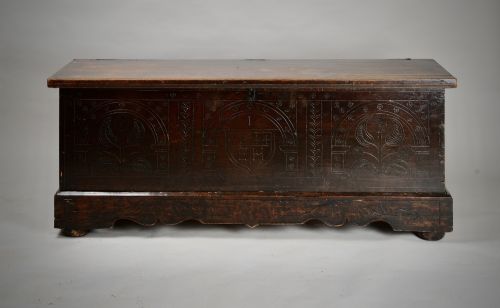
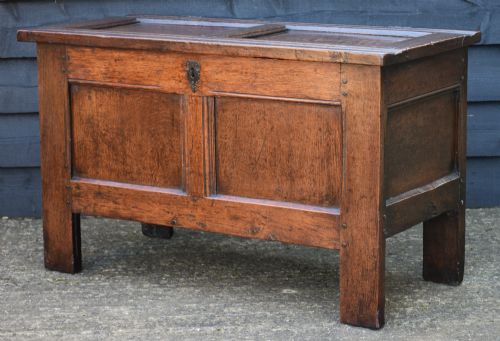
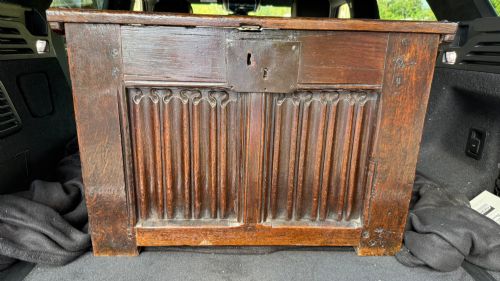
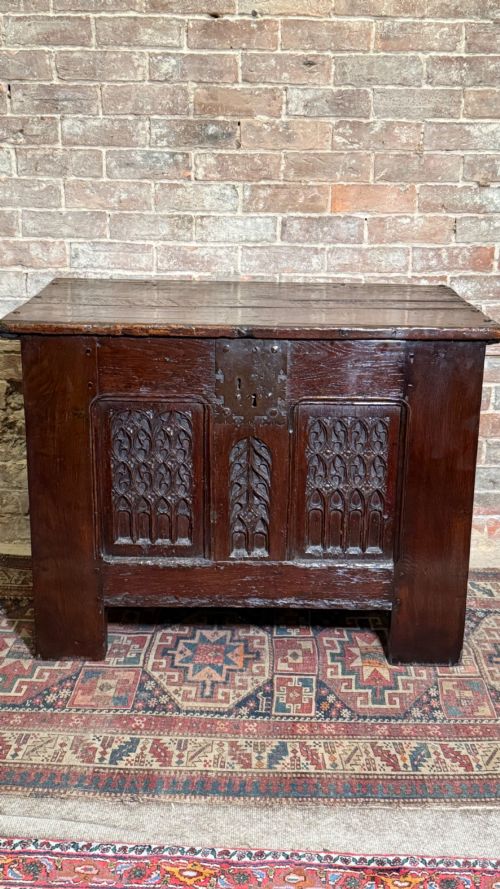
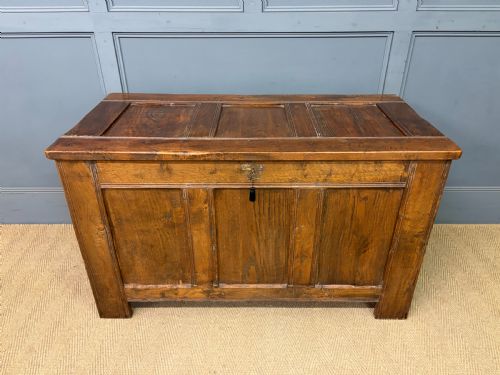
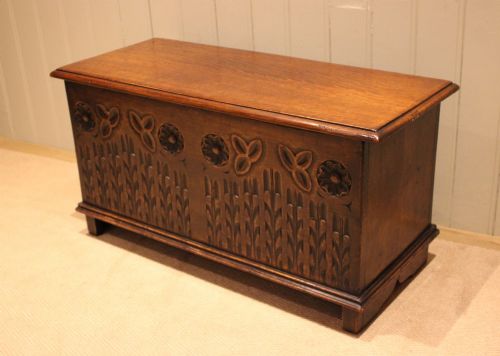
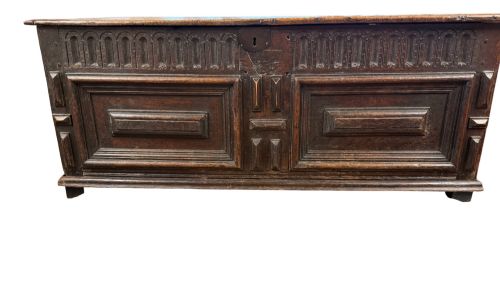
Brown Carved Blanket Box
A brown carved blanket box brings centuries of heavy timber and domestic utility directly into a modern room.
Brown Carved Blanket Box
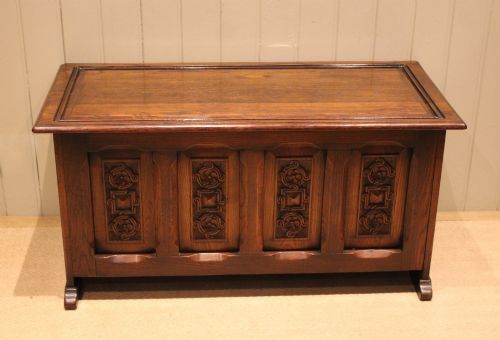
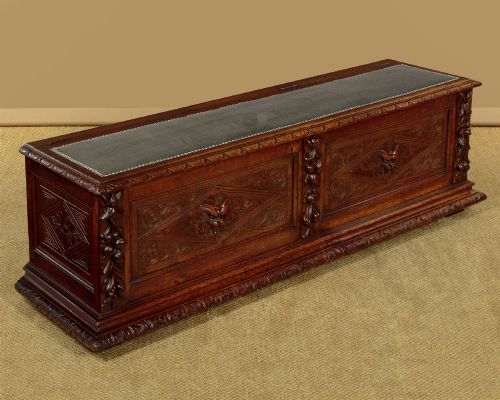
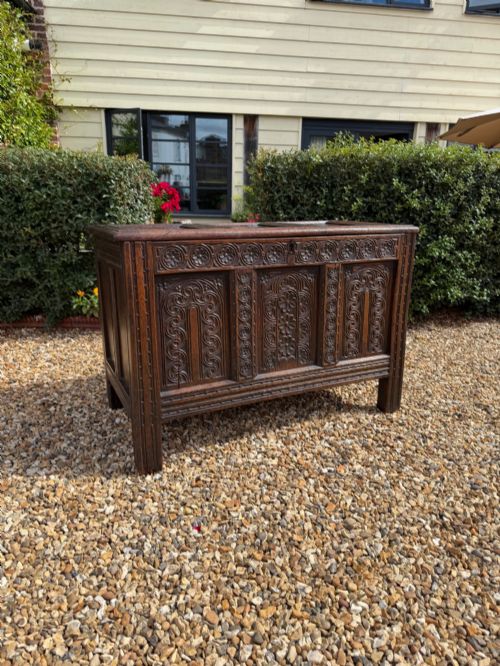
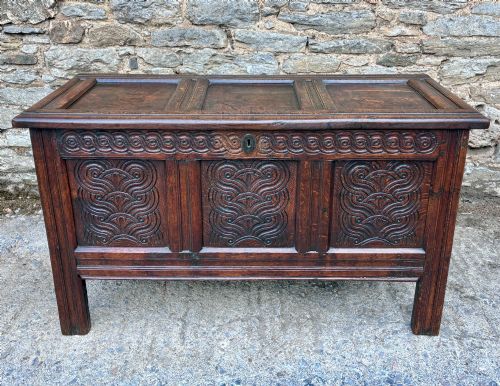
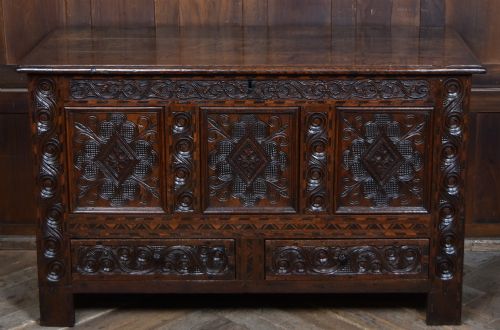
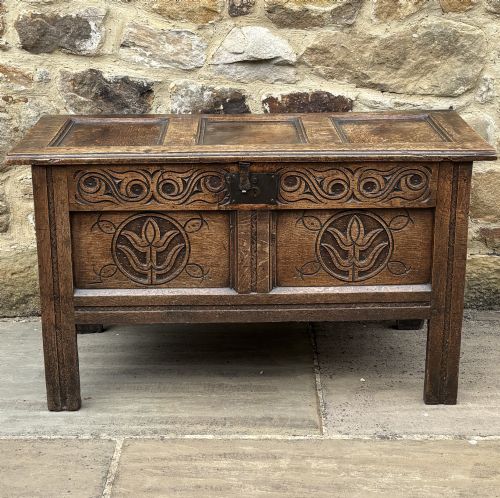
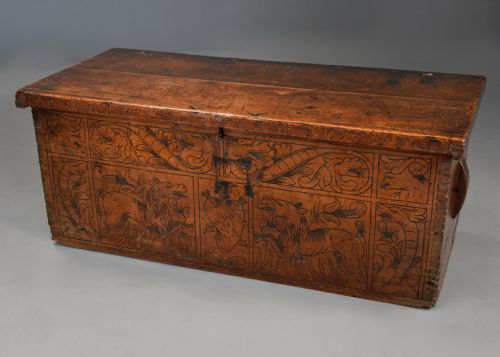
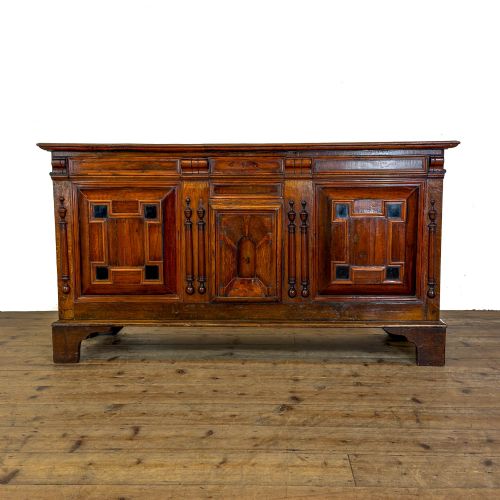
When you search for a brown carved blanket box, you are looking at substantial storage vessels designed for household textiles, valuables, and provisions. These pieces appear primarily as oak coffers and trunks spanning from the sixteenth century through the Georgian era and into later revival periods.
The items most frequently met on this page are seventeenth century oak coffers and chests exhibiting deep panel construction and carved decoration. Alongside English examples, the selection includes camphor wood trunks, teak dowry chests, and provincial French and Italian pieces.
Beyond standard blanket storage, these forms function practically as window seats, hall benches, and low tables. Their heavy lids and timber frames offer a grounded presence suited to traditional and eclectic interiors alike.
Evaluating Quality and Period Integrity
Quality in a brown carved blanket box rests upon the depth and crispness of the original carving rather than superficial surface sheen. Pieces retaining their early panel construction and period hardware command greater interest among collectors.
The proportion of timber shrinkage and the stability of the lid hinge mechanism indicate the rigour of original workshop construction. Retained original patina on domestic oak demonstrates careful custodianship across generations.
Materials range from domestic solid oak and iron to exotic teak, camphor wood, and brass.
The Brown Carved Blanket Box Glossary
- Mule chest
- A storage chest fitted with one or more drawers beneath the main compartment. This form bridges the gap between the simple coffer and the modern chest of drawers.
- Dowry chest
- A large storage trunk created to hold household linens and personal property assembled for a marriage. These pieces frequently display regional carving styles.
- Panel construction
- A method of joining wooden boards where a floating centre panel sits within a grooved frame. This technique accommodates natural wood movement without splitting the timber.
- Patina
- The surface texture and deep coloration developed by wood and metal over centuries of handling and oxidation. It serves as an indicator of age and historical use.
Brown Carved Blanket Box: Frequently Asked Questions
What is the difference between a coffer and a blanket box?
A coffer is a traditional heavy wooden chest, often panelled and carved, originally used for church plate, documents, or valuables before evolving into domestic storage. A blanket box is a functional term for any chest dedicated to holding bedding and linens.
In historical contexts, the pieces listed as coffers display earlier construction methods and firmer architectural proportions than standard domestic blanket boxes.
How do I date an antique oak chest?
Dating relies on examining the joinery, tool marks, and style of the carved decoration. Seventeenth-century examples typically show hand-split panels, pegged joints, and geometric chip carving.
Later Victorian and twentieth-century revival pieces often display machine-sawn timber, different fastener types, and softer secondary woods on the interior linings.
Can I use an antique chest as a seat?
Many of these pieces were historically utilised as benches, window seats, and hall settles alongside their primary storage function. The flat, heavy oak lids provide a stable surface for seating when paired with appropriate cushions.
Care should be taken to inspect the hinge mechanisms and lid joints to ensure they can support weight without straining the historic timber.
Where were these carved wooden chests made?
The pieces originate from diverse workshops across England, continental Europe, and international trade routes. English regional centres such as Dorset produced distinct oak carving styles during the seventeenth century.
Other origins represented include India, China, and the Swat Valley, where camphor wood and teak were utilised for dowry chests and storage cabinets.