
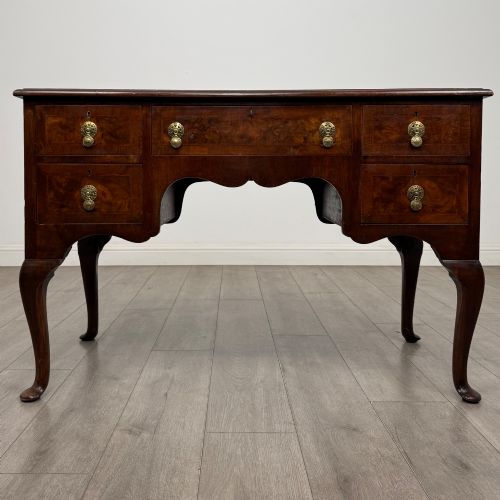
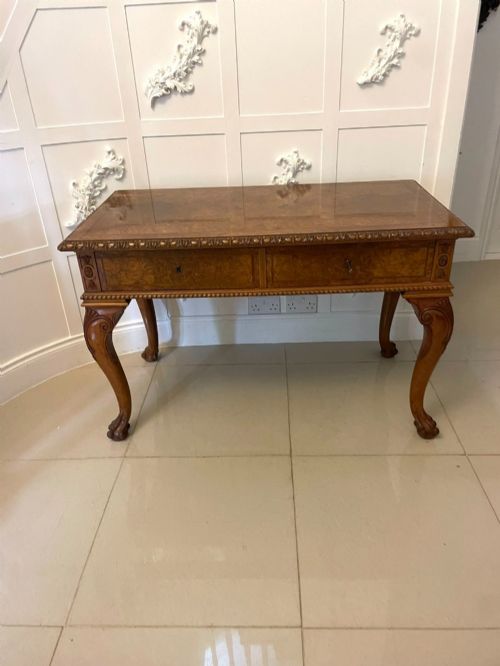
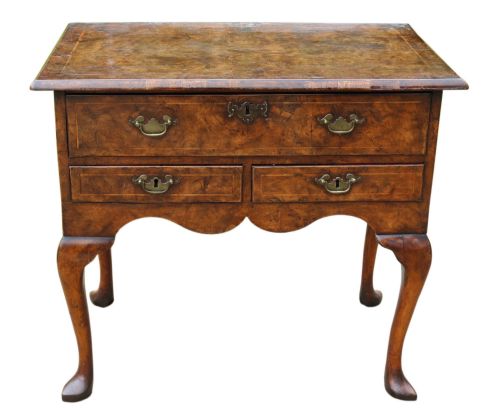
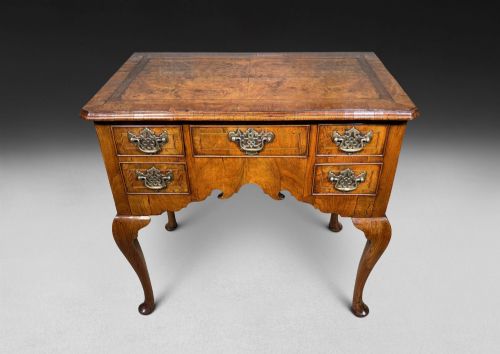


Brown Burr Wood Desk
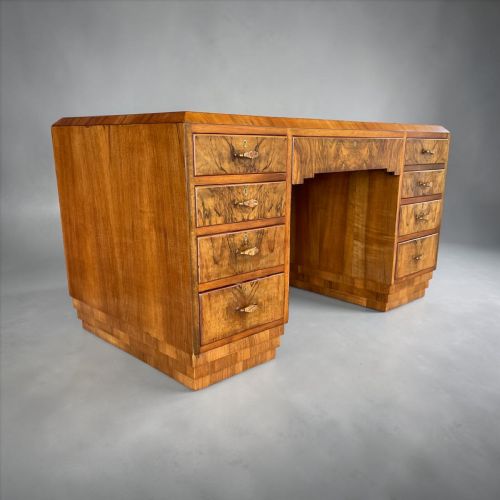
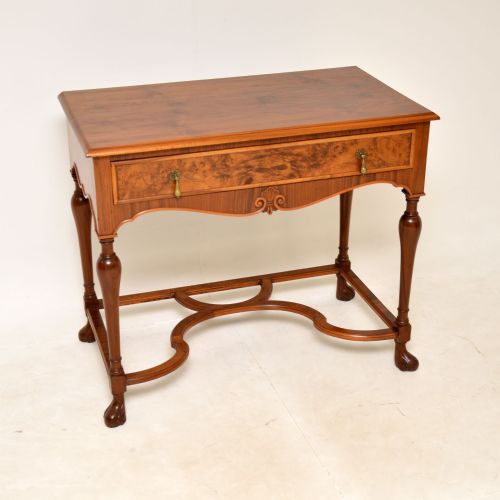
A brown burr wood desk brings rich, swirling grain and deep walnut, elm, or oak tones directly into a room.
Brown Burr Wood Desk
A brown burr wood desk covers writing tables, kneehole desks, bureaufied writing cabinets, and davenports shaped from heavily figured timber. When you search for a brown burr wood desk, you find pieces spanning the eighteenth, nineteenth, and early twentieth centuries, including Victorian, Georgian, and Art Deco interpretations.
The pieces on this page range from compact George II kneehole examples and Georgian bureaux to Victorian writing tables and twentieth-century creations. Walnut and burr walnut dominate the selection, alongside rarer appearances of burr elm, burr oak, and amboyna.
Most frequent are nineteenth-century Victorian writing tables and later revival pieces utilising rich burr veneers. These items combine practical writing surfaces with the decorative power of knotty, swirling wood growth.
How they were made
Cabinet makers selected sections of burr wood, formed where tree roots or branches grew in distorted patterns, to slice into fine decorative veneers. These dynamic veneers were then applied to solid secondary timbers such as oak or walnut using traditional animal glues.
Desk surfaces frequently incorporate inset tooled leather writing panels framed by figured wood borders. Brass handles, escutcheons, and occasional bound edges finish the construction of drawers, fall fronts, and compartments.
Pop-up Davenport desks hide secret stationery compartments that spring up when you least expect it.
What varies in quality
Quality rests in the density and visual rhythm of the burr figuring across the primary surfaces. Finer pieces display symmetrical veneer matching and careful placement of knots that flow naturally around drawers and pigeonholes.
The integrity of the underlying cabinetwork and the crispness of secondary details, such as herringbone banding, drawer linings, and original brass hardware, separate standard production from superior workshops.
W J Mansell·Whytock & Reid of Edinburgh
The Brown Burr Wood Desk Glossary
- Burr wood
- Timber harvested from tree growths containing numerous dormant buds, creating complex swirling patterns. It is sliced into veneer for furniture surfaces.
- Kneehole desk
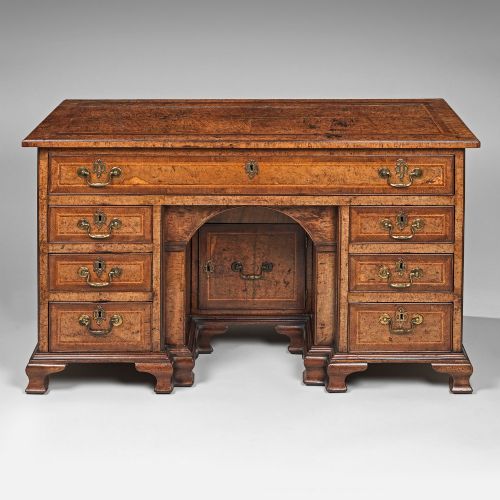
- A compact writing desk featuring a central recess for the user's legs, flanked by pedestals of small drawers. This form dates strongly to the eighteenth century.
- Davenport desk
- A small Victorian writing desk with a sloping, hinged writing surface above a set of side drawers. The top often incorporates a stationery compartment.
- Bureau
- A writing cabinet featuring a sloping lid that folds down to reveal a fitted interior of small drawers and pigeonholes. Many examples stand on bracket feet or cabriole legs.
- Veneer
- A thin layer of highly figured wood applied to a stable base timber. This technique allows makers to display costly grain patterns without using solid scarce blocks.
Brown Burr Wood Desk: Frequently Asked Questions
What is a brown burr wood desk?
A brown burr wood desk is a writing table or cabinet surfaced with decorative, knotty timber veneers. These pieces showcase the natural swirling grain of walnut, elm, or oak.
They range from eighteenth-century kneehole formats to Victorian davenports and twentieth-century revival writing tables.
How do I date a burr walnut desk?
Dating relies on construction methods, hardware, and stylistic cues from periods like the Georgian era or Victorian reign. Eighteenth-century pieces often feature solid craftsmanship and specific bureau or lowboy proportions.
Victorian and Edwardian items frequently introduce mechanical pop-up compartments, richer inlays, and different secondary woods.
How do I care for burr wood furniture?
Burr wood surfaces require protection from direct sunlight and extreme humidity changes to prevent veneer lifting. Regular dusting with a soft, dry cloth preserves the polished finish.
Avoid chemical polishes and keep leather writing inserts conditioned with appropriate balms.
What is a lowboy?
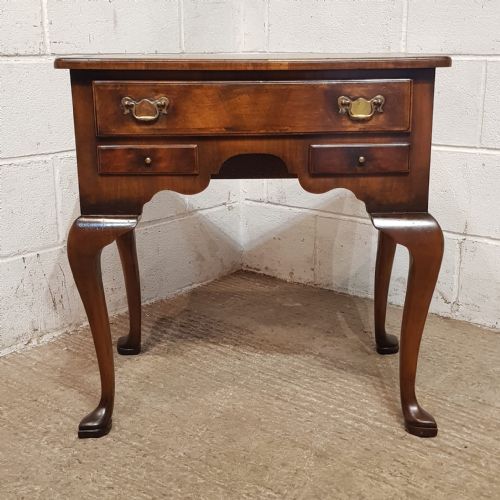
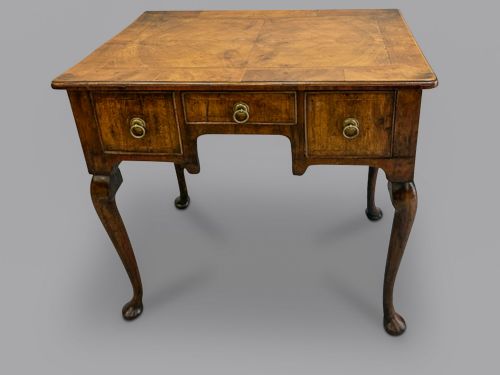
A lowboy is a small seventeenth or eighteenth-century table with one or more rows of drawers beneath the top surface. They frequently served as writing tables or dressing surfaces.
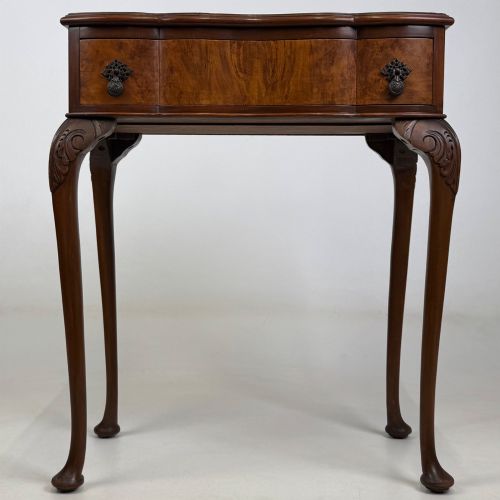
Examples appear in figured walnut and burr elm supported by slender cabriole legs.