
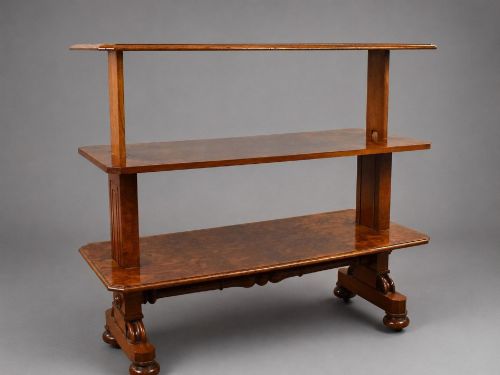
Brown Burr Walnut Sideboard
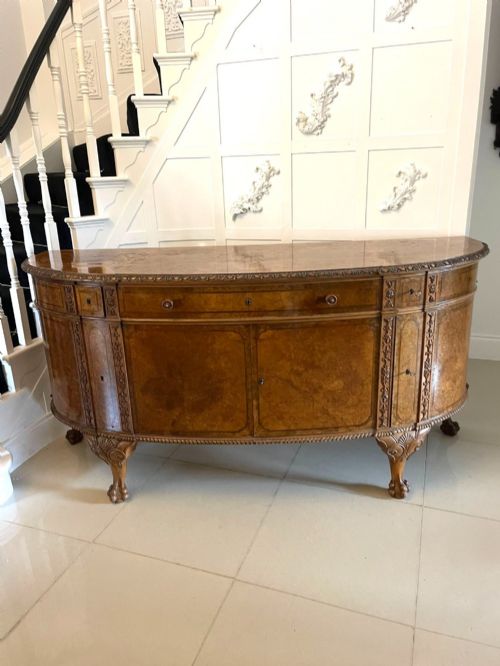
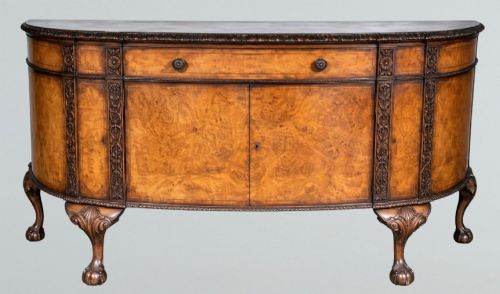
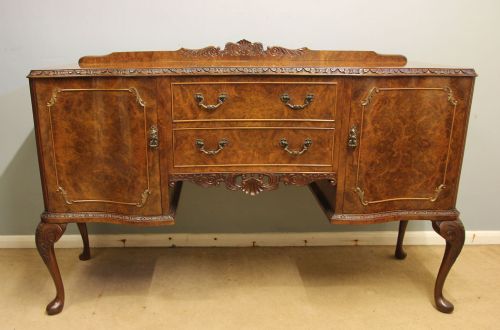
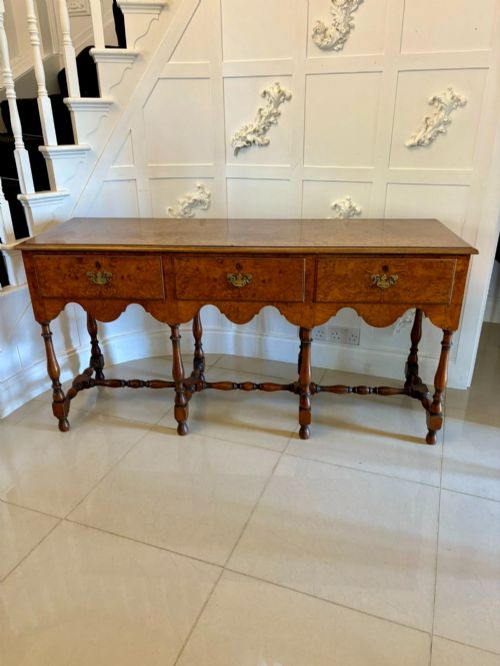
A brown burr walnut sideboard brings rich grain and substantial storage to a room, drawing the eye with its complex timber figures.
Brown Burr Walnut Sideboard
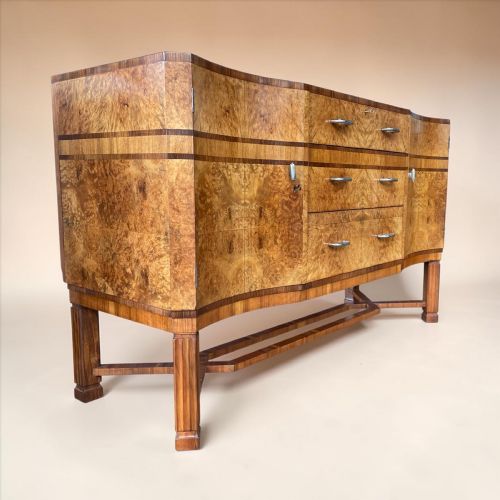
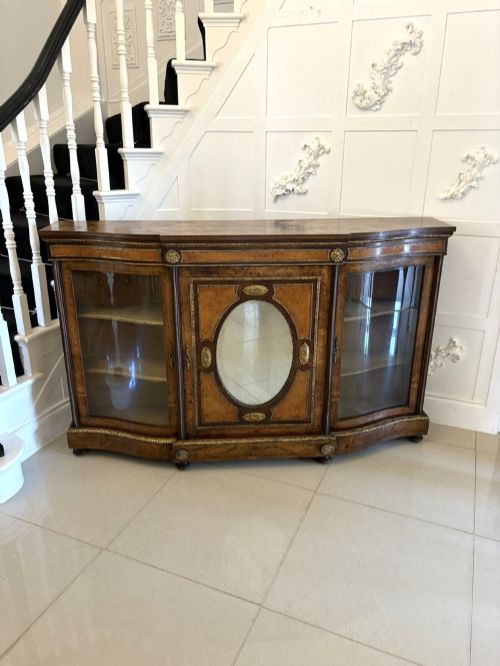
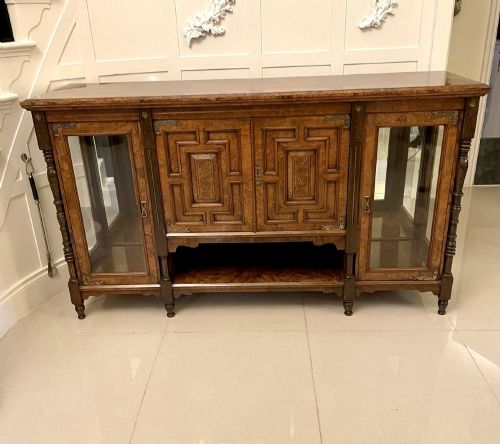
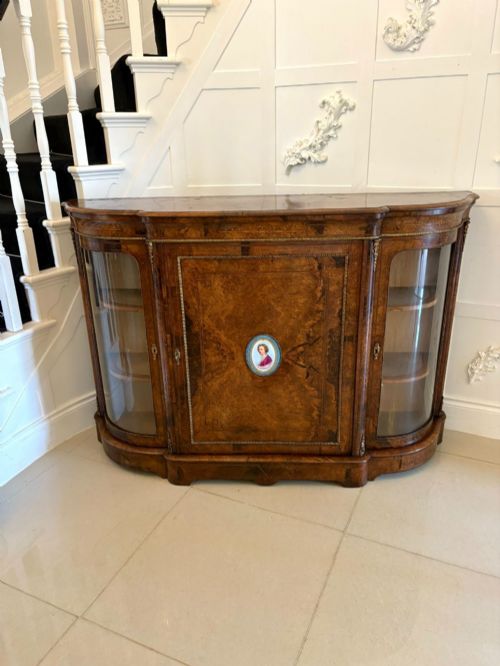
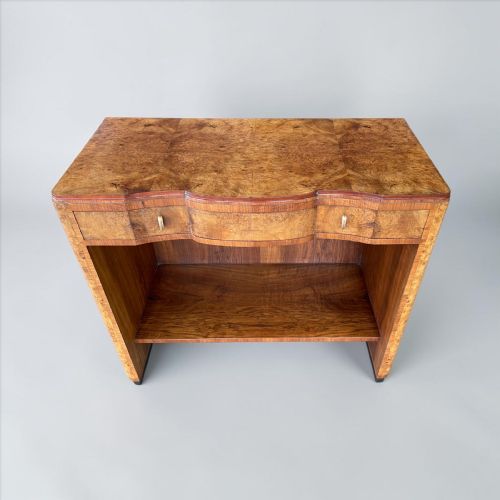
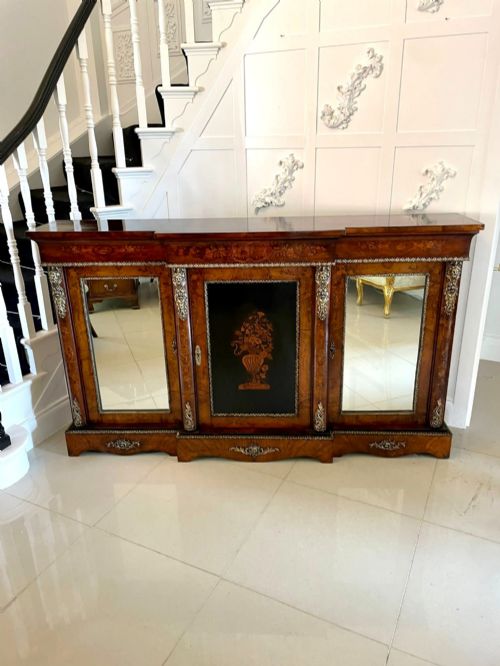
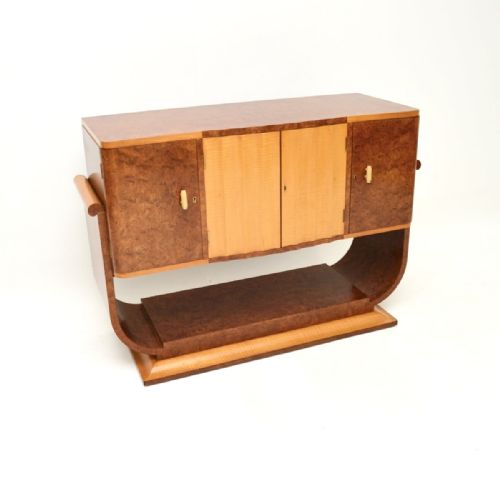
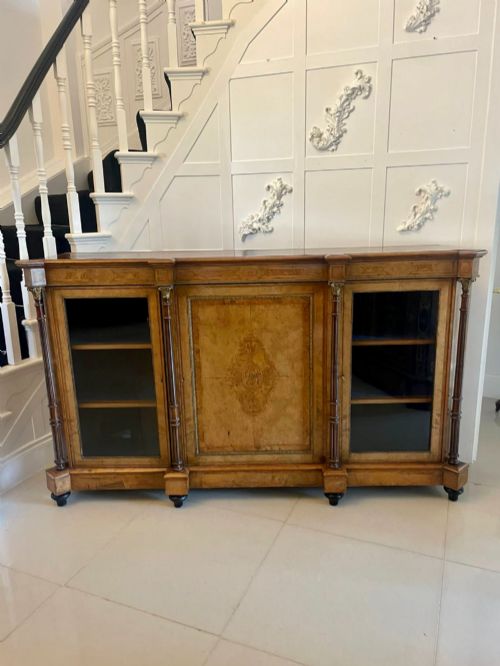
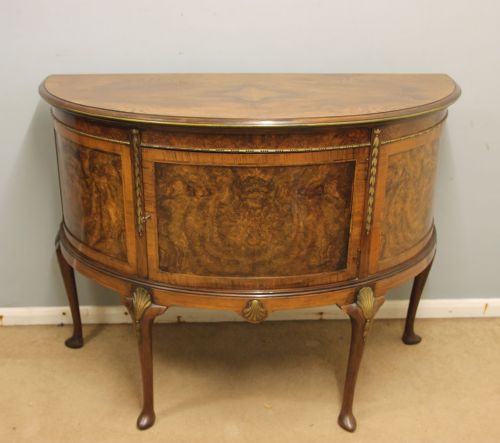
The forms vary widely depending on the decade of manufacture. You find nineteenth-century credenzas and mirror-back chiffoniers alongside twentieth-century cocktail cabinets, bow-front servers, and geometric Art Deco sideboards.
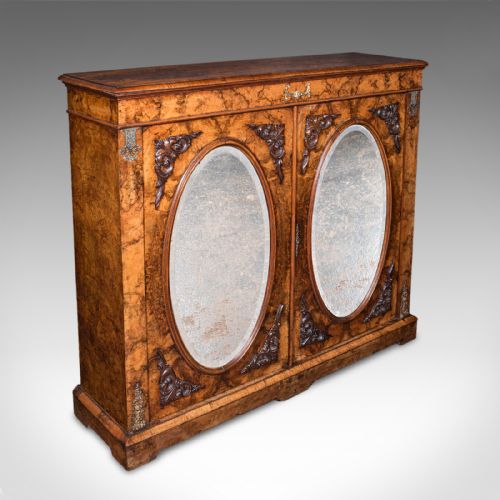
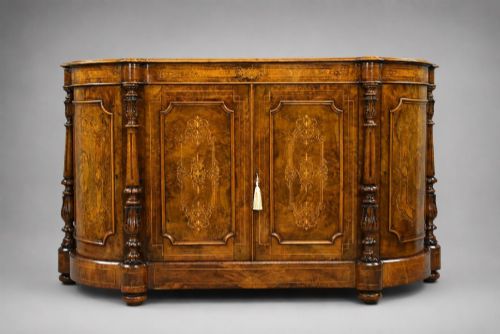
Victorian examples often incorporate elaborate marquetry, porcelain mounts, or ormolu details, whilst later pieces lean towards clean architectural lines or dramatic book-matched veneers.
Materials and construction
Cabinetmakers select burr walnut for its swirling, knotty grain patterns, applying thin veneers over solid secondary woods like mahogany or pine. This technique allows skilled hands to create symmetrical panel designs across large cabinet doors and drawer fronts.
Many pieces incorporate contrasting inlay materials such as boxwood, ebony, and sycamore to define geometric borders or floral motifs. Ormolu mounts, brass handles, glass doors, and mirrored backs complete the construction of the finer credenzas and display cabinets.
Materials appearing across the inventory include burr walnut, plain walnut, boxwood, sycamore, brass, ormolu, glass, and mirror.
Judging the standard
Quality rests upon the selection and matching of the veneer. The finest examples display continuous, balanced burr patterns across every surface, whilst lesser pieces show disjointed grain alignment or heavy patching.
Execution of secondary details dictates the tier of the piece. Crisp marquetry work, substantial cast ormolu mounts, and original bevelled mirror glass separate standard production items from exhibition-grade commissions.
Maurice Adams·Hille of London·Harry and Lou Epstein·Hamptons of Pall Mall London
The Brown Burr Walnut Sideboard Glossary
- Burr walnut
- A veneer taken from the gnarled growths on walnut trees, prized for its intricate, swirling grain patterns. It creates a highly decorative surface on cabinet doors.
- Credenza
- A low dining room cabinet or sideboard, frequently featuring glass doors or central cupboards flanked by curved compartments. Victorian versions often include elaborate marquetry.
- Marquetry
- The art of applying small pieces of veneer to form decorative patterns and pictures. Craftsmen utilise contrasting woods to achieve pictorial depth.
- Ormolu
- Gilt bronze mounts used as decorative feet, handles, or corner accents on nineteenth-century furniture. It adds a metallic gleam against dark wood.
- Book-matching
- A veneer technique where adjacent slices of timber are opened like a book to mirror each other's grain. This produces symmetrical, butterfly-like patterns across large panels.
- Chiffonier
- A compact sideboard or cabinet equipped with a raised shelf or mirror back. It served practical storage and display functions in Victorian parlours.
Brown Burr Walnut Sideboard: Frequently Asked Questions
How do I clean a burr walnut sideboard?
Dust regularly with a soft, dry cloth to prevent dirt build-up in the natural crevices of the burr grain. Apply a traditional beeswax sparingly once or twice a year to nourish the timber and maintain a soft sheen.
Avoid placing the cabinet near direct heat sources or strong sunlight, which can dry out the veneer and cause the polish to fade or craze over time.
What is the difference between a credenza and a sideboard?
A credenza typically denotes a low-profile cabinet without legs, often featuring enclosed cupboards and curved glass end compartments. Sideboards frequently stand on legs or a plinth base and may include cutlery drawers or serving surfaces.
In nineteenth-century rooms, credenzas functioned primarily for display and formal serving, whilst sideboards served practical dining room storage needs.
How do I distinguish Victorian from Art Deco pieces?
Victorian pieces exhibit ornate details such as carved ornamentation, marquetry inlay, porcelain plaques, ormolu mounts, and arched mirror backs. Their silhouettes follow historic revival styles like Queen Anne or Rococo.
Art Deco items from the nineteen-thirties rely on geometric symmetry, dramatic book-matched veneers, and streamlined silhouettes without historical revival motifs.
Can I use a cocktail cabinet as a regular sideboard?
Cocktail cabinets and drinks chests provide specialised internal storage including mirrored drop-down flaps, glass shelves, and bottle racks. Their internal layout differs from traditional drawer and cupboard sideboards.
While you can store dining linen or tableware inside them, their internal fittings remain specifically tailored for glassware and beverage storage.