
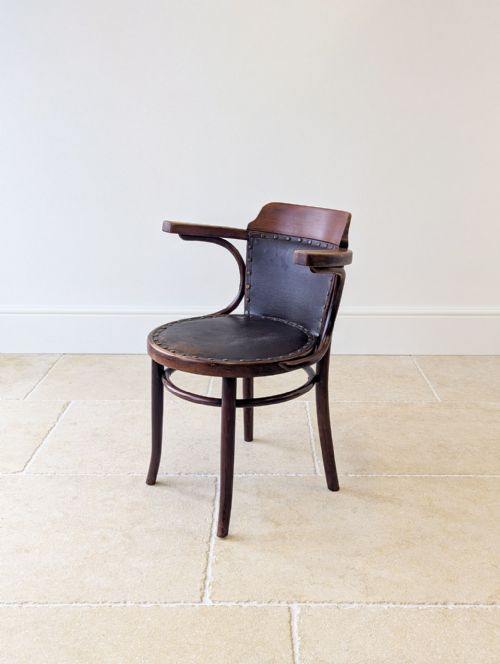
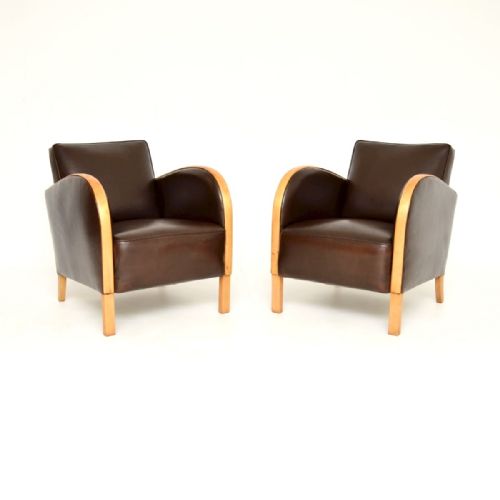
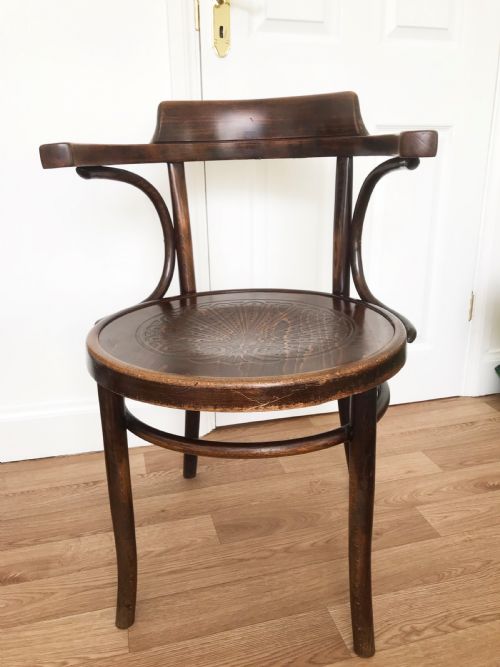


Brown Bentwood Armchair
These brown bentwood armchair pieces offer curved wooden frames and sturdy seating, combining nineteenth and twentieth century design with practical comfort.
Brown Bentwood Armchair
A brown bentwood armchair brings characteristic curved timber framing into domestic and commercial spaces, originating from nineteenth century and early twentieth century production. Buyers searching for a brown bentwood armchair encounter forms ranging from desk chairs to rocking chairs and bistro carvers.
The pieces appearing in this selection span the Victorian, Edwardian, and Art Deco periods, alongside early twentieth century and American Colonial styles. Rocking chairs and desk chairs dominate the forms, frequently bearing the distinct mark of Thonet manufacture.
Originating as practical seating for cafes and studies, these chairs rely on steam-bent timber to create continuous flowing arms and backrests. The brown finish highlights the natural grain of the underlying wood while providing a durable surface for daily use.
Construction and materials
The manufacture of these seats relies primarily on beech and beechwood, subjected to steam heat until pliable enough to bend into tight radii. Craftsmen then secure the curved components using screw fixings, internal bracing, and occasionally brass elements to ensure structural rigidity.
Upholstered variants incorporate supple leather for seat pads and back panels, while other examples feature solid timber slats or woven cane inserts. Additional materials such as satin birch, elm, ash, and yew appear in related vernacular and Windsor forms within the selection.
The selection encompasses desk chairs, rocking chairs, and tub armchairs alongside traditional Windsor seating forms.
Judging quality and execution
The standard of a bentwood frame depends on the smoothness of the curves and the absence of splitting along the grain where the steam-bending took place. Superior examples maintain structural tension without excessive metal reinforcement, keeping the original silhouette clean and balanced.
Upholstery finish and the preservation of original wooden surfaces dictate the distinction between everyday utility pieces and finer collectible specimens. The integrity of maker stamps, particularly associated with Thonet, adds historical weight to the physical condition of the timber.
Thonet·Fred Walker Rockley·Watkins & Doncaster
The Brown Bentwood Armchair Glossary
- Bentwood
- Wood shaped by applying steam heat to make it pliable, allowing manufacturers to create smooth, flowing curves without traditional joinery. This technique defines the silhouette of nineteenth century cafe chairs.
- Carver chair
- An armchair designed with open sides, frequently used at the head of a dining table or as a desk seat. These pieces offer supportive armrests integrated directly into the back frame.
- Bistro chair
- A lightweight, durable seating form originally created for European cafes and public houses. These chairs combine steam-bent components with simple round seats.
- Windsor chair
- A wooden seating form constructed with a solid sculpted seat into which the legs and back spindles are wedged directly. Examples in this category utilise timbers such as yew, ash, and elm.
Brown Bentwood Armchair: Frequently Asked Questions
What defines a bentwood armchair?
A bentwood armchair uses solid timber softened by steam and bent into continuous curved shapes for the backrest and arm components. This method produces a lightweight yet remarkably strong frame.
Makers often paired these curved wooden structures with upholstered leather pads or cane panels to increase seating comfort.
How do I identify a Thonet chair?
Thonet pieces generally feature stamped maker marks, paper labels, or distinct structural signatures pressed directly into the underside of the wooden seat frame. The precision of the steam-bent curves also points toward the master workshops.
These chairs date primarily from the nineteenth and early twentieth centuries, reflecting the patent processes developed by the firm.
Can I use these chairs daily?
These historical armchairs function well in modern interiors for sitting at a desk or relaxing in a living space. Their robust steam-bent construction was originally engineered for heavy commercial use in cafes.
Regular care of the wood finish and leather upholstery keeps the structures stable for everyday domestic environments.
How do I date an Edwardian bentwood chair?
Dating relies on stylistic markers, construction methods, and any surviving maker documentation from the period between nineteen hundred and the First World War. Edwardian examples often incorporate refined proportions and specific bolt configurations.
Comparing the timber finish and the presence of original leather or cane helps determine the manufacturing era.