


Brown Beech Armchair
A brown beech armchair brings solid character and tactile warmth to a room, ranging from robust Windsor forms to light bentwood designs.
Brown Beech Armchair
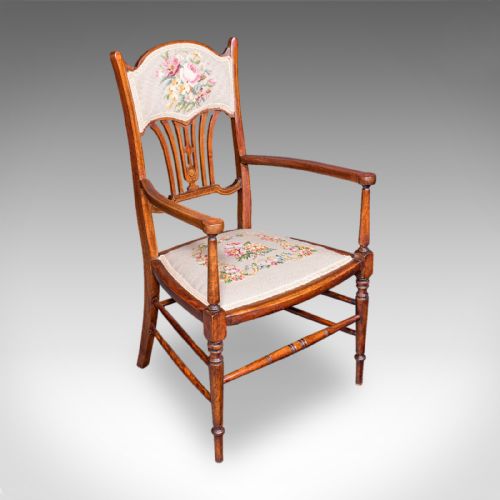
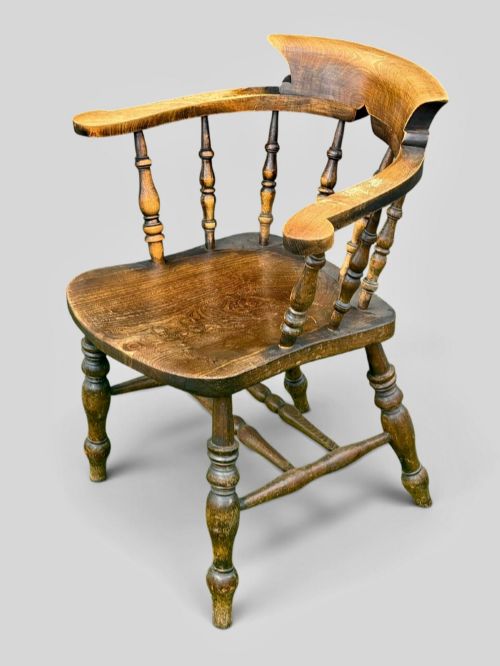
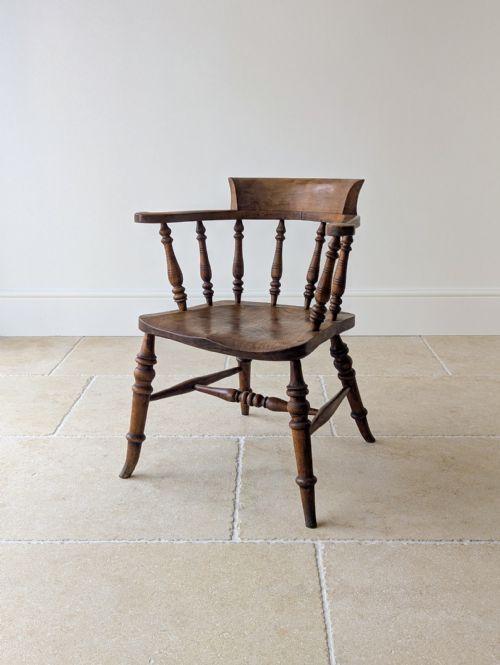
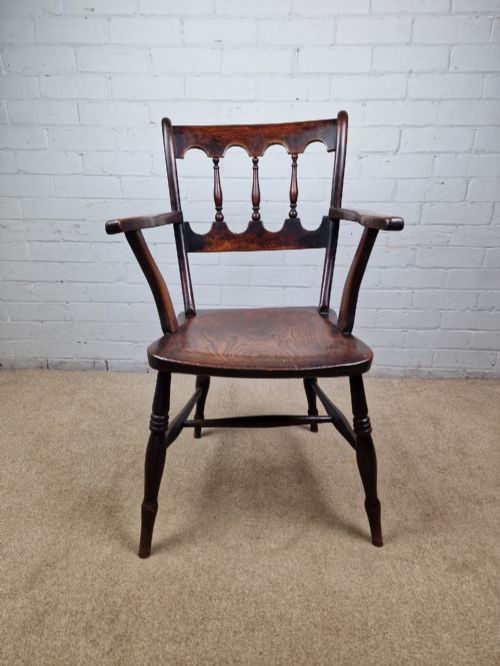
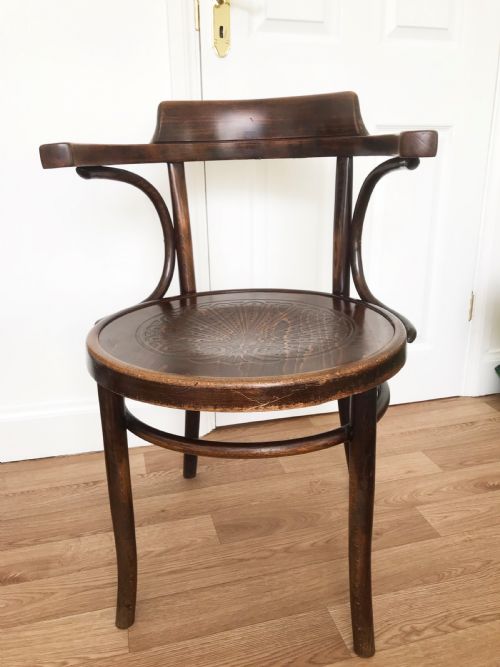
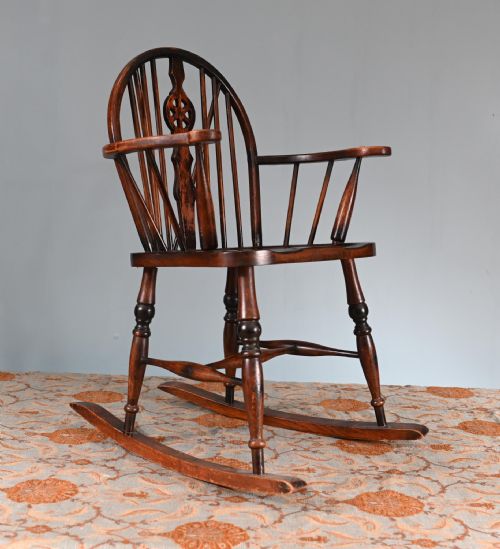
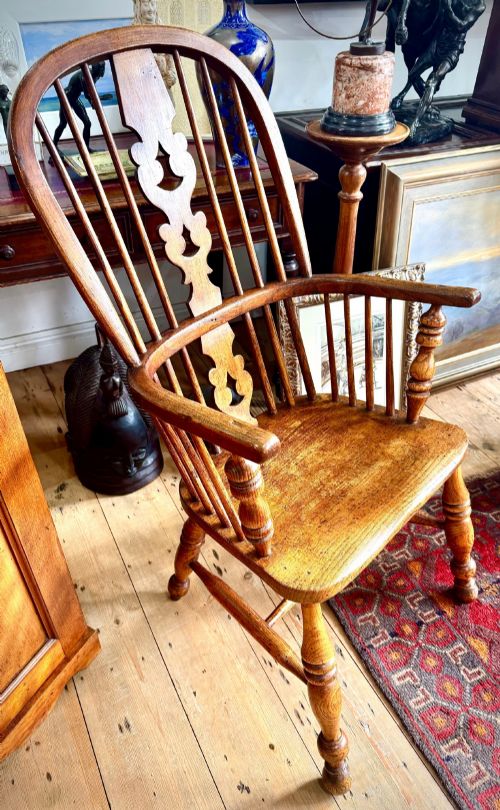
A brown beech armchair is a practical seating option shaped by nineteenth and early twentieth century cabinet makers. When you browse this selection, you encounter familiar forms such as Windsor chairs, smokers bows, captains chairs, and desk seats.
The material combination typically pairs a turned beech frame with an elm seat, creating a sturdy piece designed for daily utility. These armchairs appear in Victorian, Edwardian, and Arts and Crafts styles, reflecting domestic and workspace interiors of the era.
You will frequently meet country farmhouse armchairs and spindle back designs on this page. Each variant provides supportive armrests and a comfortable seat, whether intended for a morning room, office, or fireside.
Materials and construction methods
Makers utilised beech for its reliable turning properties, shaping legs, spindles, and uprights on a lathe. Elm provided a tough, dense timber for solid saddles and seats that resisted splitting under heavy use.
Additional timbers such as ash and oak appear in framing and stretchers to increase structural rigidity. Steam bending techniques allowed artisans to shape solid wood into curved armrests and rounded backs, particularly visible in bentwood and Windsor variations.
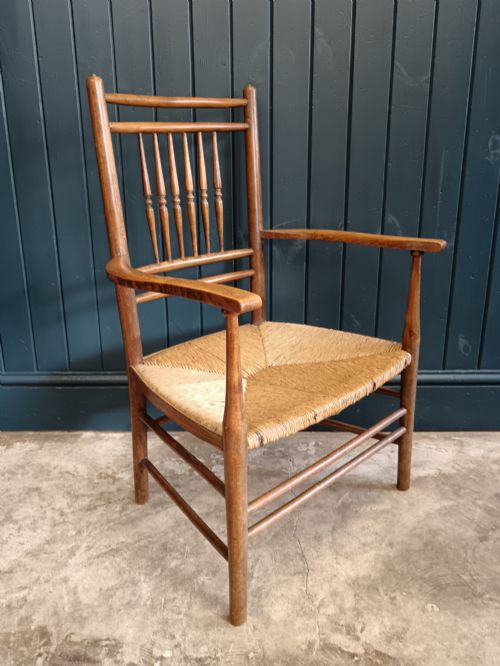
Several armchairs come equipped with woven rush seats, offering a rustic perch for tired nineteenth century readers.
Evaluating craftsmanship and integrity
The standard of a brown beech armchair depends on the crispness of the turned components and the tightness of the joints. Finer examples retain their original timber surfaces without excessive sanding or inappropriate modern sealants.
Construction details such as wedged tenon joints and well-pegged spindles separate robust vernacular pieces from weaker alternatives. The selection of figured elm for the seat plank also elevates the visual appeal of traditional country armchairs.
Thonet·Watkins and Doncaster
The Brown Beech Armchair Glossary
- Windsor chair
- A wooden chair built with a solid sculpted seat into which the legs and back spindles are directly inserted. This style provides dependable stability through sturdy pegged construction.
- Smokers bow
- A low-backed Windsor derivative with a continuous curved armrail popular in nineteenth century offices and smoking rooms. It offers compact support with turned spindles below the elbow rest.
- Bentwood
- Wood softened by steam and bent into graceful curved frames under pressure. This method defines lightweight cafe chairs and armchairs associated with Thonet production.
- Rush seat
- A seating surface woven from dried marsh rushes in a traditional pattern. This technique creates a textured, supportive platform found on Arts and Crafts chairs.
Brown Beech Armchair: Frequently Asked Questions
What is a smoker's bow armchair?
A smoker's bow is a sturdy armchair featuring a low, rounded back rail and turned spindles above a solid wooden seat. These chairs were widely used in Victorian offices, libraries, and smoking rooms for comfortable upright sitting.
They combine the construction methods of Windsor chairs with a more compact frame. The curved armrest offers steady support while keeping the profile modest.
How do I identify a Windsor chair?
A Windsor chair is distinguished by its thick, shaped wooden seat that holds the legs and back components directly. Instead of a separate frame holding upholstery, the structural strength relies on turned spindles fitted into drilled holes.
Various regional patterns emerged during the nineteenth century, including wheelbacks, lath backs, and comb backs. Each variation uses turned beech for the framework alongside an elm seat base.
Where did bentwood armchairs originate?
Bentwood armchairs developed through nineteenth century Austrian innovations in steam-bending solid timber. This technique allowed manufacturers to produce curved chair components without complicated joinery.
The resulting armchairs are remarkably lightweight yet durable. They became staples of European cafe culture and domestic interiors by the early twentieth century.
How do I care for antique beech furniture?
Antique beech furniture benefits from regular dusting with a soft cloth and occasional treatment with suitable beeswax. Avoiding direct sunlight and sudden temperature changes helps preserve the timber and finish.
Maintaining stable humidity in the room prevents the wooden joints from drying out or loosening over time. Gentle handling ensures the original patina remains intact.