
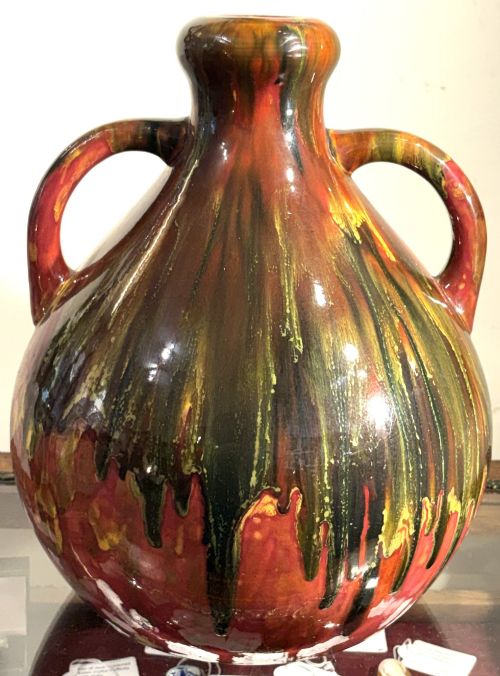
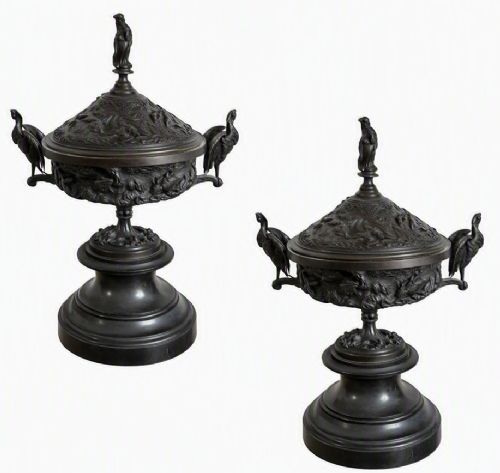
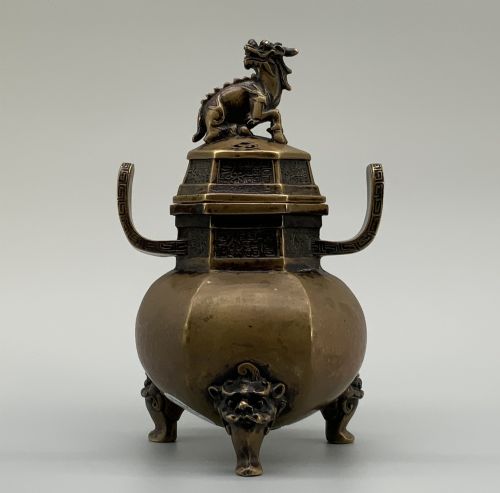
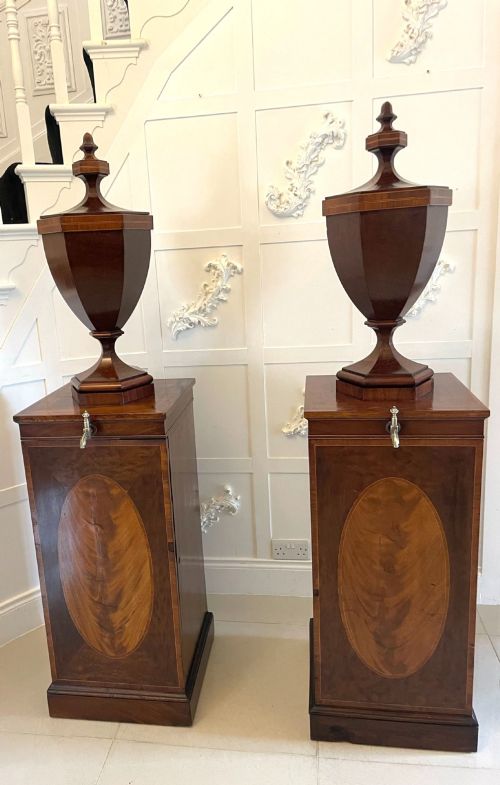

Brown Urns
Brown antique urns are classically proportioned vessel forms spanning the Georgian, Victorian, and Edwardian eras, offering sculptural presence to an interior.
Brown Urns
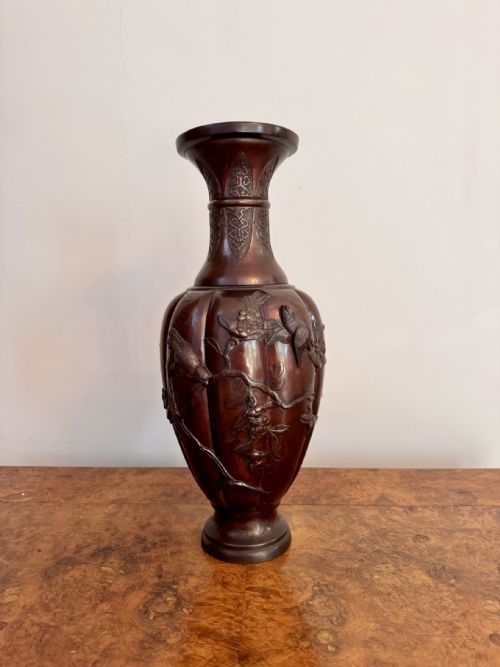
When you search for brown antique urns, you encounter a selection spanning the 18th century through the Edwardian period, incorporating mahogany, bronze, walnut, and terracotta.
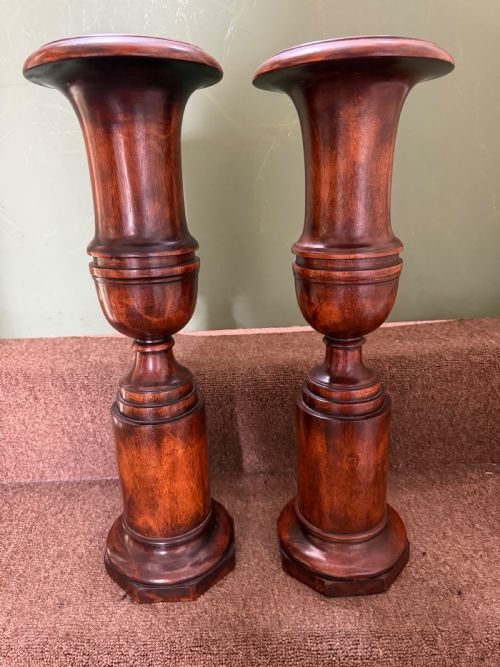
The objects take various forms including campana shapes, decorative vessels, wine containers, and specialised stands from Georgian, Victorian, and Edwardian workshops.
You are most likely to meet mahogany wine urns, turned walnut vases, and bronze or copper vessels displaying Neoclassical and Sheraton Revival influences.
How they were made
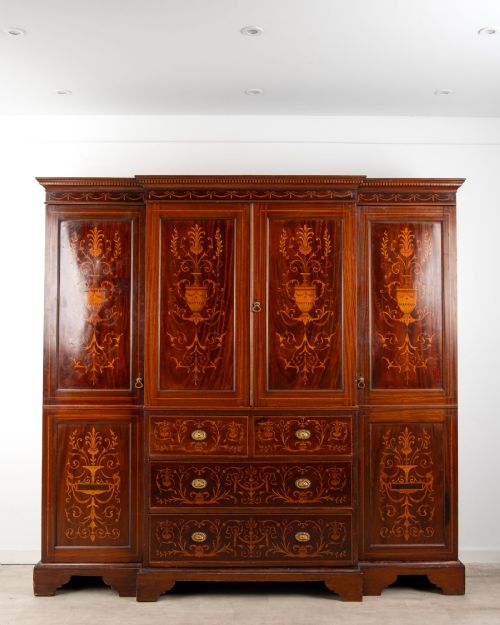
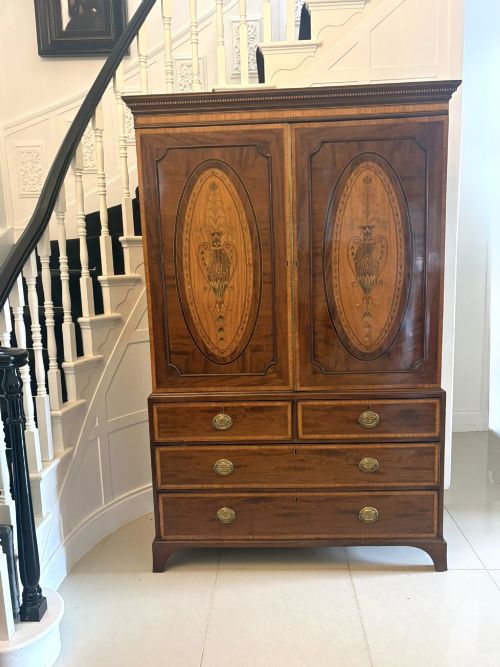
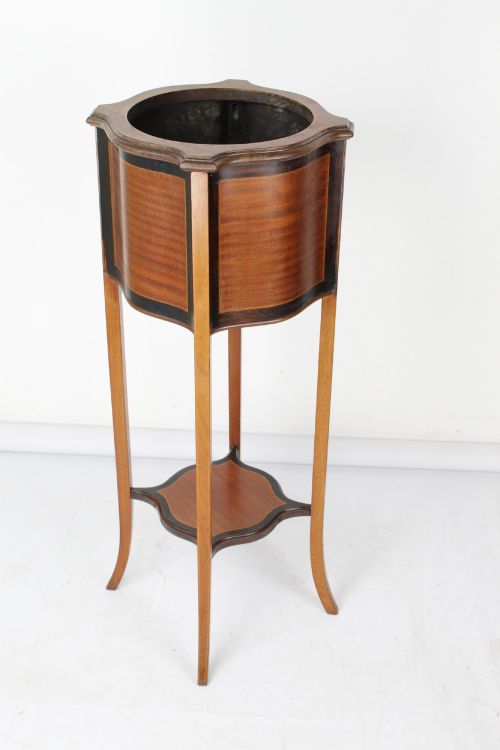
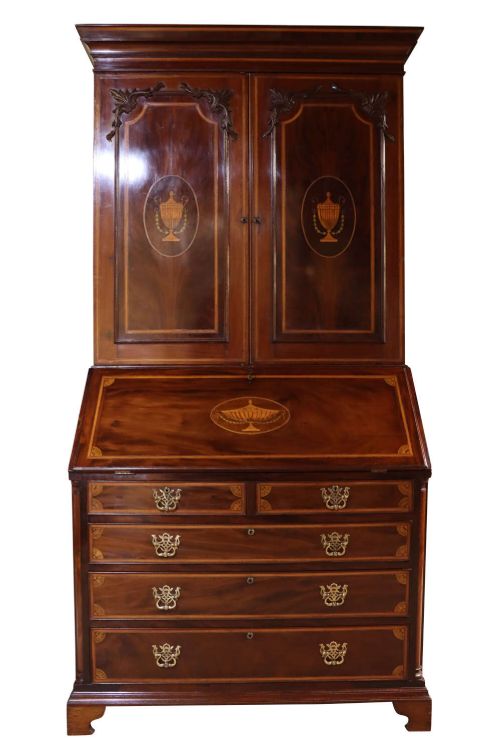
Cabinet makers utilised dense hardwoods such as mahogany and satinwood, applying intricate marquetry and inlay work to surfaces.
Foundries cast bronze and copper, often employing repoussé techniques or patination to achieve deep brown tones.
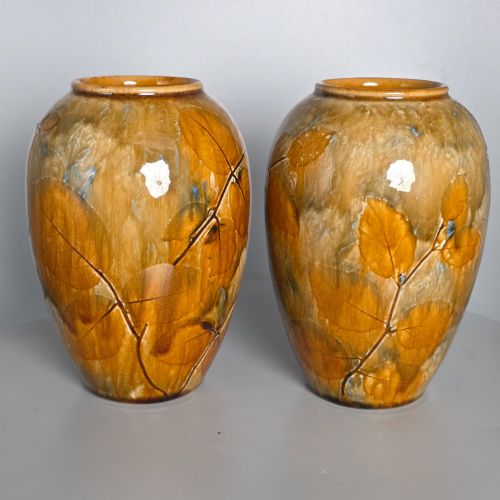
Potters shaped terracotta, stoneware, and glazed ceramics, sometimes adding hand-carved details or applied cabochons.
What varies in quality
The refinement of the carving and the precision of the marquetry inlay distinguish standard production from exceptional examples.
The choice of raw material, such as figured mahogany or heavy cast bronze, dictates the permanence and weight of the piece.
Original surfaces and patination earned through age outweigh heavily restored or overly refinished examples.
Royal Doulton·Bretby Pottery·Boch Freres
The Brown Urns Glossary
- Campana urn
- A bell-shaped vessel form originating in classical antiquity, often mounted on a square pedestal base.
- Marquetry
- Decorative veneer patterns applied to furniture surfaces using thin slices of wood like satinwood and boxwood.
- Repoussé
- Metalworking technique where a design is hammered into relief from the reverse side of copper or bronze.
- Sheraton Revival
- A late 19th-century design movement inspired by the lighter neoclassical furniture forms of the Georgian era.
- Pedestal
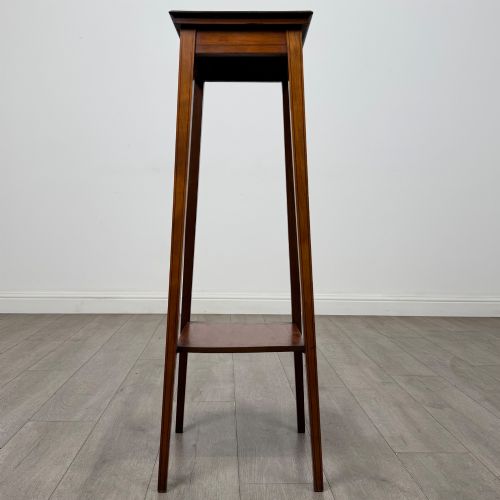
- A supporting column or base designed to elevate a vase, urn, or decorative object.
Brown Urns: Frequently Asked Questions
Where were these urns displayed?
These vessels historically occupied prominent positions on sideboards, entrance halls, and dedicated stands within period rooms.
Today, they function as sculptural focal points on tables or floors in contemporary living spaces.
How do I date an urn?
Dating relies on identifying the underlying wood species, casting techniques, and stylistic markers such as Neoclassical or Edwardian motifs.
Comparing construction methods with documented pieces from the 18th, 19th, and early 20th centuries clarifies the origin.
Can bronze urns be polished?
Bronze and copper surfaces develop an aged patina over decades that owners generally preserve rather than strip away.
Gentle dusting maintains the finish without removing the historical oxidation that defines the brown tone.
Are wooden urns lined?
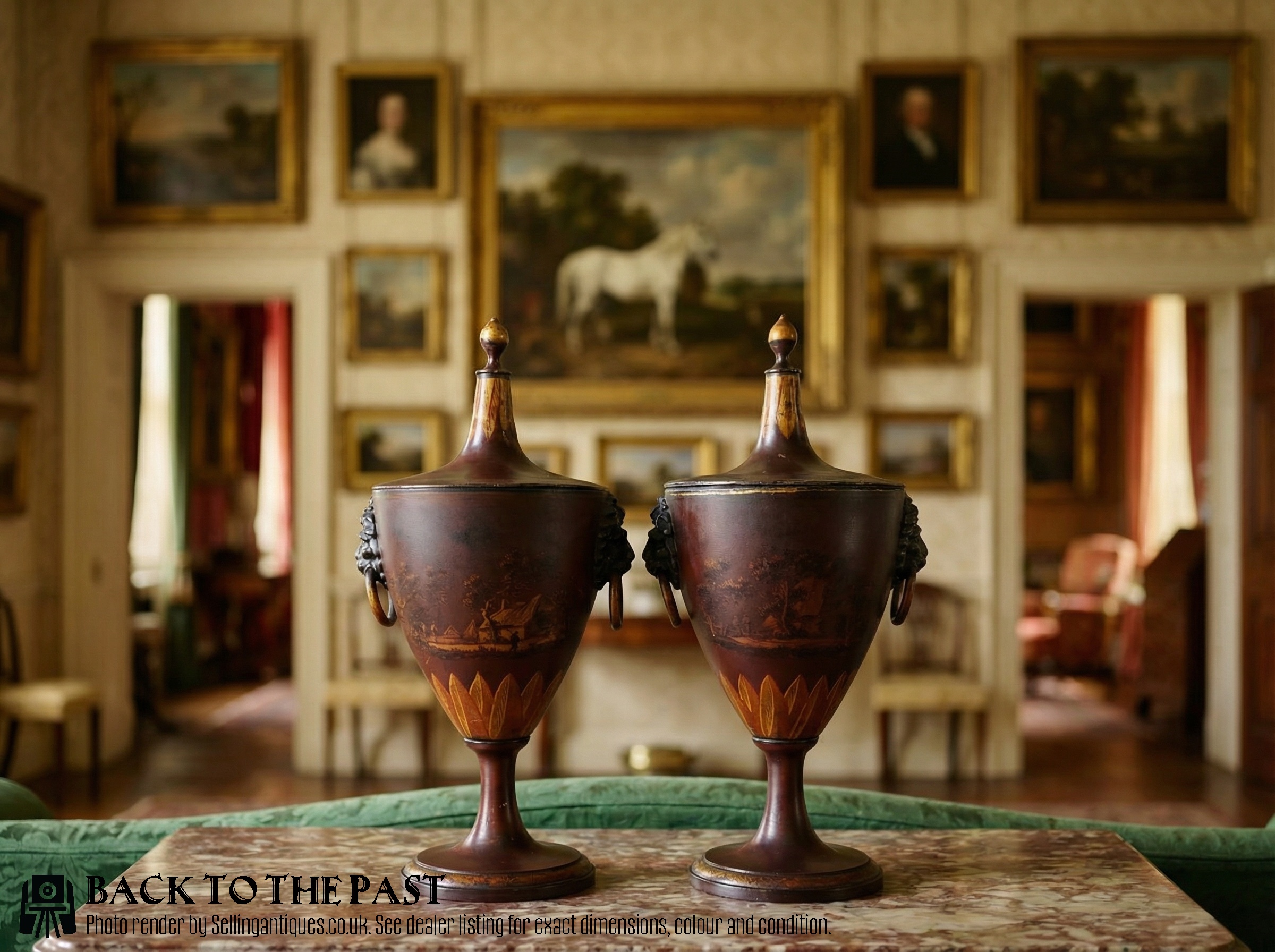
Wooden wine urns from the Georgian period often featured lead or metal linings to hold ice and bottles securely.
Over time, many linings were removed or altered depending on how previous owners utilised the vessel.