
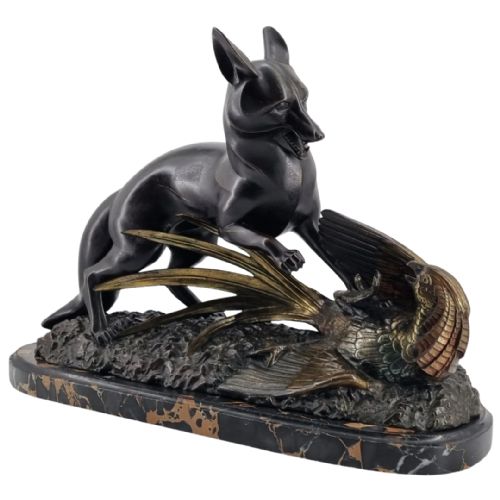


Bronze Wildlife Statuette
These bronze wildlife statuettes capture creatures in heavy metal, offering a tangible piece of natural history for your mantelpiece.
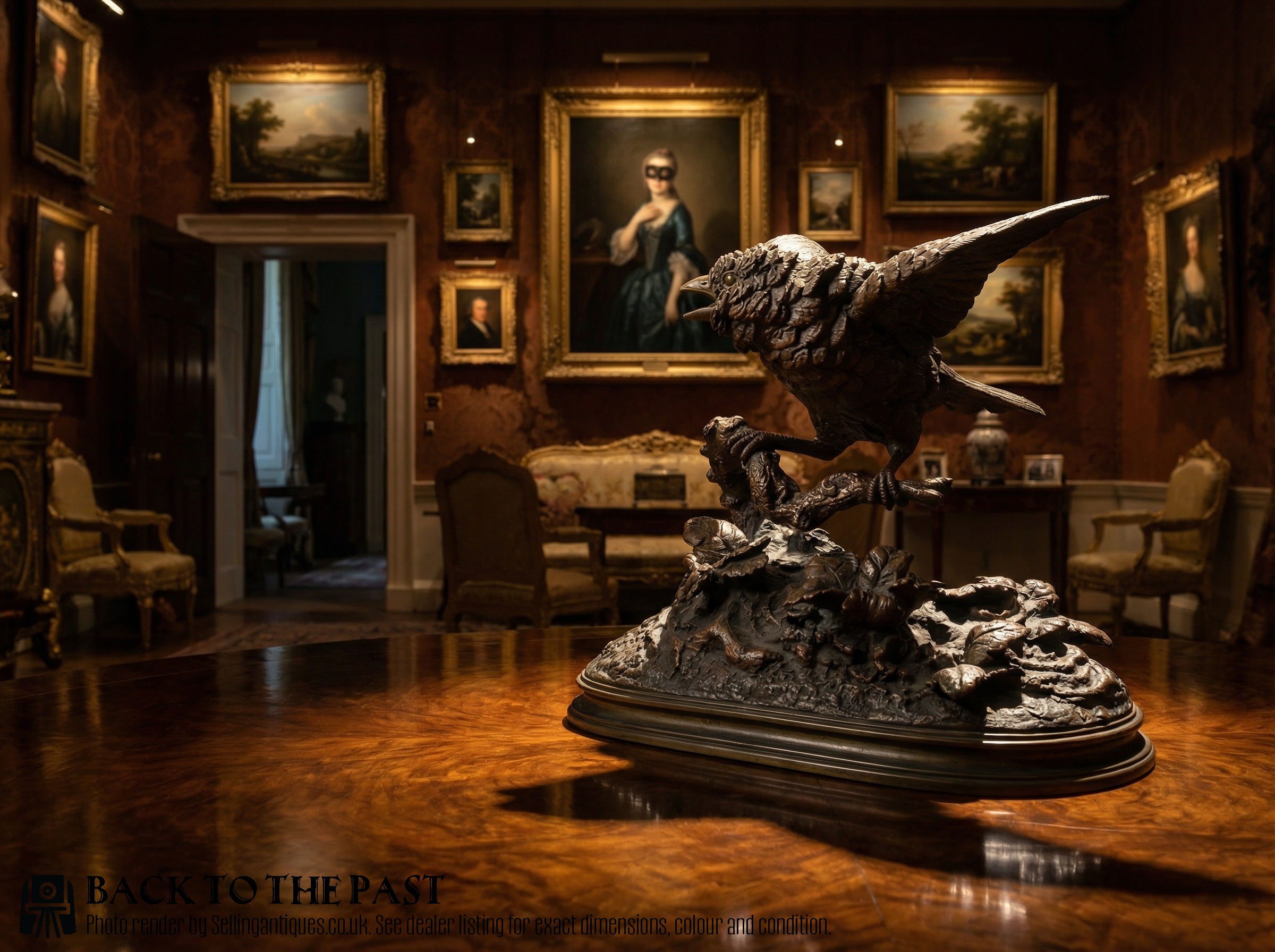
Bronze Wildlife Statuette
A bronze wildlife statuette represents animals captured in metal, ranging from woodland foxes and hares to larger exotic subjects like elephants and lions. These sculptures emerge from various periods, including nineteenth-century French animalier works and early twentieth-century Austrian cold-painted pieces.
You will encounter distinct regional interpretations, such as French foundry casts depicting naturalistic movement and Meiji period Japanese works showing intricate detail. The subjects span solitary birds and complex groupings of predators and prey mounted upon stone or marble bases.
How they were made
The primary material is cast bronze, frequently enhanced with a dark patina or hand-applied paint in cold-painted Austrian examples. Many sculptures integrate secondary support materials such as green onyx, marble, or wood to anchor the metal figures securely.
Foundries utilised traditional casting methods to capture fine anatomical details in subjects like fur, feathers, and muscle structure. Surface finishes range from natural metallic tones to polychrome paint layers applied directly over the bronze.
Listings feature bronze wildlife statuettes incorporating green onyx, marble, and wood bases across nineteenth-century and early twentieth-century periods.
What varies in quality
The distinction between tiers rests upon the crispness of the casting and the sensitivity of the chisel work applied after the metal leaves the mould. Superior examples retain sharp musculature and delicate surface textures rather than smooth, indistinct edges.
The quality of the patination or cold-painted surface dictates visual depth, while the selection of mounting materials like green onyx or marble adds substance to the overall composition.
Franz Bergman·Antoine Louis Barye·Barbedienne·P J Mene·Alfred Dubucand·Jules Moigniez·Ferdinand Pautrot
The Bronze Wildlife Statuette Glossary
- Animalier
- A nineteenth-century artistic movement dedicated to the realistic depiction of animals. Sculptors in this tradition focused on the anatomy and behaviour of wildlife.
- Cold-painted bronze
- A technique where bronze objects are painted with polychrome cold enamel and left unheated. This finish appears frequently in Austrian works from the early twentieth century.
- Patina
- The chemical colouration or surface film that develops on bronze over time or through intentional treatment. Dark patinas are typical in nineteenth-century French animalier bronzes.
- Foundry mark
- An inscription or stamp placed on a bronze by the casting workshop. These marks identify the commercial house responsible for producing the metal edition.
Bronze Wildlife Statuette: Frequently Asked Questions
What is an animalier bronze?
An animalier bronze is a sculpture depicting animals, typically produced during the nineteenth century by artists who studied wildlife anatomy closely. These pieces capture creatures in active or natural poses.
The style prioritises realistic movement over idealised forms, showing beasts in moments of rest or predation.
Where should I display a heavy bronze?
Heavy bronze statuettes require sturdy surfaces such as sideboards, heavy desks, or dedicated mantelpieces. Because many pieces utilise stone bases like green onyx or marble, they carry considerable weight.
Placement should avoid areas of high humidity or direct moisture to protect both the metal patina and the stone mount.
What periods do these bronzes come from?
The available pieces span the nineteenth and early twentieth centuries, encompassing distinct stylistic movements. You will find mid-nineteenth-century French works alongside Meiji period Japanese examples and 1920s Austrian pieces.
Each period brings specific casting techniques and patination styles that help date the sculpture accurately.