
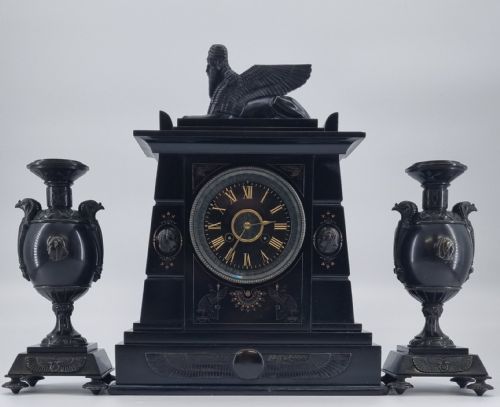


Bronze Urn Garniture Set
A bronze urn garniture set transforms a mantelpiece through matched metals, porcelain, and stone.
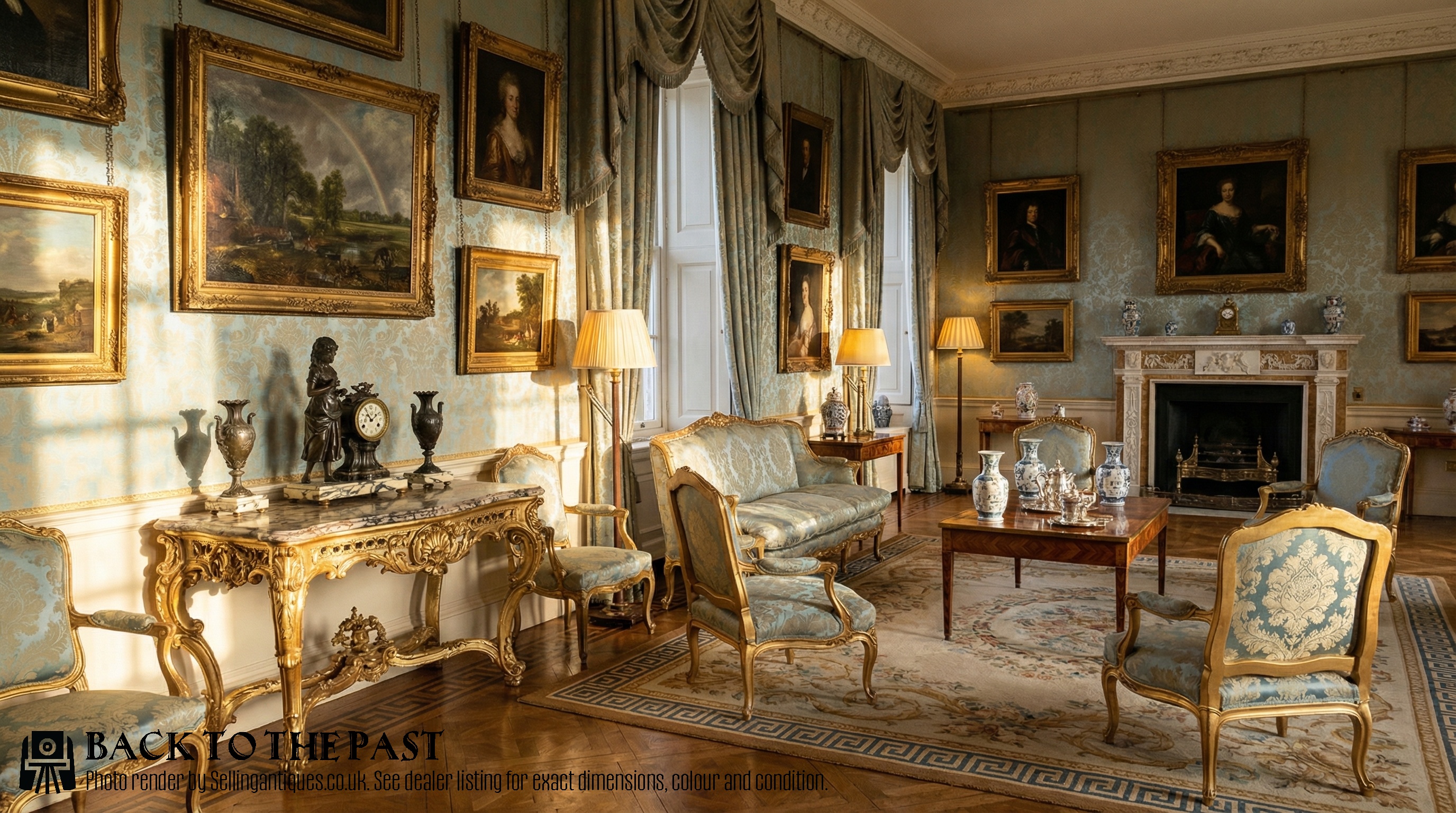
Bronze Urn Garniture Set
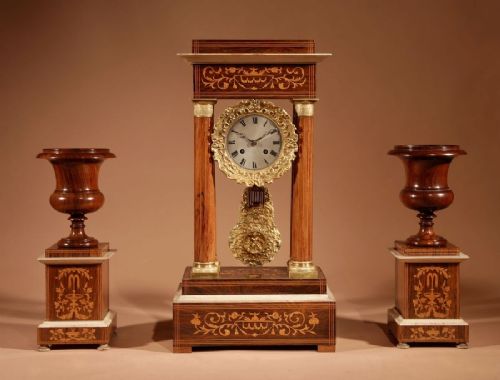
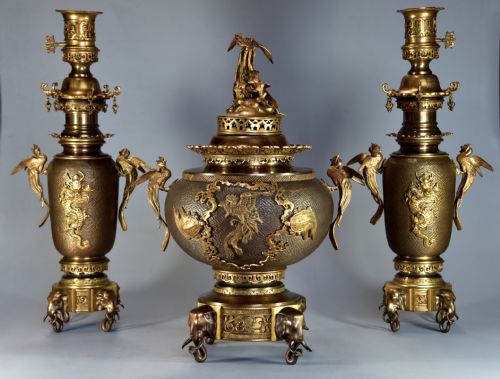
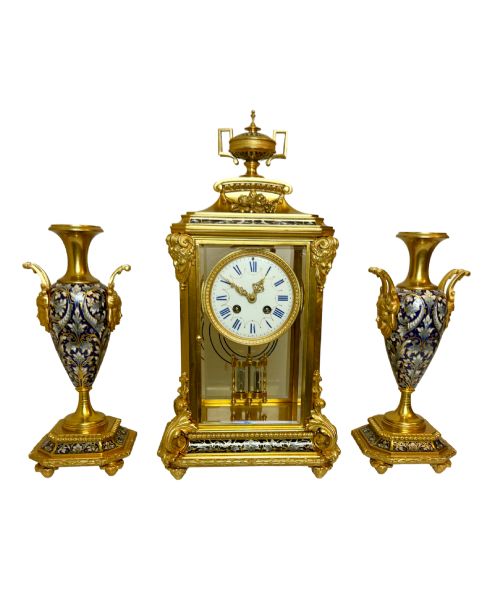
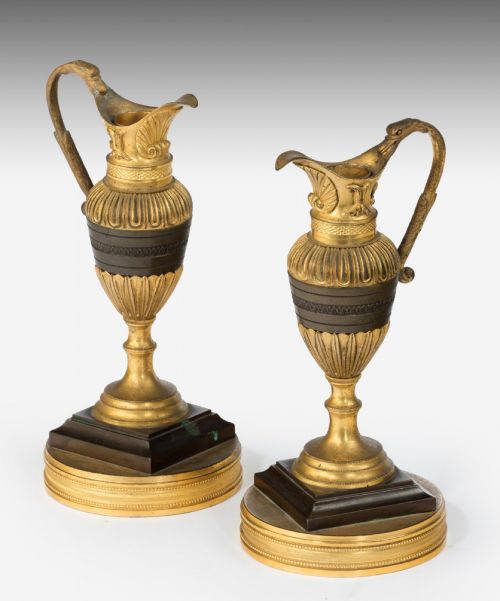
A bronze urn garniture set comprises a central mantel clock accompanied by matching side pieces such as urns, ewers, or vases. These decorative ensembles originate predominantly from nineteenth-century French workshops, spanning styles from Neoclassical and Louis XVI Revival to Napoleon III and Japonisme. Buyers encounter complete three-piece arrangements featuring central timepieces flanked by symmetrical companion objects.
The evidence shows various material combinations involving gilt bronze, ormolu, brass, marble, onyx, porcelain, and glass domes. Formats range from portico clock garnitures and incense burner sets to pairs of bronze vases on marble plinths and Sevres style porcelain sets. These items served a decorative and functional purpose in period interiors, anchoring the mantelpiece with balanced, symmetrical design.
What varies in quality
The standard of chasing and casting on the bronze or ormolu mounts determines the crispness of decorative detail across the garniture pieces. Sets bearing named maker signatures reflect higher workshop standing during the nineteenth century.
The integration of materials dictates overall refinement, particularly the quality of porcelain painting, the depth of champleve enamel work, and the choice of supportive marble or onyx bases. Symmetrical harmony between the central clock and its flanking companions remains a primary marker of intended design success.
The documented materials on this page include champleve enamel, onyx, marble, and glass domes alongside cast bronze.
A.D Mougin·VINCENTI of PARIS
The Bronze Urn Garniture Set Glossary
- Garniture set
- A decorative arrangement consisting of a central clock and matching side pieces designed to be displayed together on a mantelpiece.
- Ormolu
- A gold-coloured alloy of copper, zinc, and sometimes tin applied to bronze mounts to create a bright, decorative finish.
- Champleve enamel
- A technique where troughs are dug into a metal surface and filled with vitreous enamel before firing.
- Portico clock
- A mantel clock featuring a architectural case supported by columns or pillars.
- Ewer
- A large jug with a wide spout and handle, frequently produced as a decorative companion piece in metal or porcelain sets.
Bronze Urn Garniture Set: Frequently Asked Questions
What is a bronze urn garniture set?
A bronze urn garniture set is a matched group of decorative mantel ornaments, usually featuring a central clock flanked by two symmetrical urns or vases.
These nineteenth-century French sets were designed to create a balanced, unified display on fireplace mantels and grand sideboards.
How were garniture sets used?
These sets served as the visual focal point of a room's interior decoration, combining timekeeping with ornate sculptural display.
The central clock provided a working timepiece while the flanking urns, ewers, or incense burners completed the symmetrical arrangement.
How do I date a garniture set?
Dating relies on identifying the prevailing design style, such as Neoclassical, Louis XVI Revival, Napoleon III, or Japonisme, alongside material usage.
Nineteenth-century pieces frequently bear maker signatures on the clock movements or cast bronze components which help narrow the period of manufacture.
What materials are common in these sets?
Common materials include gilt bronze, ormolu, brass, and patinated bronze, frequently paired with marble, onyx, or Sevres style porcelain.
Some surviving sets also incorporate champleve enamel details, painted porcelain panels, or protective glass domes.