




Bronze Ribbon Wall Lights
Bronze ribbon wall lights bring French neoclassical elegance and delicate metalwork to an interior scheme.
Bronze Ribbon Wall Lights
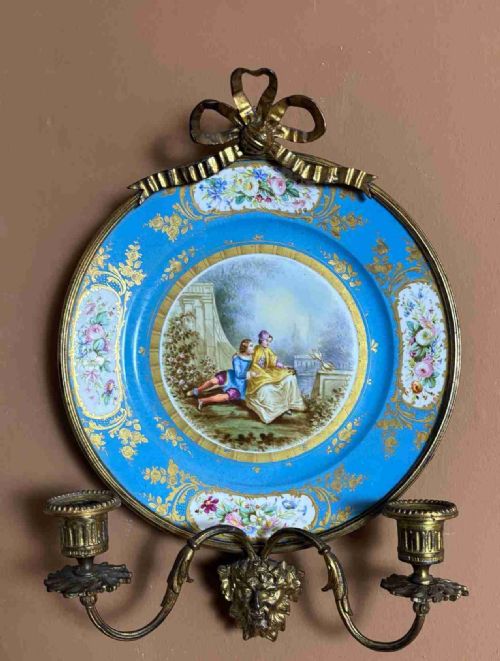
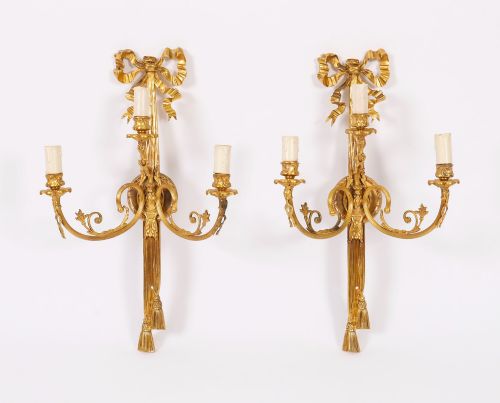
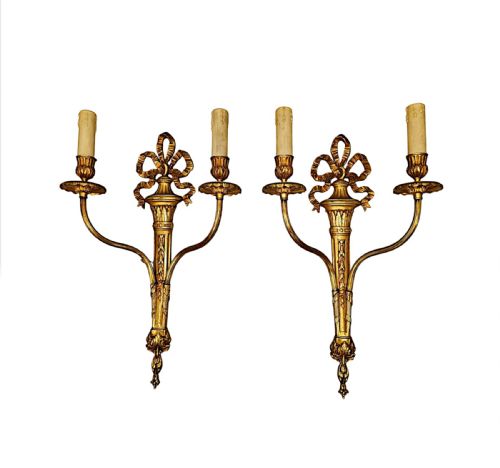
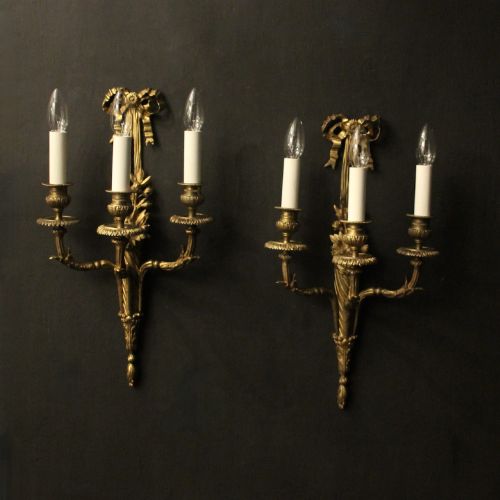
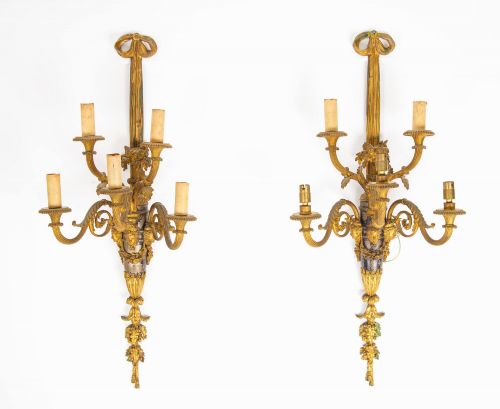
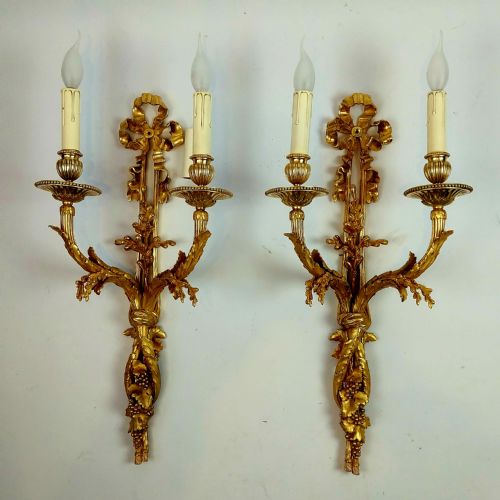
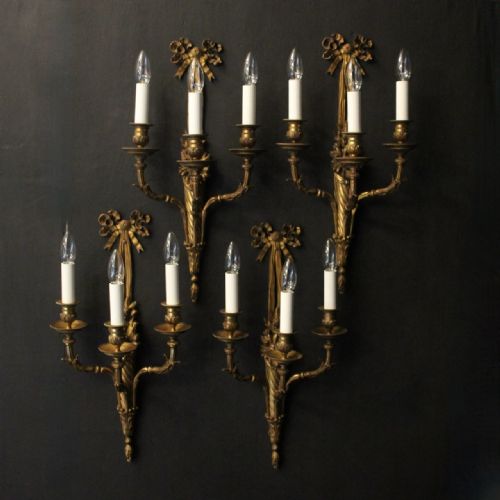
Bronze ribbon wall lights are decorative lighting fixtures designed to be mounted directly onto a wall, most commonly taking the form of wall sconces and girandoles. These pieces typically emerge from French workshops spanning the nineteenth century and the early decades of the twentieth century. The selection leans heavily towards pairs and sets of four, often drawing on Louis XVI, Louis XV revival, and classical design vocabulary.
Buyers seeking these fixtures encounter twin-arm, three-arm, and five-light configurations alongside mirrored backplates. The overriding visual motif involves simulated ribbon ties, bows, and sweeping foliage rendered in solid metal. French origin dominates the record, with occasional English interpretations appearing alongside the continental pieces.
How they were made
The primary structural material across these listings is bronze, utilised either in its raw metallic state, finished as ormolu, or treated with various gilt applications. Gilt bronze, gilded bronze, and gilt-bronze provide the lustrous golden surfaces characteristic of the neoclassical and revival styles. Brass and standard metal also appear as constituent materials in the construction.
Casting allowed makers to achieve the intricate drapery, bows, and naturalistic curves defining the ribbon and foliage motifs. Surface gilding was then applied to catch and reflect candlelight or early electric illumination within period rooms. The combination of heavy cast metal frames and articulated arms required precise assembly to support multiple candle branches.
Bronze Ribbon Wall Lights Retail Price Guide 2026
Typical asking prices for bronze ribbon wall lights among the pieces listed under this phrase on Sellingantiques today, from the lower quarter to the upper quarter. They describe what is for sale here now, not the wider market.
The recorded inventory spans the nineteenth century and the interwar period, utilising gilt bronze, brass, and ormolu within French neoclassical and revival frameworks.
What varies in quality
The distinction between standard production and exceptional quality rests upon the crispness of the chased detail in the metalwork. Superior examples exhibit deeply incised ribbon folds and sharply rendered acanthus leaves that retain their definition after the gilding process. Lesser pieces tend to present softer contours where the initial cast has been smoothed over without secondary hand-chasing.
Proportion and scale also dictate the standing of a fixture, with larger multi-arm configurations and documented commissions demanding greater technical mastery from the foundry. The integrity of the original mercury gilding or fire-gilt surfaces rather than later paint additions preserves the intended visual warmth of the object.
Henri Vian·Maison Baguès
The Bronze Ribbon Wall Lights Glossary
- Ormolu
- Gilt bronze, specifically referring to a gold-mortal amalgam applied to a bronze base through a mercury amalgamation process common in French manufacturing. This technique produces a durable, deep golden lustre that does not tarnish easily.
- Girandole
- An ornamental branched wall light or sconce, frequently incorporating a mirrored backplate to multiply the ambient light in a room. These pieces often feature elaborate frames adorned with ribbons and floral swags.
- Louis XVI Style
- A neoclassical design movement originating in eighteenth-century France and revived extensively during the nineteenth century. It is characterised by straight lines, symmetry, classical motifs, and ribbon tied elements.
- Wall Sconce
- A fixed lighting fixture attached to a wall surface to provide illumination using extended arms or branches. In antique contexts, these are designed to hold multiple candles or converted lamp fittings.
Bronze Ribbon Wall Lights: Frequently Asked Questions
How are these wall lights wired for modern electricity?
Most antique wall lights arrive with historical wiring removed or adapted for contemporary domestic standards. Professional electricians can run modern internal cabling through the existing bronze arms without damaging the structural integrity of the metal.
Where the original candle tubes remain, they are often sleeved to accept small modern bulb fittings while retaining their vintage outward appearance.
What is the difference between ormolu and gilt bronze?
Ormolu is a specific subset of gilt bronze denoting objects finished with a mercury-gilding technique popular in France. The terms are frequently used interchangeably in trade descriptions to indicate a gold-finished bronze surface.
Both materials require gentle cleaning with dry cloths to preserve the metallic finish without stripping the historical surface layer.
How do I securely mount heavy bronze sconces?
Due to the solid cast bronze construction, these fixtures carry considerable weight compared to modern light fittings. Installation requires direct anchoring into solid wall studs or the use of heavy-duty hollow-wall fixings capable of supporting the load.
Weight distribution must be managed carefully across the backplate to prevent any strain on the decorative ribbon mount.
How do I identify a Louis XVI revival piece?
Revival pieces from the nineteenth and early twentieth centuries replicate the symmetry, urn motifs, and tied ribbon swags of the original eighteenth-century French royal court aesthetic. Examining the casting seams, fixing screws, and patination helps distinguish these later interpretations from earlier originals.
The presence of standardised nineteenth-century threaded components often points to a later date of manufacture.