

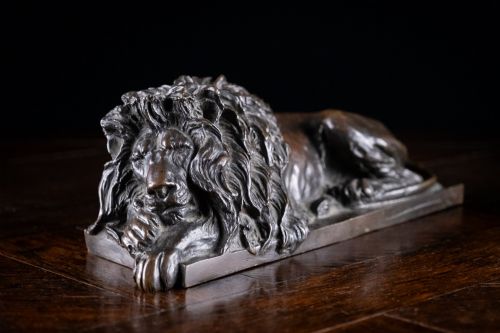
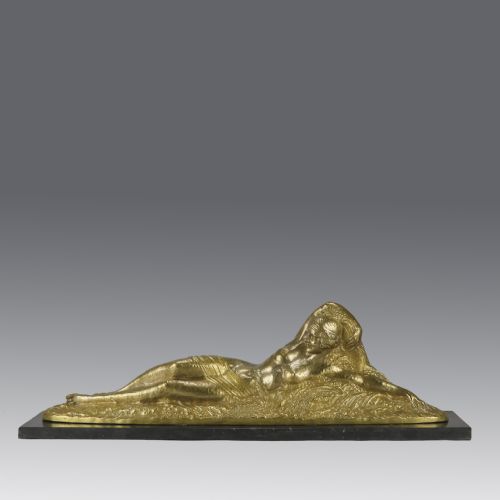


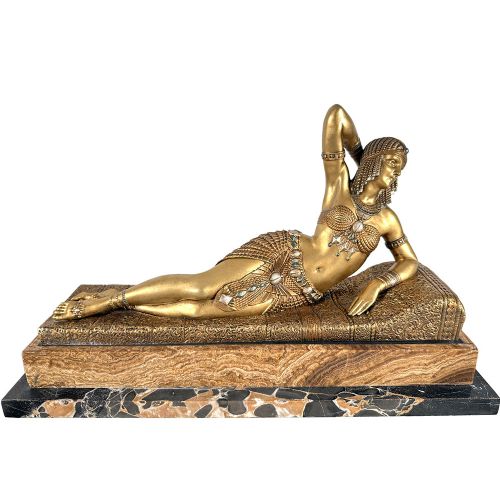


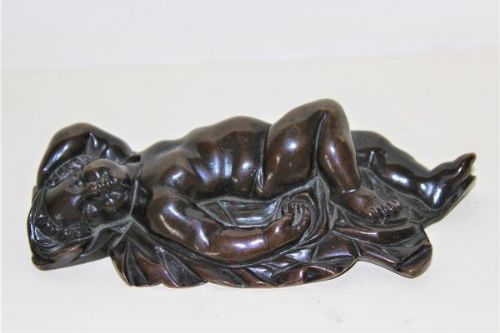


Bronze Reclining Figure
A bronze reclining figure brings classical poise or modern sleekness to a desk, mantle or cabinet.
Bronze Reclining Figure
When you search for a bronze reclining figure, you are looking at small sculptures, paperweights, bookends and clock garnitures depicting human and animal forms at rest. The pieces meeting this search span the sixteenth century through the Art Deco era, moving from Ming Dynasty scholar weights to French Art Deco nudes and nineteenth-century animal studies.
You are most likely to encounter twentieth-century Art Deco interpretations alongside nineteenth-century classical and animalier studies. These vary from cast bronze to spelter figures mounted on marble, slate or onyx bases.
How they were made
Foundries cast these pieces using traditional methods, utilising bronze or spelter poured into moulds to capture fine anatomical details and textures. Many twentieth-century examples employ patinated bronze, sometimes combined with selective fire-gilding or cold painting.
Makers mounted finished metal casts onto heavy stone plinths such as marble, onyx and slate to provide stability and visual contrast. Clockmakers integrated reclining figures into mantel clock cases alongside eight-day striking movements.
Bronze Reclining Figure Retail Price Guide 2026
Typical asking prices for bronze reclining figure among the pieces listed under this phrase on Sellingantiques today, from the lower quarter to the upper quarter. They describe what is for sale here now, not the wider market.
Listings feature materials ranging from traditional bronze and marble to spelter, onyx, gold leaf and slate.
What varies in quality
Quality rests upon the crispness of the cast and the nuance of the patination, distinguishing sharp hand-finished surface detail from softer, secondary production. The integration of the metal figure with its stone or marble base demonstrates the care taken in assembly.
Signatures and foundry marks elevate certain pieces, reflecting the standing of the sculptor and the precision of the workshop. The depth of the chasing and the richness of the applied finish separate standard ornamental castings from works by recognised artists.
Demetre Chiparus·Josef Lorenzl·Sibylle May·A L Barye·Jennings Brothers·James Pradier·Susse Freres·Ugo Cipriani
The Bronze Reclining Figure Glossary
- Spelter
- A zinc alloy frequently utilised as a cost-effective substitute for bronze during the Art Deco period. It accepts patination and paint readily to resemble heavier metal.
- Animalier
- A nineteenth-century artistic movement focusing on the realistic depiction of animals. Sculptors in this style studied animal anatomy closely, often capturing creatures in repose.
- Patinated bronze
- Metal treated with chemical solutions to produce a controlled surface colour or finish. This process protects the bronze while enhancing sculptural contours and shadows.
- Fire-gilded
- A technique where an amalgam of gold and mercury is applied to metal and heated until the mercury evaporates, leaving a durable gold layer. It yields a brilliant, lasting lustre.
Bronze Reclining Figure: Frequently Asked Questions
How do I clean a bronze sculpture?
Dust gently with a soft, dry cloth to remove surface particles without disturbing the underlying patina.
Avoid using water, chemical cleaners or abrasive polishes, as these strip the protective finish from the metal.
What is spelter and how do I spot it?
Spelter is a softer zinc alloy that feels lighter than bronze and often shows a greyish metal beneath chips in the finish.
It was widely utilised for decorative figures during the early twentieth century and requires careful handling to prevent breakage.
How can I tell Art Deco from earlier figures?
Art Deco pieces display stylized geometry, streamlined clothing and materials like onyx or marble bases characteristic of the nineteen-thirties.
Nineteenth-century works tend toward classical mythology, naturalistic animal studies or romantic ornamentation.
Where were these figures displayed originally?
Smaller pieces functioned as scholar desk paperweights, bookends or cabinet ornaments in domestic and academic settings.
Larger studies and clock garnitures occupied prominent positions on mantelpieces and parlour tables.