
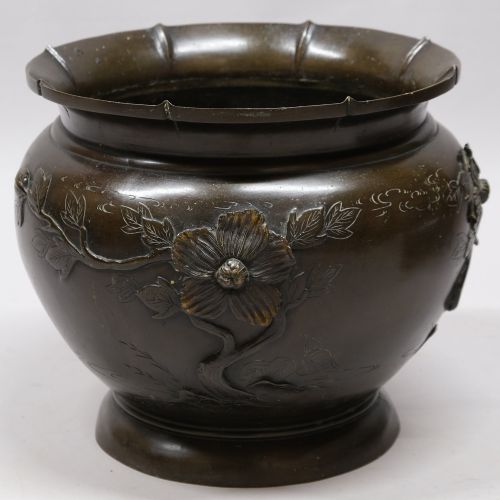


Bronze Planter Bowl
A bronze planter bowl is a sturdy vessel meant for housing greenery or displaying interior flora.
Bronze Planter Bowl
A bronze planter bowl serves primarily as an ornamental receptacle for indoor plants or floral arrangements, often taking the form of a jardiniere. When you examine a bronze planter bowl on this page, you frequently encounter examples originating from Japanese Meiji period workshops or Chinese nineteenth-century foundries.
Beyond Eastern provenance, the selection includes European items spanning Victorian and Georgian eras alongside French Empire designs. These vessels manifest variously as heavy decorative bowls, desk pots, centrepiece bowls, and traditional Buddhist tearai vessels adapted for domestic interiors.
The enduring appeal of a bronze planter bowl lies in its substantial weight and metalwork finish, which anchors a room's decorative scheme. Collectors select these vessels for their rich patination and sculptural surface detailing, whether displayed empty on a table or filled with foliage.
Materials and Construction Methods
Foundries produced these vessels using cast bronze, patinated bronze, and gilt bronze, occasionally pairing the metal body with cut glass inserts. Artisans employed traditional casting techniques to achieve thick-walled bowls capable of holding damp earth and water safely without structural compromise.
Surface ornamentation often incorporates cloisonne enamel and champleve enamel techniques, fusing coloured glass pastes into wire-formed or recessed metal compartments. Makers also applied chemical patination or gilding to create depth, texture, and lasting colour across the exterior walls.
Some nineteenth-century Japanese vessels started life as Buddhist temple water basins before finding a second career holding parlour ferns.
Distinctions in Quality and Execution
Quality in a bronze planter bowl rests upon the crispness of the casting and the precision of any applied enamel work. Superior examples exhibit tightly controlled cloisonne cells or deeply chiselled surface motifs that demonstrate complete mastery by the metalworker.
The weight of the vessel and the uniformity of the bronze wall thickness signal a higher grade of manufacture. Finer pieces maintain structural balance and retain their original patination intact, whereas lesser items show hurried finishing or crude surface repairs.
The Bronze Planter Bowl Glossary
- Jardiniere
- An ornamental pot or stand for holding flowers or plants, typically designed for indoor display. These vessels form a significant portion of the available metalware.
- Cloisonne
- A decorative metalwork technique where artists create compartments using soldered wire and fill them with enamel paste. Firing hardens the glass into vibrant coloured patterns across the bronze surface.
- Champleve
- A method of enamelling where troughs or cells are carved directly into the thick bronze surface and filled with vitreous paste. This technique produces bold linear designs integrated into the metal body.
- Meiji Period
- A designated era in Japanese history spanning from 1868 to 1912, noted for exceptional metal casting and decorative arts. Many of the finest bronze bowls on the market date from this period.
- Patinated Bronze
- Metal treated with chemical solutions to alter the surface colour and create an aged, mellow appearance. This finish protects the underlying bronze while adding visual depth.
Bronze Planter Bowl: Frequently Asked Questions
What is a bronze planter bowl used for?
These vessels were traditionally used to house potted plants, ferns, or floral arrangements inside the home, functioning as decorative jardinieres. They also served as standalone decorative vessels on tables, desks, or pedestals.
Today, they continue to function effectively as plant holders or remain empty as sculptural centrepieces within traditional and modern interiors alike.
How do I distinguish between Chinese and Japanese pieces?
Chinese vessels often display distinct archaic motifs, heavier casting proportions, or champleve enamel work associated with Qing dynasty traditions. Japanese pieces frequently date from the Meiji period and showcase naturalistic flora, fauna, or intricate cloisonne patterns.
Examining the underlying casting style, patination colour, and decorative iconography generally clarifies the specific regional origin of each bowl.
Can I plant directly into a antique bronze bowl?
Planting directly into antique metalware risks moisture retention causing corrosion or damage to the interior patination over time. Using a separate plastic or ceramic inner pot is standard practice for protecting the historic bronze.
This removable liner allows for easy watering and prevents soil acidity from interacting directly with the metal surface.
How should I clean a bronze planter bowl?
Cleaning should be limited to gentle dusting with a soft, dry cloth to preserve the natural historic patination and surface oils. Avoid using abrasive metal polishes, harsh chemical cleaners, or water soaking, which can strip away desirable age finishes.
If the vessel requires minor dust removal from recessed carved areas, a soft-bristled brush used without liquids is safest.