





Bronze Plant Pot
These heavy bronze plant pot designs bring structural weight and rich patination to interior planting, spanning Victorian utility and Japanese export craftsmanship.
Bronze Plant Pot
A bronze plant pot, most frequently encountered as a jardiniere, cachepot or planter bowl, serves as a decorative vessel designed to house potted greenery rather than hold soil directly. The examples found here range from nineteenth-century Victorian productions to detailed Japanese Meiji period castings and Chinese export pieces.
Buyers will frequently meet heavy Japanese bronze bowls featuring champlevé enamel or intricate relief work alongside French Louis XIV ormolu designs. These objects bring a dense material presence to interior spaces, functioning primarily to elevate everyday foliage into a considered decorative display.
Materials and technique
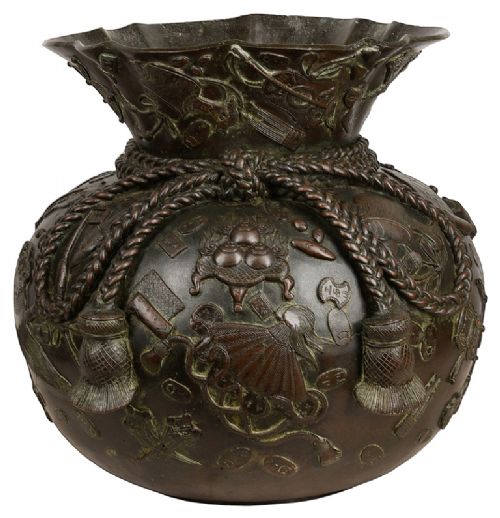
Foundry work relies heavily on cast bronze, often complemented by gilt bronze or ormolu to achieve high-contrast surface detail. Artisans utilised both lost-wax casting and sand-casting methods to form the robust walls necessary to support substantial interior plantings.
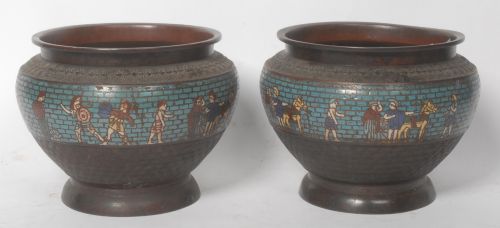
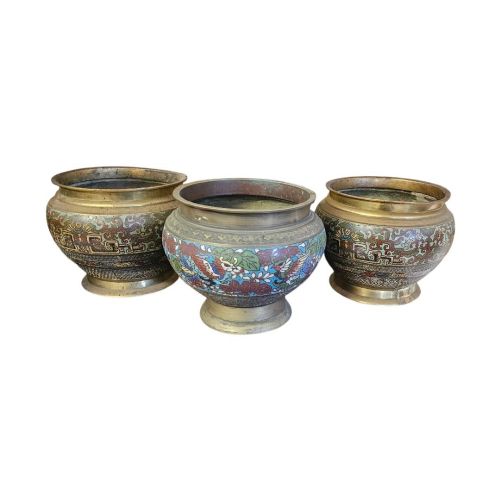
Surface decoration frequently incorporates cloisonné and champlevé enamel, where metal wirework or hollowed cells hold vitreous pastes fired to brilliant hues. Japanese Meiji period pieces and Chinese export works demonstrate particularly intricate enamel application alongside finely chased botanical motifs.
Bronze Plant Pot Retail Price Guide 2026
Typical asking prices for bronze plant pot among the pieces listed under this phrase on Sellingantiques today, from the lower quarter to the upper quarter. They describe what is for sale here now, not the wider market.
The listings combine nineteenth-century European ormolu with Japanese Meiji period and Chinese Qing dynasty cast bronze forms.
Distinctions in craftsmanship
Quality rests in the precision of the casting and the depth of the chased surface work, where sharper relief and cleaner patination distinguish superior vessels. Heavier bronze walls and uniform thickness indicate careful foundry control rather than hurried mass production.
The integrity of the enamel work further separates standard examples from exceptional ones, marked by smooth vitreous fills without pitting or excessive shrinkage. The clarity of the base metal finish beneath patination reveals the maker's discipline.
The Bronze Plant Pot Glossary
- Jardiniere
- A large ornamental pot or stand for flowers or plants, usually manufactured from ceramic or metal. These vessels form the majority of the bronze plant pot selection.
- Cachepot
- An ornamental container used to conceal an ordinary flowerpot, preventing water leakage onto furniture. These objects perform a practical containment role while displaying decorative exterior surfaces.
- Cloisonne
- An ancient technique for decorating metalwork objects with coloured material held in place by thin metal strips. Artisans solder flat wires to the bronze body before filling the compartments with enamel paste.
- Champleve
- An enamelling technique in which troughs or cells are carved into the surface of a metal object and filled with vitreous enamel. This method creates bold colour planes bound by raised bronze outlines.
- Ormolu
- Gilding technique of applying a finely ground high-carat gold-mercury amalgam to a bronze object. This treatment produces a rich golden lustre on nineteenth-century decorative pieces.
Bronze Plant Pot: Frequently Asked Questions
Can I plant directly into a bronze plant pot?
These vessels are generally intended to function as cachepots or jardinieres that hold an inner plastic or ceramic pot. Placing soil and water directly against the antique bronze interior risks accelerating corrosion and damaging the historic patination.
Using a separate liner protects the integrity of the metal while allowing you to water your plants safely outside the vessel before returning them to display.
How do I clean a bronze jardiniere?
Dusting with a soft, dry cloth is sufficient for routine maintenance of historic metal surfaces. Avoid harsh chemical cleaners, abrasive polishes or water soaking, as these agents strip the aged patina and damage enamel work.
Professional conservation wax can occasionally be applied sparingly to protect the bronze from atmospheric moisture if the surface appears dry.
What is the difference between a jardiniere and a cachepot?
While both terms describe decorative exterior containers for plants, a jardiniere traditionally refers to a larger, freestanding bowl or basin. A cachepot specifically denotes a pot designed to hide an unadorned plant container.
In marketplace listings, these terms often overlap to describe similar vessel forms used for interior greenery.
How do I identify a Meiji period bronze pot?
Japanese bronze plant pot examples from the Meiji period often display distinct avian, floral or geometric motifs executed in high relief or champlevé enamel. The bronze itself tends to be heavy and dense, occasionally accompanied by artist signatures or stamps on the underside.
Stylistic influences from this era frequently blend traditional Japanese casting with Western export tastes of the late nineteenth century.