







Bronze Pedestal Decorative Bowls
Bronze pedestal decorative bowls bring classical presence to a room, combining heavy cast metal with fine stones and glass.
Bronze Pedestal Decorative Bowls
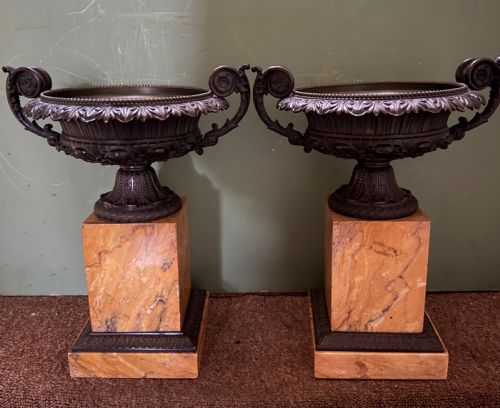
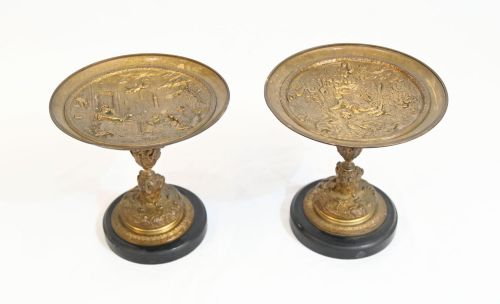
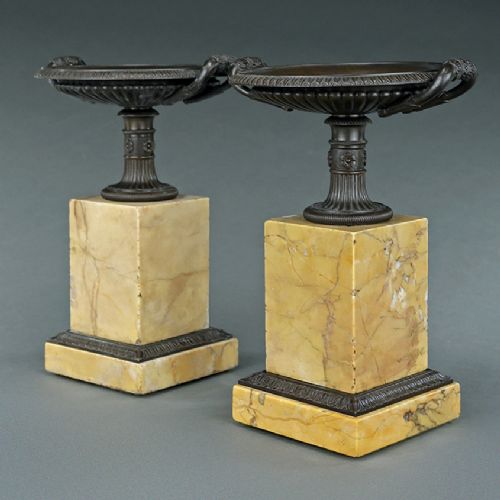
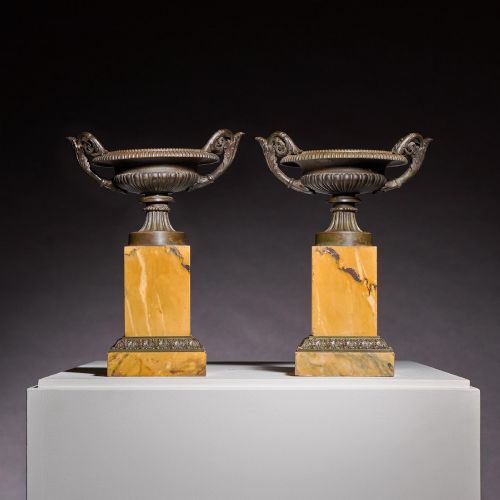
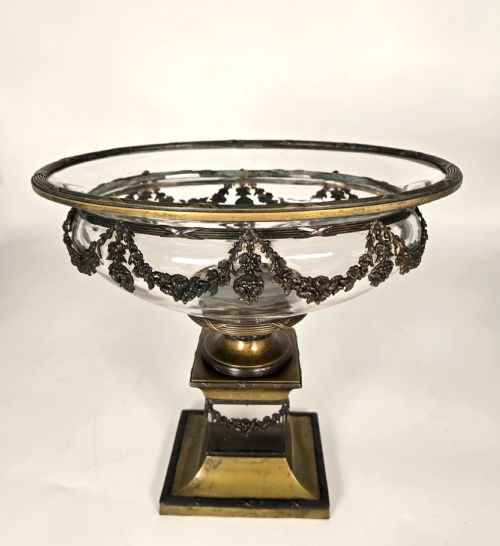
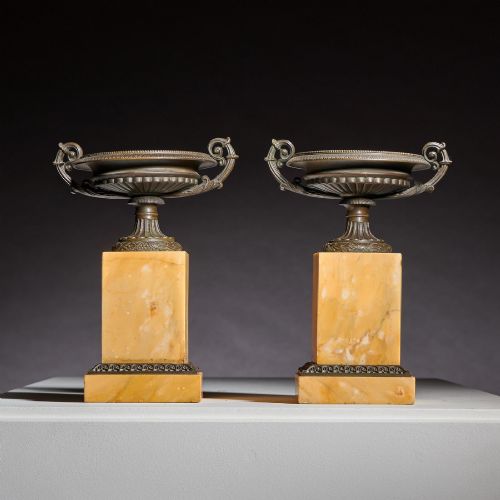
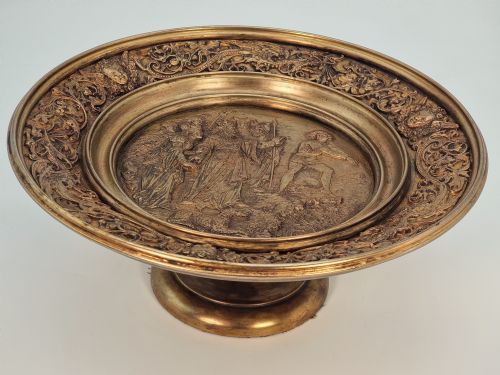
Bronze pedestal decorative bowls appear primarily as nineteenth-century French and English tazzas, comports, and centrepieces raised on classical columns or feet. These objects draw heavily on French Empire, Regency, and Aesthetic Movement designs, often arriving as matched pairs suited for formal display on tables and mantelpieces.
The forms frequently echo ancient architectural finds associated with Grand Tour travel, translating archaeological motifs into domestic ornaments. Visitors encounter shallow dishes supported by cast pedestals, frequently incorporating secondary materials like marble, porcelain, or agate.
The selection ranges from miniature cabinet pieces to large presentation items, spanning the nineteenth century with notable examples from the eighteen-eighties and earlier decades. Each piece serves primarily as a decorative vessel or stand rather than a functional container for daily use.
Materials and construction
Foundry work relies on bronze, ormolu, and gilt metal, combining patinated dark surfaces with bright gilded highlights. Craftsmen cast the pedestals and mounts in sections before chasing the details by hand to achieve crisp definition on foliage, figures, and classical ornament.
Many examples incorporate mineral accents such as Siena marble, malachite, Blue John, agate, and mother-of-pearl alongside Limoges enamel plaques and glass bowls. These diverse elements require precise mechanical fitting, often utilising threaded rods and bolts to secure heavy stone bases to metal stems.
Bronze Pedestal Decorative Bowls Retail Price Guide 2026
Typical asking prices for bronze pedestal decorative bowls among the pieces listed under this phrase on Sellingantiques today, from the lower quarter to the upper quarter. They describe what is for sale here now, not the wider market.
Several pieces feature unexpected cabochons of agate and mother-of-pearl, proving that Victorian artisans rarely missed a chance to add extra sparkle.
Assessing quality
Quality rests upon the crispness of the bronze casting and the depth of the subsequent hand-chasing, which separates mass-produced items from superior studio work. Superior pieces exhibit well-defined musculature, sharp acanthus leaves, and clean architectural mouldings without soft edges or casting voids.
The choice and integration of secondary materials dictate the tier of an object, with hardstones like banded agate or Blue John elevating the piece far beyond plain metal. A cohesive composition where the patination, gilding, and stone retain their original integrity marks the higher end of the range.
The Bronze Pedestal Decorative Bowls Glossary
- Tazza
- A shallow bowl or cup mounted on a stem and foot, originating from classical antiquity and revived during the nineteenth century. These vessels serve as decorative display pieces rather than tableware.
- Ormolu
- Metal cast in brass or bronze and treated with a mercury gilding process to produce a rich gold finish. The technique creates a durable surface that resists tarnishing over decades.
- Grand Tour
- A cultural journey across Europe undertaken by wealthy young men during the eighteenth and nineteenth centuries. Souvenirs brought back included classical bronzes and architectural marbles.
- Champlevé
- An enamelling technique where troughs or cells are hollowed out of the metal surface and filled with vitreous paste before firing. This creates colourful decorative patterns flush with the metal border.
- Comport
- A raised dish or stand used traditionally for serving fruit or sweets at formal dining tables. Nineteenth-century examples frequently combine bronze pedestals with glass or porcelain dishes.
Bronze Pedestal Decorative Bowls: Frequently Asked Questions
What were bronze pedestal bowls used for?
These pieces functioned historically as ornamental centrepieces on dining tables, sideboards, or console tables to display fruit, sweets, or simply artistic craftsmanship.
They were prized by collectors as decorative conversation pieces that demonstrated classical taste and refinement within a nineteenth-century interior.
How do I date a bronze tazza?
Dating relies on stylistic clues, such as the heavy neoclassical proportions of the Regency period versus the eclectic revivalism of the later nineteenth century.
Material combinations also offer guidance, as specific hardstones and porcelain plaques align closely with mid-century manufacturing trends.
Are these bowls suitable for daily use?
Most antique pedestal bowls feature delicate stones, fragile enamel, or sensitive gilding that limits them to decorative display rather than robust functional service.
Gentle dusting with a soft, dry cloth is sufficient for maintenance, avoiding liquid cleaners that might harm patinated bronze or soft stone.
What is the difference between a tazza and a comport?
A tazza generally refers to a single-footed shallow vessel with distinct classical or Renaissance revival styling, often made entirely of metal or stone.
A comport more frequently denotes a raised dish intended for table service, commonly combining a metal pedestal stand with a separate glass, porcelain, or ceramic bowl.