



Bronze Ornamental Vase
These bronze ornamental vase pieces bring neoclassical grace and patinated weight to a room, offering the heavy presence collectors seek.
Bronze Ornamental Vase
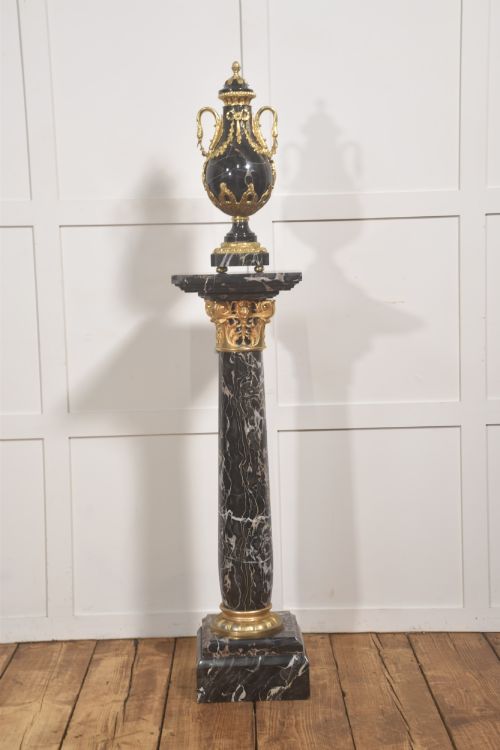
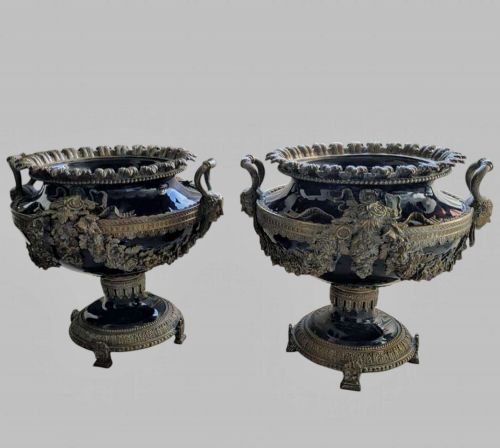
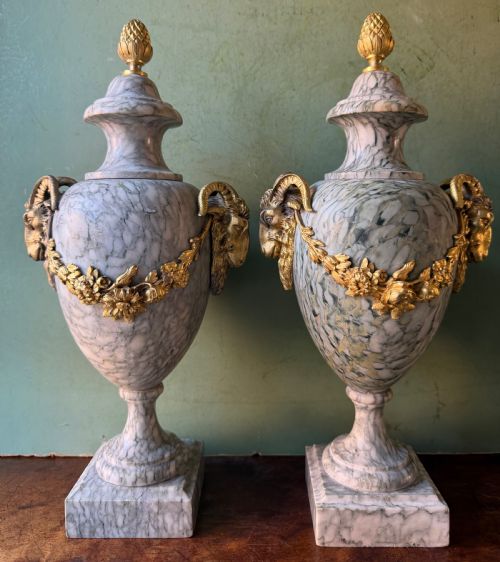
A bronze ornamental vase sits firmly in the neoclassical tradition, often taking the form of campana urns, cassolettes, or ewers influenced by Grand Tour travels. These decorative objects draw heavily on French Empire, Regency, and Victorian revivals from the nineteenth century.
Buyers will most frequently find pairs produced during the nineteenth century, ranging from the eighteen twenties to eighteen nineties. Many examples combine cast metal with green or quartz marble bases and classical motifs.
Materials and construction
The primary construction relies on cast bronze, patinated bronze, or ormolu, occasionally accompanied by bronzed spelter. These metals are frequently paired with turned green marble or quartz marble to add substantial weight and colour contrast.
Surface treatment involves careful patination and gilding, highlighting intricate details such as Bacchic masks, putti, and classical drapery. Individual components are joined securely, uniting the metal bodies with stone plinths.
Bronze Ornamental Vase Retail Price Guide 2026
Typical asking prices for bronze ornamental vase among the pieces listed under this phrase on Sellingantiques today, from the lower quarter to the upper quarter. They describe what is for sale here now, not the wider market.
Materials appearing across the current selection include bronze, ormolu, green marble, quartz marble, and bronzed spelter.
Assessing quality and execution
Quality rests in the crispness of the casting and the depth of the chased detail across the bronze surface. Superior examples display sharply defined figures and foliage rather than softened edges from worn moulds.
The selection of materials also dictates standing, with fine ormolu highlights and well-turned marble or quartz bases distinguishing the most accomplished nineteenth-century pieces from standard decorative castings.
The Bronze Ornamental Vase Glossary
- Campana urn
- A bell-shaped vessel with a flaring rim and a pedestal foot, typical of classical antiquity and later revivals.
- Cassolette
- A decorative vase or urn featuring a reversible lid that can function as a burner or seal.
- Ormolu
- Gilded bronze, where a layer of gold is applied to a bronze base, producing a bright golden finish.
- Patinated bronze
- Metal treated chemically to produce a specific surface colour or tone, ranging from dark brown to green.
- Spelter
- A zinc alloy used as a less expensive alternative to bronze, often given a bronze-like finish.
- Grand Tour
- The nineteenth-century practice of travelling through Europe to collect classical art and antiquities.
Bronze Ornamental Vase: Frequently Asked Questions
What are bronze ornamental vases made of?
These decorative objects are primarily cast from bronze, ormolu, gilt bronze, and patinated bronze, sometimes substituted with bronzed spelter.
Many examples incorporate natural stones, most notably green marble and quartz marble, for their plinths and bodies.
When were these pieces made?
The available pieces date predominantly from the nineteenth century, spanning from the Regency period through the Victorian era.
Specific dates within the listings range across the eighteen twenties, eighteen fifties, eighteen sixties, and eighteen nineties.
What styles influence these designs?
The predominant styles are neoclassical, French Empire, and French Neoclassical Revival, alongside Victorian Rococo Revival and Louis XVI styles.
Many of these objects reflect the aesthetic tastes associated with nineteenth-century Grand Tour souvenirs.
How do I style a bronze ornamental vase?
These pieces function well as symmetrical pairs on mantelpieces, sideboards, or console tables, anchoring a traditional interior scheme.
Their classical urn, ewer, and cassolette forms provide strong vertical lines and rich metallic textures to a room.