






Bronze Musician Figurine
A bronze musician figurine captures the grace of performance in metal, bringing lasting character to a mantelpiece or cabinet.
Bronze Musician Figurine
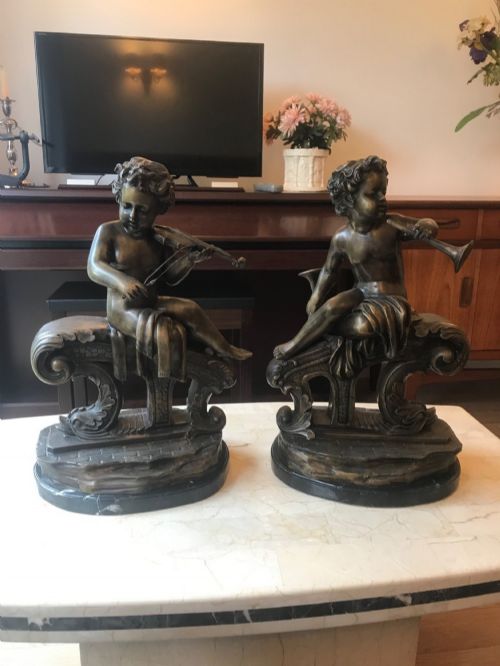
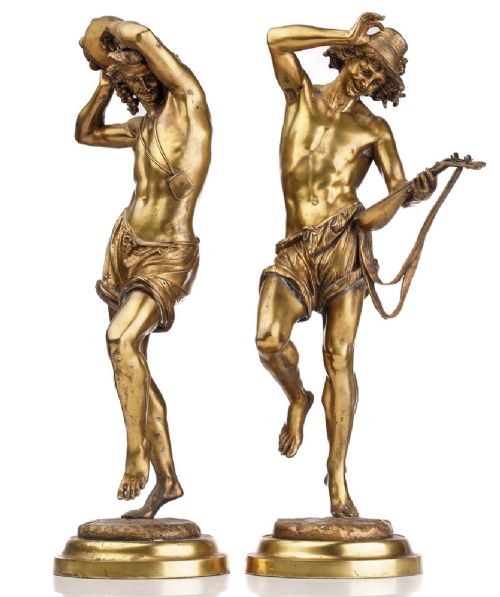
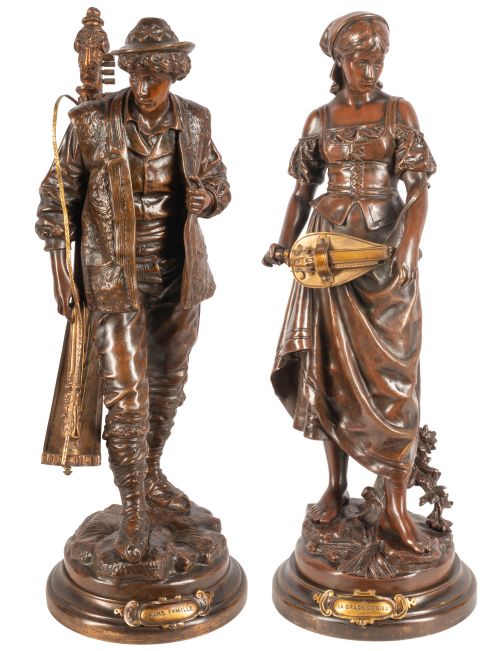
A bronze musician figurine represents performers from harlequins and pipers to lute players and minstrel figures, captured in cast metal. When you search for this phrase, you encounter works spanning the nineteenth century through the art deco period, alongside Japanese Meiji examples.
Nineteenth century French and European examples dominate the selection, often featuring patinated bronze or gilt finishes mounted on marble or onyx bases. Sculptures range from small tabletop studies to large paired figures playing instruments like the tambourine, flute and mandolin.
Materials and construction
Foundries utilised traditional lost-wax or sand casting methods to shape the bronze, producing intricate details in the instruments and drapery. Castings frequently received patination treatments to create dark or warm surface tones, while some pieces combined gilt bronze with stone bases such as marble or onyx.
Signatures and foundry marks often appear directly on the cast base, linking the sculpture to established workshops and named artists. Selected pieces incorporate mixed materials or applied finishes, including wood or gold accents, to highlight specific costumes and instruments.
Materials recorded across the inventory include bronze, patinated bronze, gilt bronze, marble, onyx, patinated metal, gold, and wood.
Quality and execution
The precision of the casting and the crispness of the chasing define the distinction between standard works and master pieces. Finer sculptures display sharply defined facial expressions, detailed hand and instrument rendering, and careful smoothing of the metal surface.
The quality of the patina and the harmony of any associated marble or onyx base contribute significantly to the visual presence of the figure. Signed works by recognised sculptors or founders generally reflect superior artistic conception and foundry execution.
Alfred Grevin·Justo de Gandarias·Aug. Moreau·Paul Fournier·Albert Ernest Carrier-Belleuse·Miyao·Josef Lorenzl·Marcel Debut·Renzo Colombo·Barbedienne
The Bronze Musician Figurine Glossary
- Gilt bronze
- Bronze coated with a thin layer of gold, providing a bright and decorative surface. This technique was frequently applied to nineteenth century decorative figures to emphasise richness.
- Lost-wax casting
- A metal casting method where a molten alloy is poured into a mould created from a wax model. This process allows for intricate detail in figurative and sculptural works.
- Onyx
- A banded variety of chalcedony often used as a contrasting base for nineteenth century and art deco sculptures. It provides a heavy, polished mounting that elevates the bronze figure.
Bronze Musician Figurine: Frequently Asked Questions
What periods do these figurines date from?
The selections date primarily from the nineteenth century, including specific decades such as eighteen sixty and eighteen eighty, extending into early twentieth century art deco and Meiji period pieces.
Styles range from nineteenth century realism and rococo revival to neoclassical and art deco designs, reflecting shifting artistic tastes across Europe and Japan.
What materials are used besides bronze?
Many figures feature patinated bronze or gilt bronze combined with stone bases made from marble or onyx. Selected works incorporate patinated metal, gold, or wood elements to complete the composition.
The choice of base material often helps determine the period, with heavy marble and onyx mounts being characteristic of nineteenth and early twentieth century display pieces.
How were these sculptures signed?
Artists typically inscribed their names directly into the bronze base or lower portion of the sculpture during the casting process. Foundry marks may also appear alongside the artist signature to indicate where the piece was produced.
Signed works connect the sculpture to specific nineteenth century sculptors or well known workshops like Barbedienne.
Where should I place a bronze musician figurine?
These sculptures suit tabletops, mantelpieces and dedicated display cabinets where their detailed casting can be viewed closely. Paired figures work well balanced on either side of a fireplace or shelf.
Ensure the figurine sits on a stable, flat surface that can support the weight of both the bronze and its stone base.