
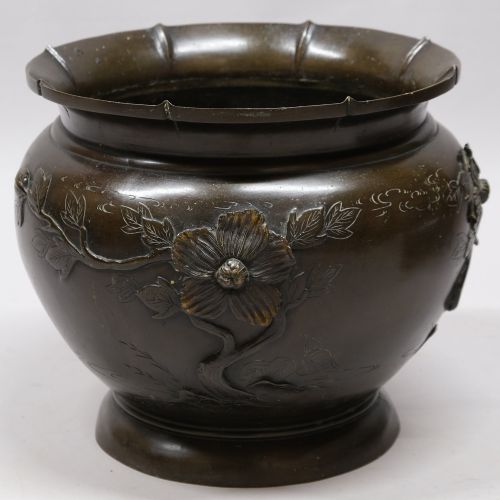


Bronze Metal Jardiniere
A bronze metal jardiniere brings sculptural plant holding into domestic spaces, drawing the eye with patinated surfaces and cast detail.
Bronze Metal Jardiniere
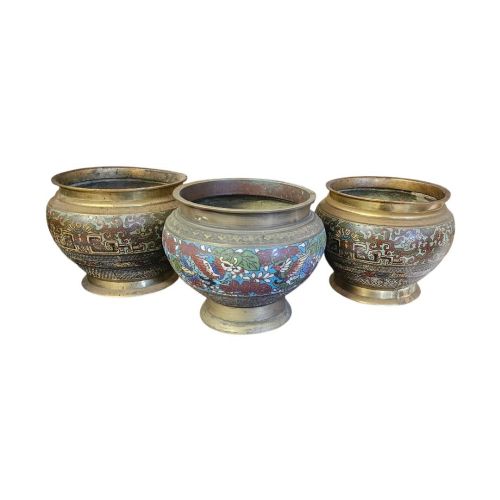
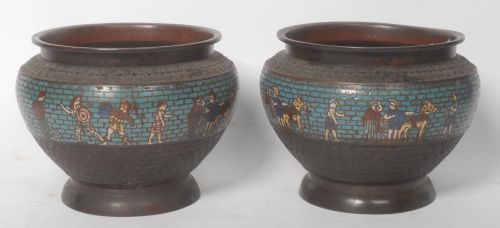
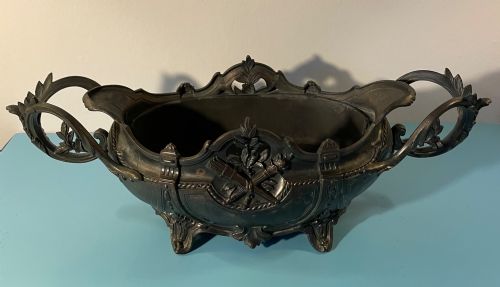
A bronze metal jardiniere functions as a decorative vessel designed to hold potted plants or floral arrangements within a room. Collectors encounter these planters in forms ranging from heavy Japanese hibachi bowls and Chinese champlevé enamel vessels to ornate French pedestal pieces.
The selections span the nineteenth century through the early twentieth century, incorporating Victorian, Meiji period, and Edo period aesthetic traditions. Pieces appear as large cachepots, low bowls, and specialised jardinieres intended for centrepieces or interior display.
Materials and Construction
Makers utilised cast bronze, brass, and patinated bronze, frequently integrating ormolu mounts, zinc linings, and vibrant enamel work. Chinese vessels frequently display champlevé and cloisonné techniques, where coloured enamel fills recessed metal compartments.
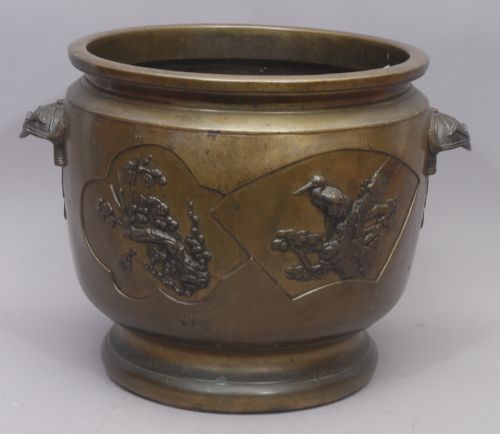
Japanese pieces demonstrate mixed metal work, incorporating detailed birds, kabuto motifs, and complex patination directly onto the bronze surface. French examples pair bronze and silvered bronze with cabinet timbers such as kingwood, burr walnut, and satinwood.
Materials recorded across the inventory include bronze, brass, cloisonné enamel, kingwood, and zinc.
Evaluating Quality in Bronze Work
Quality reveals itself in the crispness of the cast decoration and the depth of the metal patination. Superior examples show deliberate hand-finishing on birds, floral motifs, and geometric enamelling rather than soft, uniform casting lines.
The weight of the metal and the integrity of internal construction distinguish the work. Substantial bronze thickness and carefully fitted decorative mounts indicate higher manufacturing standards across French and Oriental pieces alike.
A Moreau Paris·Lerolle Fres
The Bronze Metal Jardiniere Glossary
- Jardiniere
- An ornamental pot or stand designed to hold plants indoors. These vessels often feature decorative casting or enamel work.
- Champlevé
- An enamelling technique where troughs or cells are carved into the bronze surface and filled with enamel before firing.
- Meiji Period
- A Japanese historical era lasting from 1868 to 1912, noted for intricate metalwork and decorative bronze bowls.
- Ormolu
- Gilt bronze mounted onto furniture or decorative vessels, providing contrasting golden highlights against dark wood or patinated metal.
- Cachepot
- A decorative outer pot designed to conceal a plain plant container without a drainage hole at the base.
- Hibachi
- A traditional Japanese heating device or bowl repurposed in decoration as a heavy bronze planter.
Bronze Metal Jardiniere: Frequently Asked Questions
What is a bronze metal jardiniere used for?
These vessels serve primarily as decorative containers to house potted plants, flowers, or small indoor trees within reception rooms and hallways.
Historically, they also functioned as interior centrepieces, hibachis, or freestanding display bowls designed to catch the eye through artistic metalwork.
How do I care for antique bronze?
Maintenance requires gentle dusting with a soft cloth to protect the original patinated surface and delicate enamel work from abrasion.
Harsh chemical cleaners and abrasive polishes should be avoided entirely, as they strip away the historic patina built up over centuries.
How do I distinguish Japanese Meiji bronze pieces?
Japanese Meiji pieces typically feature distinct mixed metal elements, including applied birds, kabuto motifs, and intricate surface patination.
Many of these heavier bowls originate from the late nineteenth century and reflect traditional crafting methods of the period.
Where were French bronze planters placed?
French examples often stood upon dedicated tables, plinths, or pedestals within formal nineteenth-century drawing rooms.
Cabinet makers paired the bronze and silvered metal mounts with exotic timbers like kingwood and burr walnut to complement interior decor.