




Bronze Mantle Clock Set
A bronze mantle clock set brings monumental French artistry and matching side ornaments to a principal room.
Bronze Mantle Clock Set
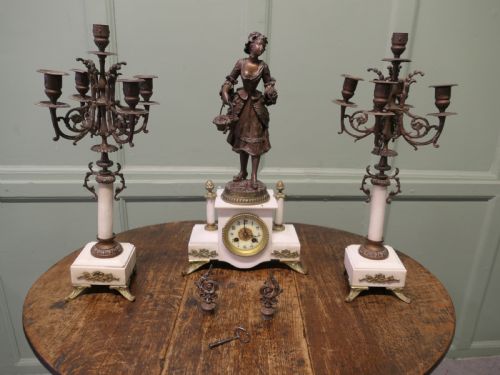
A bronze mantle clock set comprises a central timekeeper flanked by matching garnitures such as candelabras or urns, originating primarily from nineteenth century French workshops. These ensembles reflect historic revival movements including Louis XV, Louis XVI, and Empire styles, alongside later Art Deco expressions.
Most examples found here date across the Victorian era into the early twentieth century, utilising heavy stone bases and patinated metal figures. Buyers encounter complete three piece sets designed to sit symmetrically upon a chimney piece or sideboard.
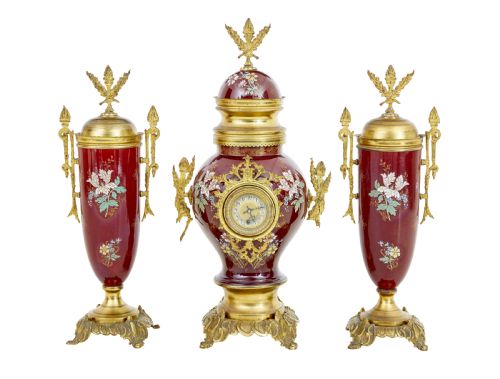
The configurations range from classical marble and ormolu arrangements to decorative toleware and porcelain mounted assemblies. Each piece within the set shares ornamental motifs and casting characteristics established by the maker.
Materials and construction methods
Foundry workers cast the figures and mounts in bronze, brass, or gilt bronze, frequently applying ormolu gilding to highlight intricate surface details. Skilled artisans carved white, siena, and black marble bases to support the weighty metal components.
Clock movements relied on brass gear trains driving eight day striking mechanisms, often paired with enamel dial faces and protective glass bezels. Candelabras and garniture urns shared identical foundry techniques, matching the central clock case in finish and decorative language.
Several sets feature literary figures reading books in bronze, proving that even clocks need a quiet story.
Distinctions in craftsmanship and design
The crispness of the bronze chasing and the depth of the mercury gilding or ormolu separate superior sets from simpler commercial productions. Heavier marble bases and more complex figural subjects, such as cherubs or allegorical figures of literature, indicate higher workshop ambitions.
Completeness dictates the standing of a garniture set, as matching candelabras or side urns must share the exact patination and foundry marks of the central clock. Signed movements and original glass domes further elevate the standing of an antique set.
Finnigan Manchester·Ferdinand Barbedienne
The Bronze Mantle Clock Set Glossary
- Garniture
- A set of matching decorative objects, typically a central clock paired with two side candelabras or urns, designed for symmetrical display. These matched groups dominated nineteenth century interior decoration.
- Ormolu
- Finely ground high-carat gold applied to a bronze base using a mercury amalgamation technique, producing a rich golden lustre. This finish characterises high-end French decorative metalwork.
- Toleware
- Painted or lacquered metalware manufactured to imitate more costly decorative finishes. It provides vibrant colour and pattern within nineteenth century domestic settings.
- Cloisonne
- An ancient technique where vitreous enamel is applied within compartments formed by soldered metal strips on a metallic base. Pieces featuring this work display intricate coloured patterns.
- Striking mechanism
- A clock movement configuration that sounds the hours and half hours on a bell or gong. Most period examples utilise an eight day movement requiring weekly winding.
Bronze Mantle Clock Set: Frequently Asked Questions
How do I wind my clock set?
Use the appropriate winding key on the dial face apertures to tension the springs, turning gently until resistance increases. Avoid over-winding to protect the historical brass mechanism.
Ensure you do not force the hands backward past the hour, as this can disrupt the striking train alignment. Regular professional servicing keeps the eight day movement running accurately.
Where should I place a garniture set?
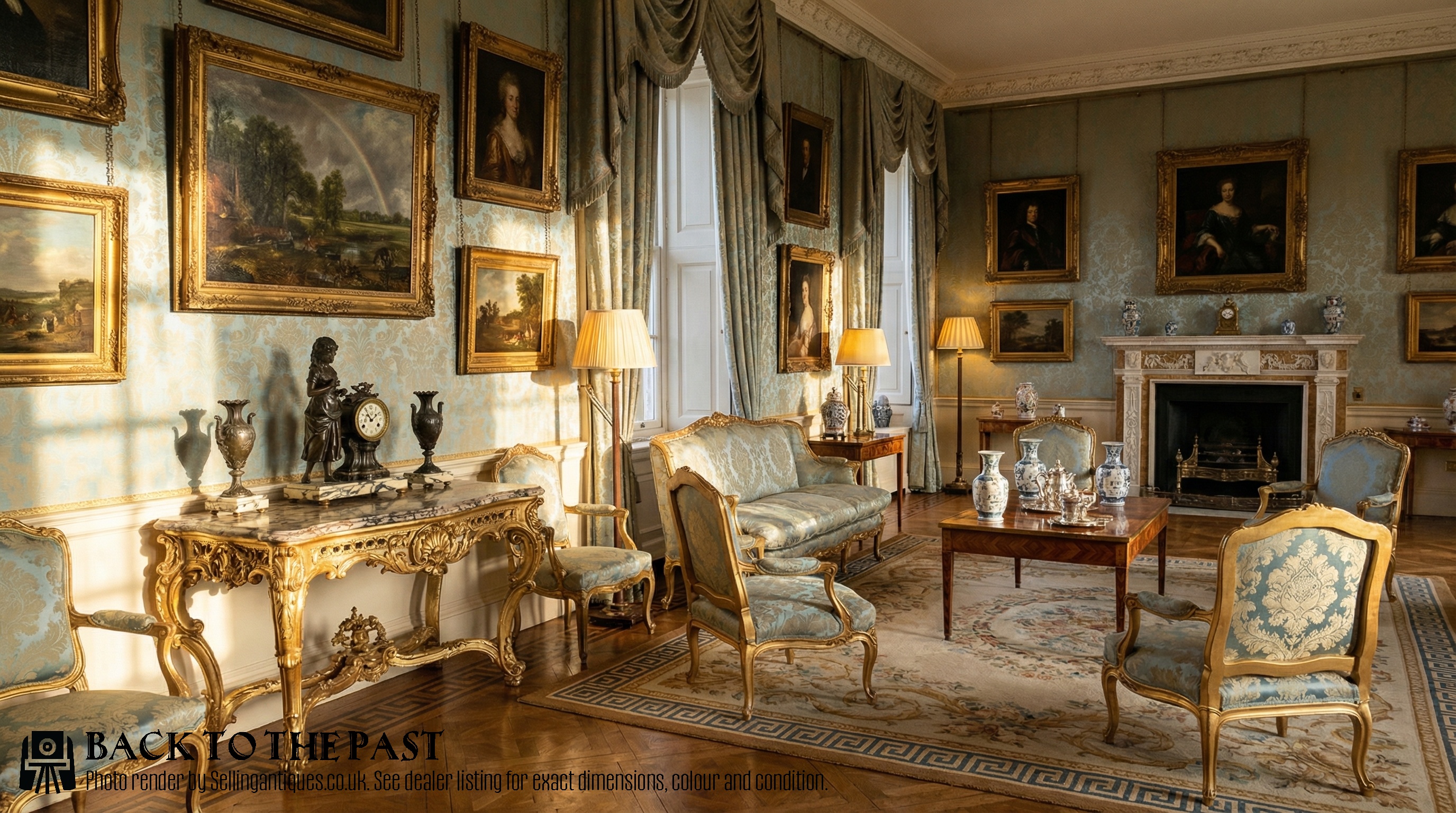
Position the pieces on a level surface away from direct heat sources and strong sunlight, which can damage marble and enamel dials. A mantelpiece or heavy sideboard provides the necessary structural support.
Allow adequate clearance around the central clock and side candelabras to appreciate the three dimensional casting work. Stability is essential given the substantial weight of the bronze and stone components.
How do I identify the period of a set?
Examine the stylistic cues, such as the symmetrical restraint of Louis XVI revival or the exuberant curves of Louis XV design. Nineteenth century French pieces often feature foundry stamps and serial numbers on the backplate.
Material choices also signal the era, with siena and white marble frequently supporting mid to late Victorian castings. Art Deco sets from later decades introduce streamlined geometric forms.