



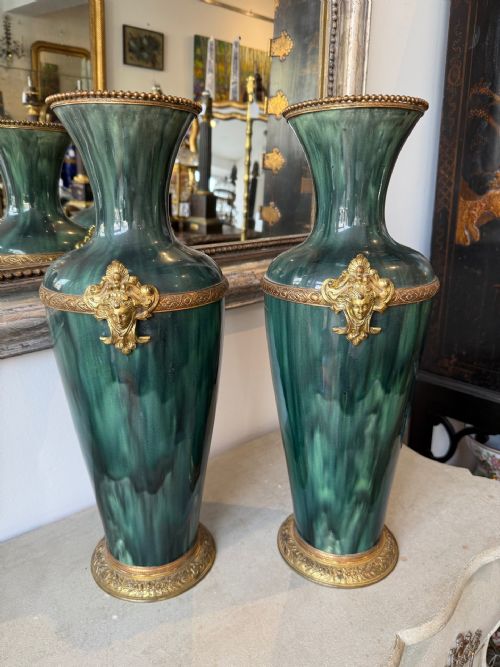
Bronze Mantel Vases
Bronze mantel vases bring classical weight and rich metallic lustre to a room, channelling centuries of European and Asian decorative arts.
Bronze Mantel Vases
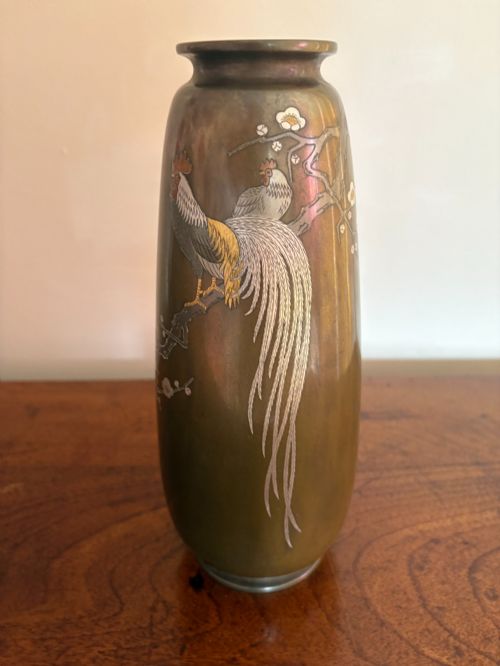
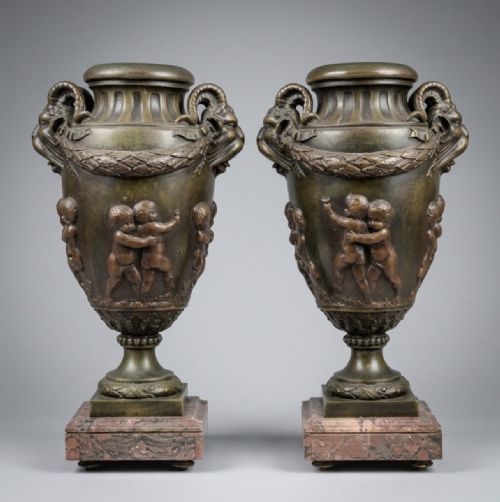
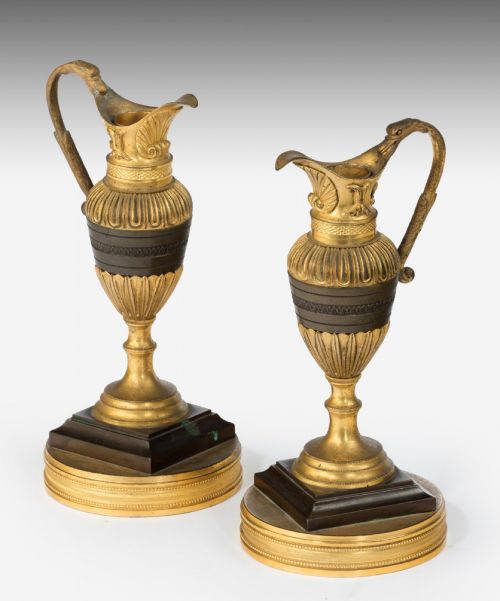
Bronze mantel vases encompass ornamental urns, ewers, and cassolettes designed to anchor a fireplace or sideboard. When searching for bronze mantel vases, collectors encounter heavy metal vessels produced across the nineteenth century in various European and Asian workshops.
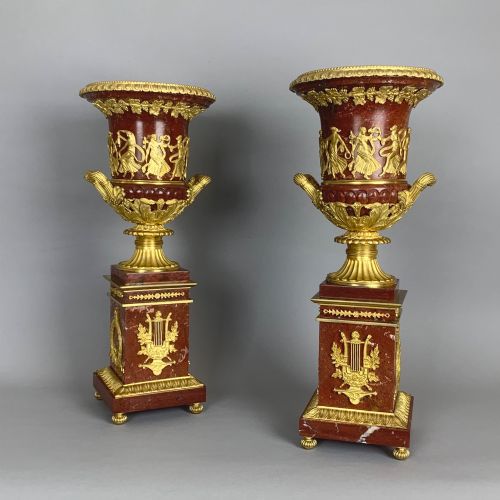
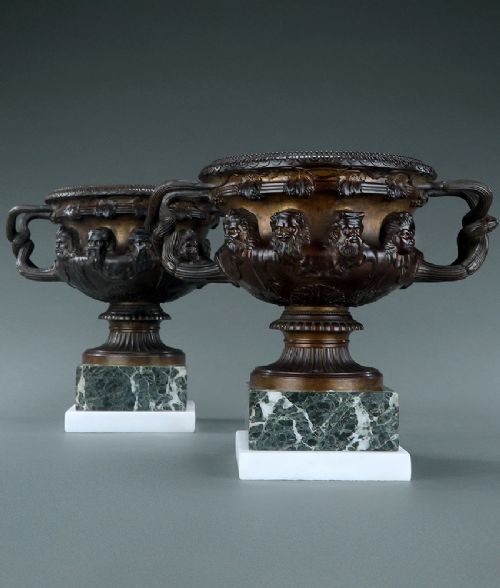
The objects take forms derived from antiquity, including campana shapes and classical urns resting upon fitted bases. Many survive as matched pairs intended for symmetrical display.
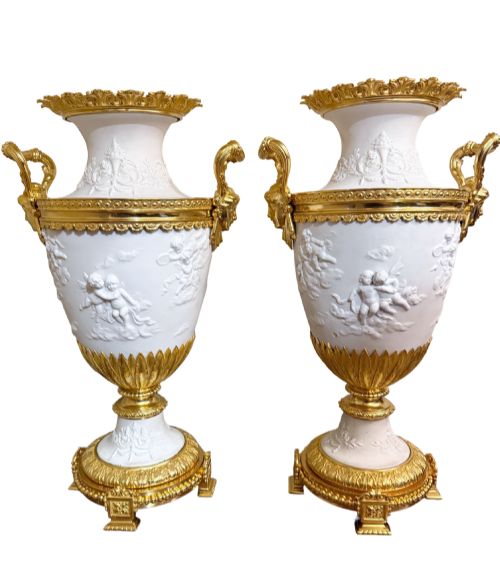
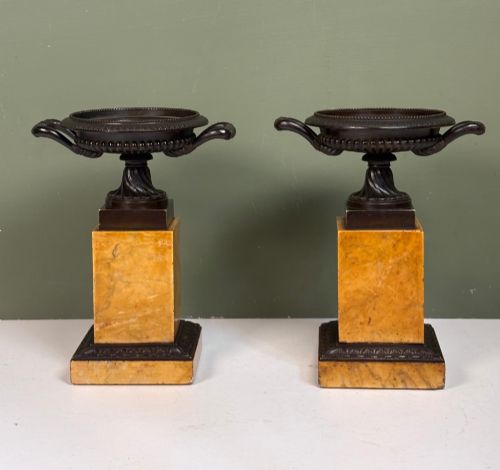
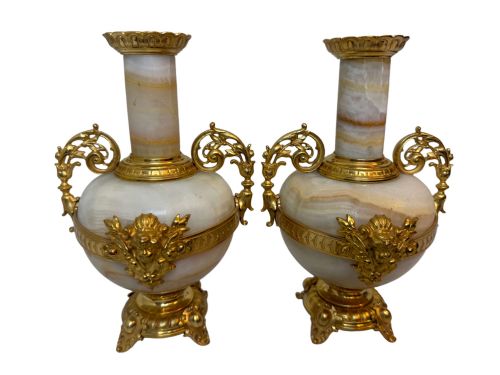
The inventory leans heavily towards nineteenth-century French and Italian interpretations of neoclassical and empire designs. Alongside pure metal work, many examples combine cast bronze or ormolu with contrasting materials such as marble, porcelain, and onyx.
Materials and methods of construction
Foundries shaped these pieces through traditional metal casting methods, frequently employing bronze, spelter, and brass. Artisans then applied fire gilding or ormolu finishes to highlight intricate surface details and provide a brilliant golden contrast.
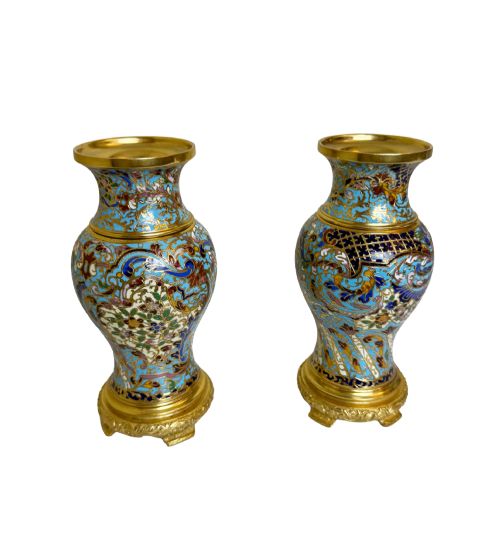
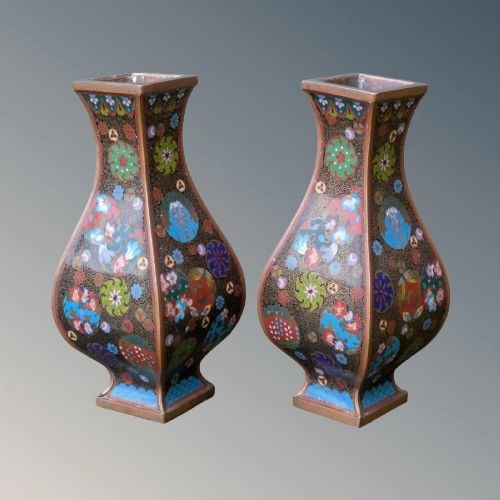
Many designs incorporate mineral elements, mounting cast metal collars, handles, and finials onto turned white marble, rouge marble, or onyx plinths. Decorative techniques like champlevé enamel and cloisonné add vibrant pools of colour directly to the metallic surfaces.
Distinctions in craftsmanship and finish
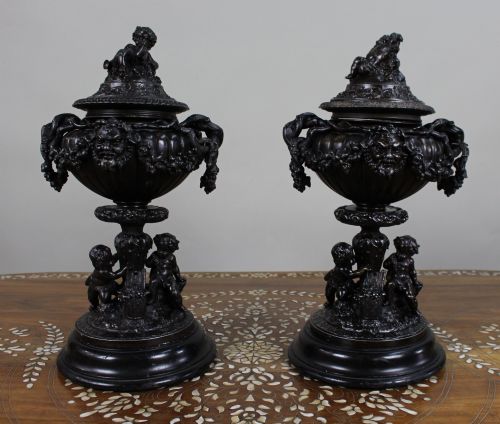
Quality reveals itself in the crispness of the casting and the depth of the chased details. Superior examples display sharply defined acanthus leaves, figures, and masks rather than softened contours resulting from worn moulds.
The integrity of the mixed media assembly marks the difference between standard production and exceptional work. Tightly fitted mounts, substantial stone bases, and richly preserved gilding distinguish the finer pieces.
KANASAWA
The Bronze Mantel Vases Glossary
- Ormolu
- Gilded bronze produced by applying a mercury and gold amalgam to a bronze base and heating it. This technique creates a durable, luminous golden finish characteristic of French decorative arts.
- Cassolette
- A decorative vessel with a reversible lid that functions either as a closed vase or an open perfume burner. These pieces often feature pierced metal mounts and stone bodies.
- Campana
- A bell-shaped classical vessel form frequently utilised for antique urns and vases. The flared rim and tapering body derive directly from ancient Roman pottery and metalwork.
- Champleve
- An enamelling technique where troughs or cells are hollowed out of a metal surface and filled with vitreous paste before firing. This process produces colourful patterned designs flush with the surrounding metal.
- Garniture
- A coordinated set of ornamental vases or urns designed for display together on a mantelpiece or sideboard. These sets typically comprise a central larger vessel flanked by two smaller matching pieces.
Bronze Mantel Vases: Frequently Asked Questions
What rooms suit bronze mantel vases?
These pieces fit naturally onto traditional mantelpieces, sideboards, and console tables where their height and weight create a strong focal point. They add architectural structure and metallic warmth to formal living spaces or studies.
Pairs work particularly well when balanced symmetrically beneath a mirror or painting. Their classic proportions also allow them to anchor modern minimalist interiors seeking a touch of historical gravity.
How were cassolettes used?
Cassolettes functioned as versatile decorative objects that could either display as solid lidded vases or serve as burners for fragrant resins and perfumes. Turning the lid over revealed a pierced insert designed to let scented smoke escape into the room.
In nineteenth-century drawing rooms, this dual purpose combined practical domestic utility with ornamental display. Many surviving examples retain this ingenious reversible mechanism.
How do I distinguish Empire from Regency pieces?
French Empire pieces lean heavily into Roman and Egyptian motifs, featuring strict symmetry, heavy ormolu mounts, and stark patinated bronze. They often incorporate military trophies, laurel wreaths, and classical figures.
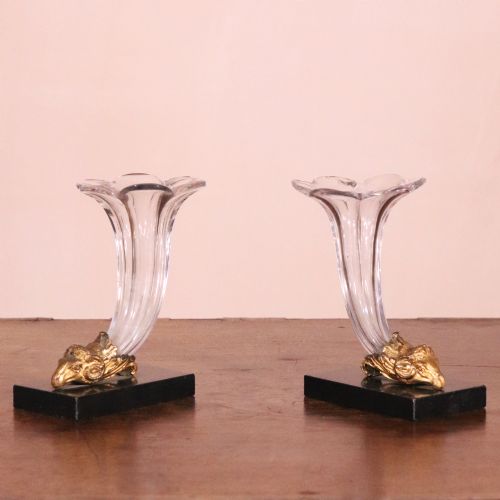
Regency examples from British makers share a similar classical inspiration but tend towards slightly more restrained, linear interpretations. They frequently integrate varied materials like cut glass or lighter marbles alongside the cast bronze.
Are these vases functional for fresh flowers?
Most antique mantel ornaments served a purely decorative role rather than holding water for floral arrangements. The presence of internal liners, lids, or delicate mixed media components like stone bases and enamel work means holding water could cause damage.
Dry botanicals or simply displaying the pieces empty protects the historical materials from moisture and corrosion. Assessing the interior helps determine whether a vessel was intended for liquids or dry display.