


Bronze Male Nude
A bronze male nude captures classical form and heroic proportion, prized by collectors for its sculptural depth and antique lineage.
Bronze Male Nude
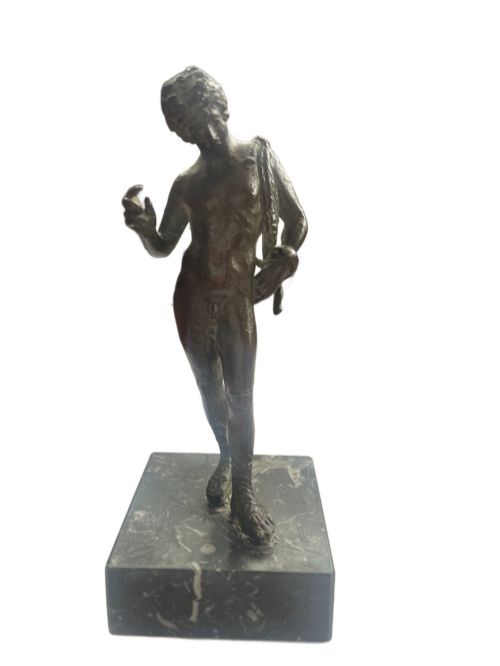
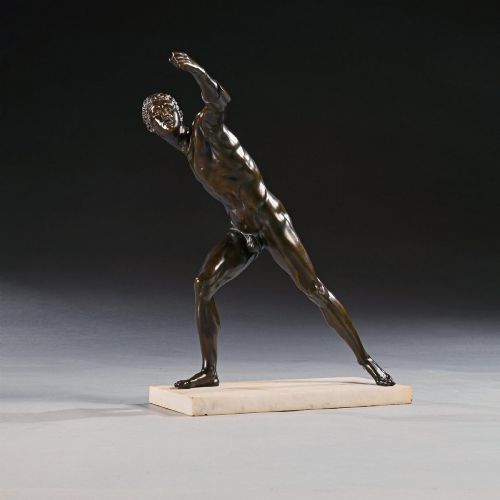
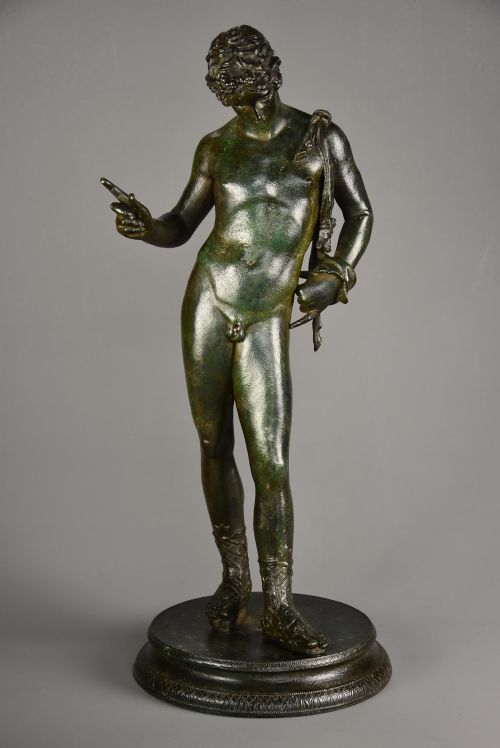
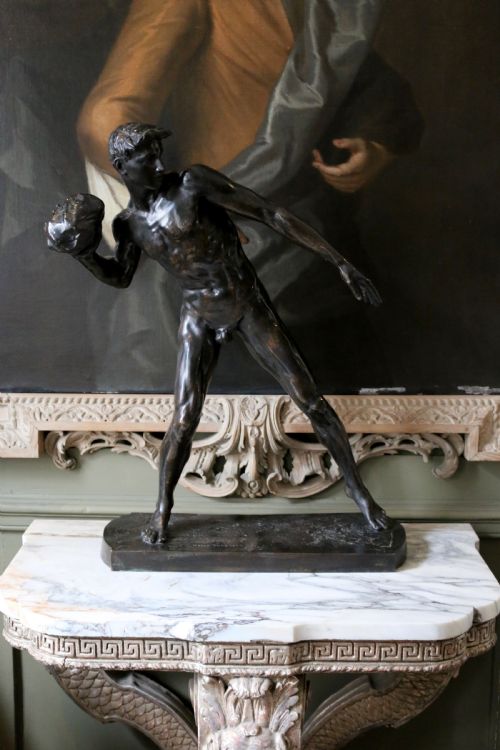
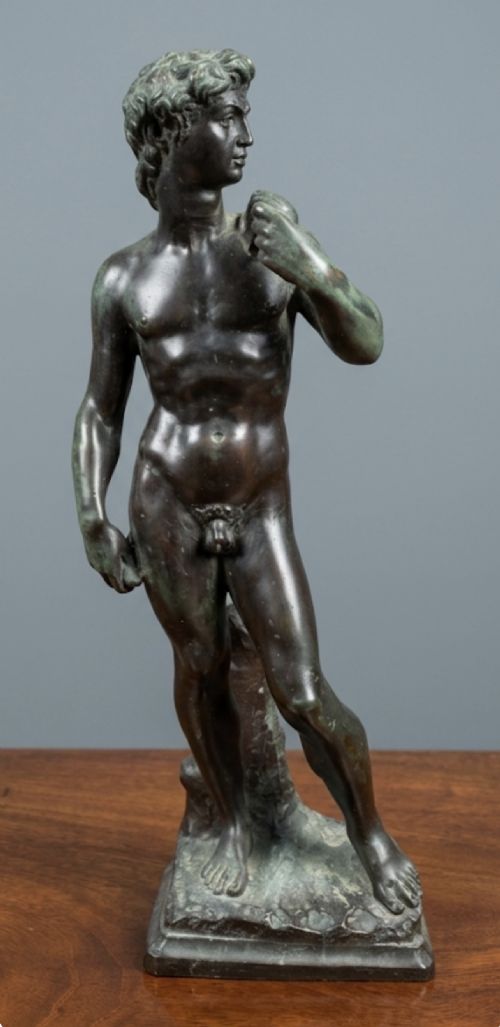
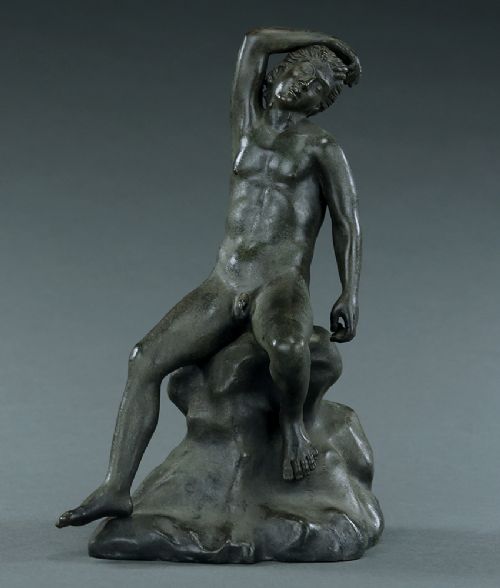
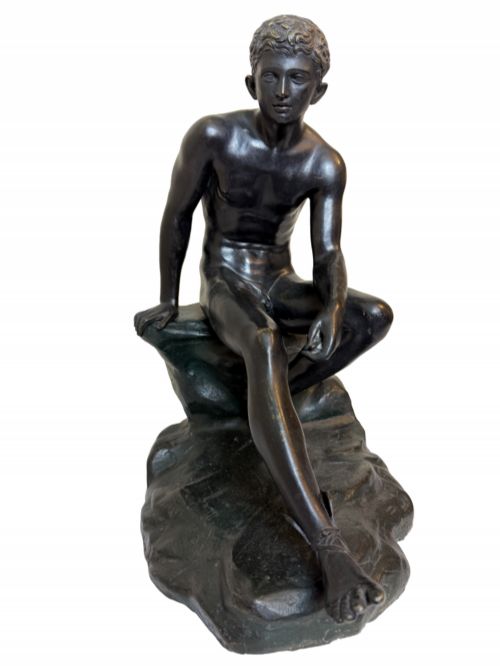
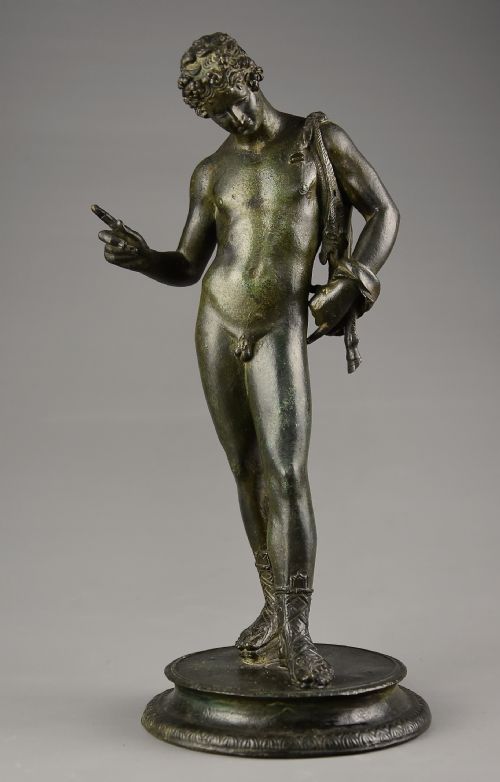
A bronze male nude represents the human form cast in metal, drawing heavily on classical mythology and antique sculpture traditions. When searching for a bronze male nude, collectors commonly encounter figures derived from Grand Tour souvenirs of mythological subjects like Narcissus, Bacchus, and various athletes.
The material record spans the nineteenth and early twentieth centuries, encompassing Victorian academic pieces and later Art Deco interpretations. Most examples on this page reflect Italian Neapolitan foundries or French academic casting traditions originating between eighteen-sixty and nineteen-thirty.
Subjects range from resting fauns and gladiators to Greek archers and wrestlers, often mounted on marble bases. These pieces served historically as study objects or decorative works for libraries and drawing rooms.
How they were made
Foundries utilised the lost-wax casting method or sand casting to achieve the fine musculature and surface detail visible on these figures. Metal composition typically consists of copper and tin alloys poured into moulds to form solid or hollow sculptures.
Surface treatments define the visual character, achieved through applied patination ranging from dark green and verdigris to rich brown tones. Bases frequently employ complementary natural materials such as fossil marble, stone, and standard marble to anchor the heavy metal figures.
Several figures of Narcissus stare downward for eternity, eternally transfixed by their own reflection in nonexistent pools.
What varies in quality
The depth and uniformity of the patination also distinguish finer examples, as chemical ageing applied with care enhances the sculptural contours. Additionally, the quality and weight of the supporting marble base contribute significantly to the overall presence of the sculpture.
Hamo Thornycroft·Eugene Barillot·Franz Iffland·Michele Amodio·Raoul Francois Larche
The Bronze Male Nude Glossary
- Grand Tour
- A traditional trip through Europe undertaken by upper-class young men in the eighteenth and nineteenth centuries to collect art and antiquities. Figures from this tradition often copy classical statues found in Italian museums.
- Patina
- A thin layer that naturally or artificially forms on the surface of bronze through oxidation. Different chemical treatments produce dark, green, or verdigris colourations on the metal.
- Lost-wax casting
- A metal-casting method in which a molten metal is poured into a mould that has been created by means of a wax model. Once the wax is melted away, the bronze fills the cavity.
- Neoclassical
- A style of art and architecture inspired by the classical art and culture of ancient Greece and Rome. This aesthetic prioritises heroic proportions, balance, and restrained emotion.
Bronze Male Nude: Frequently Asked Questions
What is a Grand Tour bronze?
A Grand Tour bronze is a small-scale reproduction of a famous classical sculpture, purchased by travellers touring Italy during the nineteenth century. These souvenirs allowed collectors to bring classical antiquity into domestic spaces.
Foundries in Naples and Paris produced these figures after ancient originals discovered during archaeological excavations. They capture the heroic male form in patinated bronze, frequently mounted on marble plinths.
How do I clean a bronze sculpture?
Cleaning requires only a soft, dry cloth to remove dust from the surface of the metal. Avoid water, soaps, or chemical polishes, which strip the historical patina.
Preserving the original surface is essential for maintaining the character of the piece. Occasional light application of microcrystalline wax can protect the metal from atmospheric moisture.
What does after the antique mean?
The term indicates that a sculpture copies a well-known ancient Greek or Roman statue rather than representing a new composition. Nineteenth-century founders routinely reproduced famous museum pieces for private collectors.
These interpretations allowed Victorian buyers to own recognised masterworks in reduced scale. Common subjects include mythological figures and classical athletes derived from museum collections.
Why do some bronzes have green patination?
Green patination mimics the natural weathering found on ancient bronzes buried in soil or exposed to marine environments for centuries. Nineteenth-century founders applied chemical solutions to fresh metal to simulate this antique effect.
Collectors prized dark green and verdigris surfaces for imparting an immediate sense of age. This finish highlights the anatomical details of the male nude by catching light in the recesses of the casting.