
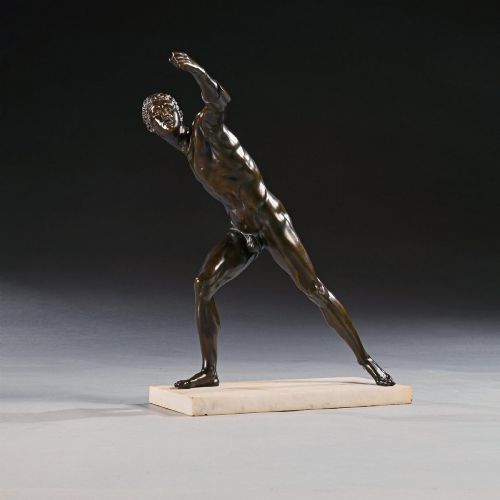
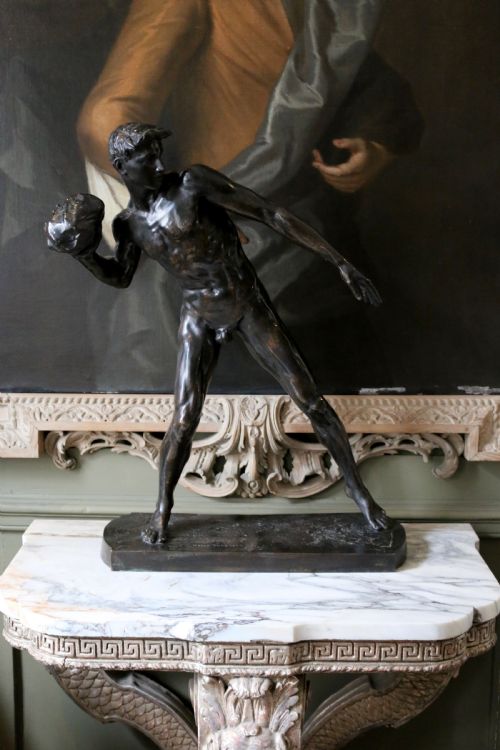
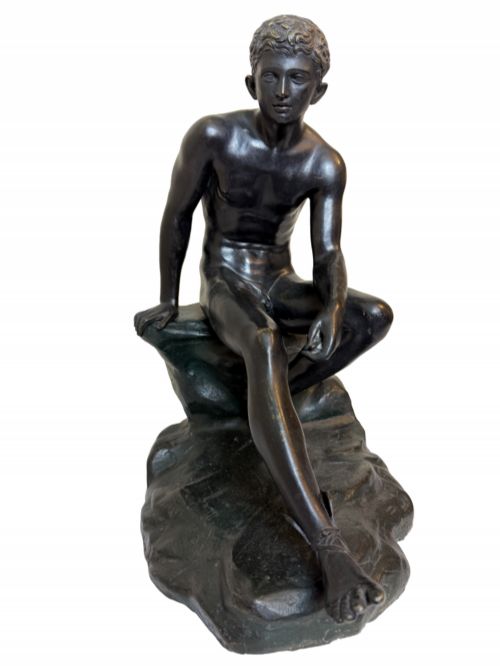


Bronze Athletic Statue
A bronze athletic statue captures muscular tension and sporting prowess, prized by collectors for bringing classical vigour and modern dynamism into an interior.
Bronze Athletic Statue
A bronze athletic statue represents male figures engaged in traditional sports, classical combat or physical exertion, spanning from nineteenth century grand tour reductions to interwar modernist figures.
The selections encountered here range widely in style, including Victorian depictions of gladiators and wrestlers alongside striking Art Deco tennis players, ice skaters and power lifters.
Most examples originate from French workshops or British studios, often mounted upon integrated marble or wooden plinths to elevate the sculptural form.
What varies in quality
Sculptural fidelity and anatomical precision distinguish the finest examples, where musculature and movement are rendered with convincing realism.
The nuance of the patination and the crispness of the chasing directly affect the visual depth and tactile appeal of the metal.
Listings feature periods spanning from the Victorian era through to the Art Deco movement of 1930.
Hamo Thornycroft·L Gerfaux·H Risch·Desire Grisard·Rudolf Küchler·Claire Colinet·Bruno Zach·Eden Antony Paul Noel
The Bronze Athletic Statue Glossary
- Patinated bronze
- Bronze treated with chemical solutions to produce a controlled surface colour or tone. This finish protects the metal and highlights the sculptural contours.
- Grand Tour
- Souvenirs purchased by nineteenth-century travellers visiting classical sites in Europe. These reductions reproduce famous antiquities for domestic display.
- Spelter
- A zinc alloy commonly utilised as a less costly alternative to bronze. It frequently receives a bronze-coloured coating to mimic genuine metal casting.
- Rosso Levanto marble
- A deep red Italian marble featuring distinctive white veining. It appears frequently as a base material for decorative bronzes.
- Chasing
- The manual refinement of a cast metal surface using hammers and punches. Artisans use this technique to sharpen details and remove casting flaws.
Bronze Athletic Statue: Frequently Asked Questions
What is a bronze athletic statue?
A bronze athletic statue depicts a male figure in sporting or physical motion, created primarily during the nineteenth and early twentieth centuries.
These pieces draw inspiration from classical antiquity, modern athletics and heroic iconography.
Where were these statues made?
Many examples originate from French foundries and British studios active during the Victorian and Art Deco periods.
Craftsmen produced both grand tour reductions of classical sculptures and contemporary sporting figures.
How do I care for bronze?
Dust the surface gently with a dry, soft cloth to prevent accumulation without disturbing the patinated finish.
Avoid applying polishes or chemical cleaners that might strip away the historic treatment of the metal.
How do I identify the period?
Stylistic indicators such as Neoclassical detailing, Victorian naturalism or Art Deco geometric lines provide primary clues to the date of creation.
Foundry marks, signatures and the composition of the base material offer further evidence of age.