
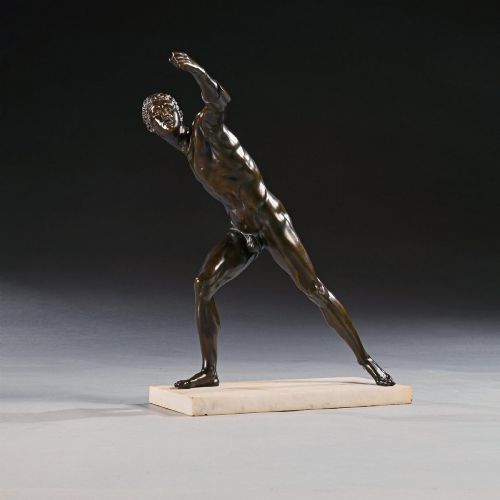
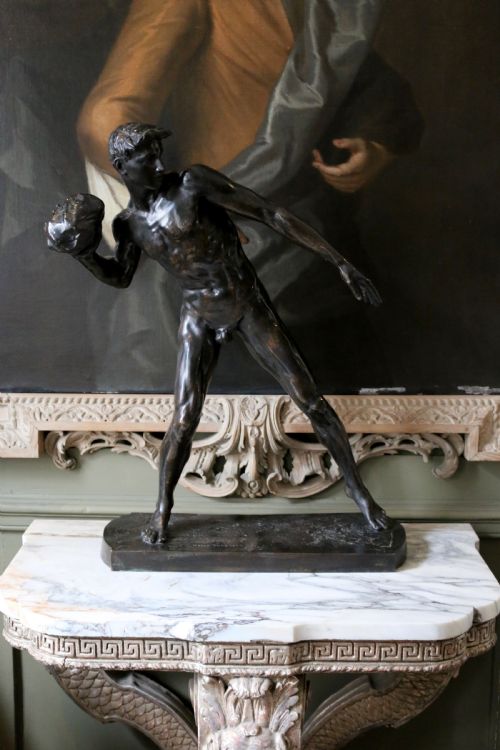
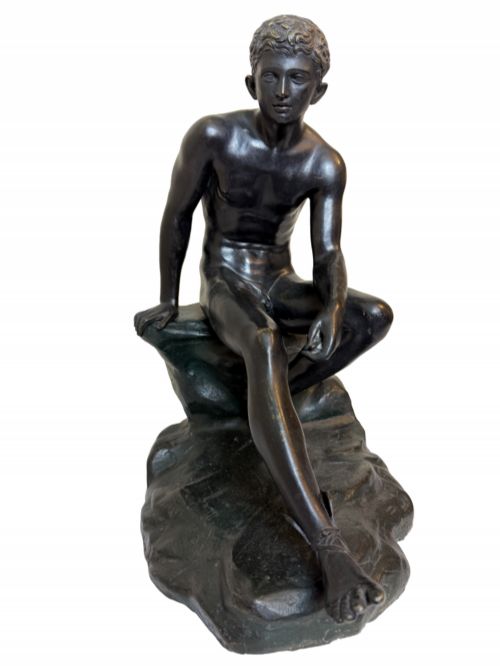


Athletic Male Sculpture
An athletic male sculpture captures physical power and classical form, offering a striking centrepiece for any room.
Athletic Male Sculpture
An athletic male sculpture represents the human form through classical, neoclassical, and modernist lenses, spanning the nineteenth and twentieth centuries. When searching for an athletic male sculpture, buyers encounter works depicting gladiators, wrestlers, tennis players, and power lifters.
The pieces on this page heavily feature French and British origins from periods including the Victorian era, the Grand Tour tradition, Art Nouveau, and Art Deco. Bronze is the dominant medium, often paired with marble bases or finished with rich patination.
Grand Tour subjects and gladiatorial figures from the nineteenth century sit alongside dynamic Art Deco tennis players and power lifters from the nineteen-thirties. Each form reflects the aesthetic preoccupations of its decade, shifting from heroic antiquity to modern athletic prowess.
Materials and construction
Bronze is the primary material used for these figures, shaped through traditional casting methods that allow for fine musculature and detail. Many of these bronzes receive a dark or coloured patinated finish to accentuate the contours of the body.
Spelter and metal also appear as alternative casting materials, providing a lighter and more accessible option for figures created during the twentieth century. Stone and marble frequently form the integral bases that support the heavier metal sculptures.
Listings feature bronze and spelter materials across Victorian, Art Nouveau, and Art Deco periods.
Judging quality and execution
The quality of the patination and the integrity of the base contribute significantly to the overall presence of the piece. Heavier bronze compositions with sophisticated patinas demonstrate a higher grade of foundry work than standard commercial casts.
Hamo Thornycroft·Desire Grisard·Rudolf Küchler·Bruno Zach·Eden Antony Paul Noel
The Athletic Male Sculpture Glossary
- Patinated bronze
- Bronze treated with chemical solutions to produce a specific surface colour and tone. This process protects the metal and enhances visual depth.
- Spelter
- An alloy of zinc and lead used as a cost-effective substitute for bronze. It is softer and typically shows a painted or faux-bronze finish.
- Grand Tour
- A cultural tradition where affluent travellers collected classical antiquities and bronze reductions in Europe. These nineteenth-century pieces emulate ancient sculptures.
- Neoclassical
- A style reviving the art and culture of ancient Greece and Rome. It prioritises proportion, symmetry, and heroic subject matter.
- Art Deco
- A design style from the nineteen-twenties and nineteen-thirties characterised by streamlined shapes and dynamic movement. Figures from this period often celebrate modern sports.
Athletic Male Sculpture: Frequently Asked Questions
What periods do these sculptures cover?
The pieces span the nineteenth and twentieth centuries, taking in Victorian work, Grand Tour souvenirs, and nineteen-thirties Modernism.
Art Nouveau and Art Deco movements also contribute distinct interpretations of the male form.
How do I care for a bronze sculpture?
Keep the metal clean by dusting it gently with a soft dry cloth to prevent grime accumulation.
Avoid harsh chemical cleaners that can strip away the original patination.
What is the difference between bronze and spelter?
Bronze is a durable copper alloy that takes fine detail and patination exceptionally well.
Spelter uses softer base metals like zinc and requires careful handling due to its fragility.
Where were most of these pieces made?
France and Britain produced a large proportion of these sculptures, particularly within established European foundries.
Grand Tour bronzes specifically originated to satisfy travellers returning from Italy and Greece.