
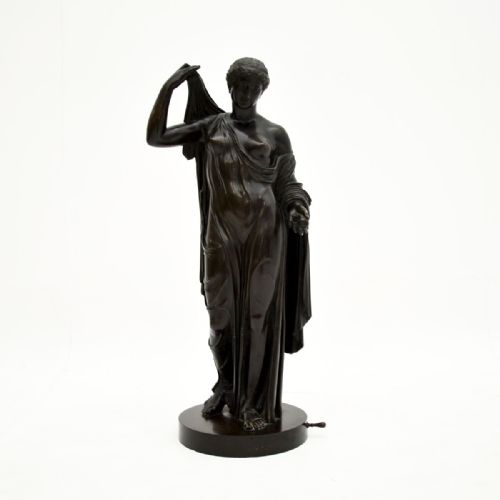
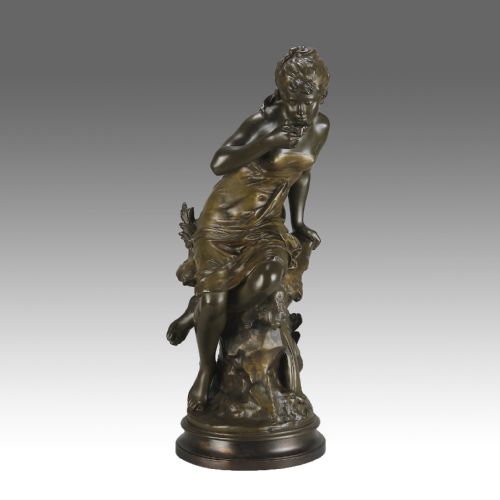
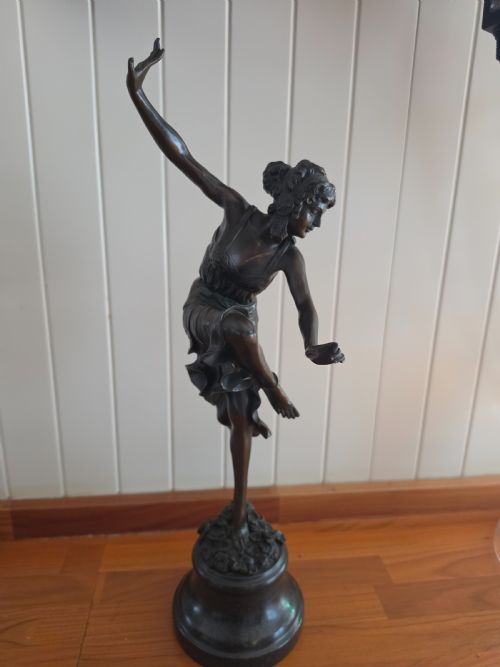


Bronze Maiden Figurine
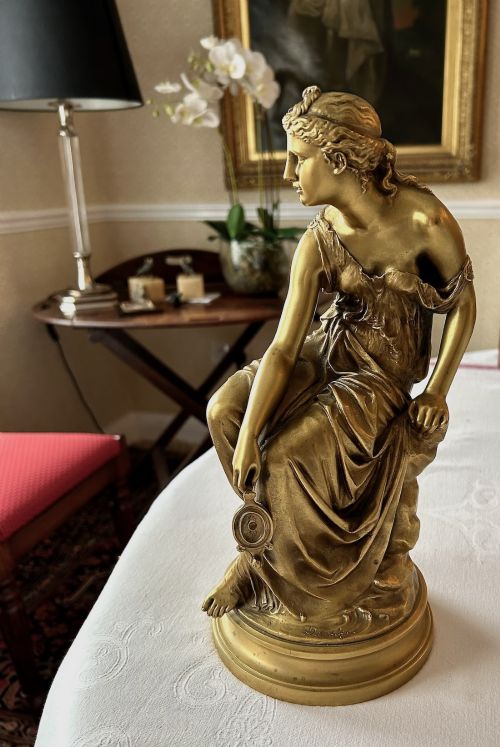
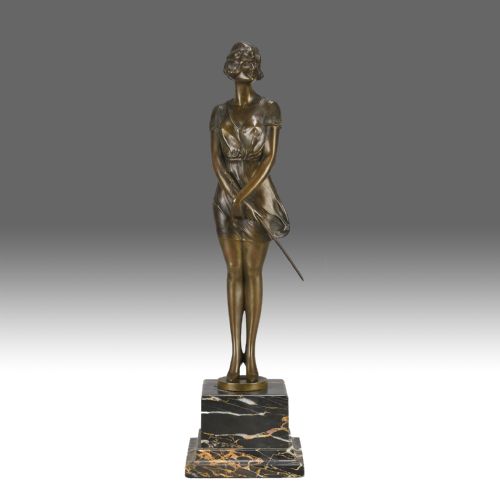
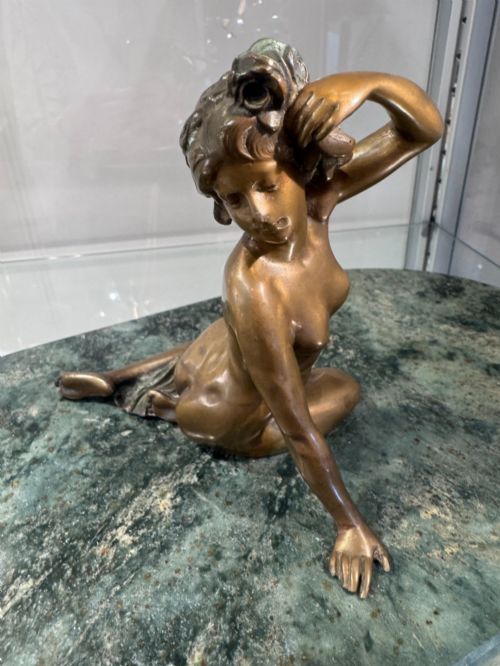
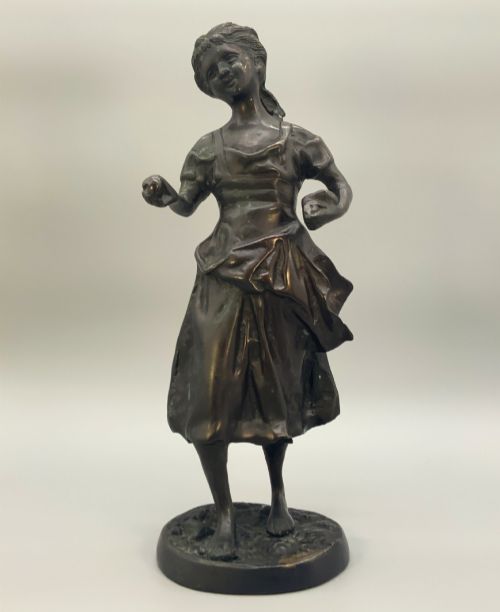
These bronze maiden figurine examples combine classical and turn-of-the-century grace, capturing female figures in bronze, patinated metal, and carved marble bases.
Bronze Maiden Figurine
A bronze maiden figurine represents female figures set within nineteenth and early twentieth-century sculptural traditions, spanning classical robed ladies, dancers, and allegorical subjects. Buyers seeking these works encounter pieces originating mainly from French and continental workshops during the Victorian, Art Nouveau, and Art Deco periods.
The assortment on this page relies heavily on French output from the late nineteenth century alongside Art Nouveau and Art Deco creations. Subjects range from mythological water carriers and dancers to literary allegories mounted on stone plinths.
Most entries showcase single female subjects standing, seated, or dancing, often integrated with natural motifs or classical drapery. These sculptures function as tabletop ornaments or cabinet pieces reflecting the decorative tastes of their respective eras.
Materials and methods
Foundry work relied predominantly on traditional casting methods using bronze, sometimes finished with patinated or gilt surfaces to accentuate the drapery and hair of the figures. Alternative media such as spelter, bronzed plaster, terracotta, and earthenware appear alongside metal casts.
Many sculptures incorporate integral bases of carved marble or stone to anchor the standing or seated figures securely. Surface details like robes, musical instruments, and floral attributes receive hand-chased finishing work after the initial cast cools.
Listings incorporate nineteenth-century Victorian works alongside Art Nouveau and Art Deco examples.
Judging the workmanship
Quality rests upon the crispness of the chase work in the metal and the subtlety of the patination applied to the surface. Stronger examples retain sharp facial expressions, delicate fingers, and intricate folds in fabric without losing definition.
The integration of the figure with its marble base and the presence of clear signatures or foundry stamps elevate the standing of a piece. Finer casts demonstrate thoughtful proportions and a balanced weight distribution across the composition.
Etienne-Henri Dumaige·Bruno Zach·Moreau Family·Mathurin Moreau·C J R Colinet·Zoldan Kovats·Villanis·Clodion·Claudius Marioton·Hans Müller·Georges Van Der Straeten·Cherc·Guillot·Maurice Bouval·C Neuhaus·Emmanuel Villanis·Charlotte Monginot·Hans Schork·A Gaudez·Henri Plé·Leon Pilet
The Bronze Maiden Figurine Glossary
- Patinated bronze
- Metal treated with chemical solutions to produce a distinct surface colour or aged finish. This process highlights sculptural contours and protects the underlying alloy.
- Spelter
- A zinc-based alloy commonly utilised as an affordable alternative to bronze during the nineteenth and early twentieth centuries. It accepts similar metallic finishes but possesses a lighter weight.
- Art Nouveau
- A decorative style characterised by flowing, organic lines and floral motifs prevalent around nineteen hundred. Sculptures from this movement frequently depict women with long, cascading hair.
- Art Deco
- A later twentieth-century design movement favouring geometric precision, stylised forms, and streamlined grace. Figures from this period often display dynamic poses associated with dance and modern athleticism.
Bronze Maiden Figurine: Frequently Asked Questions
How do I clean a bronze maiden figurine?
Dust the surface gently with a soft, dry brush to prevent the accumulation of particles in recessed crevices.
Avoid using water, chemical solvents, or abrasive polishes that might strip away the original patination.
Are these figures solid bronze?
Many sculptures utilise hollow-cast bronze construction to manage weight and manufacturing costs effectively.
Alternative listings may employ solid spelter, terracotta, or plaster rather than standard metal alloys.
What periods do these pieces span?
The available selection primarily encompasses nineteenth-century Victorian works alongside Art Nouveau and Art Deco creations.
Dates generally range from the late eighteen-hundreds through the early nineteen-thirties.
How can I tell bronze from spelter?
Bronze exhibits a heavier weight, a resonant sound when lightly tapped, and a durable metallic grain.
Spelter feels lighter, is softer to the touch, and often shows a greyish metal beneath worn areas of finish.