



Gilt Bronze Maiden
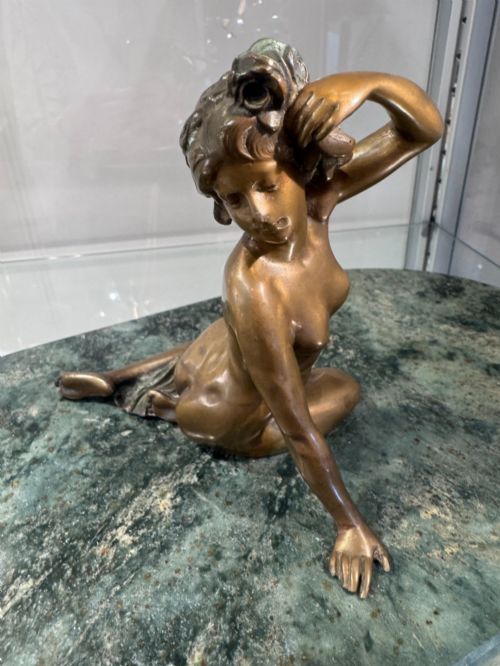
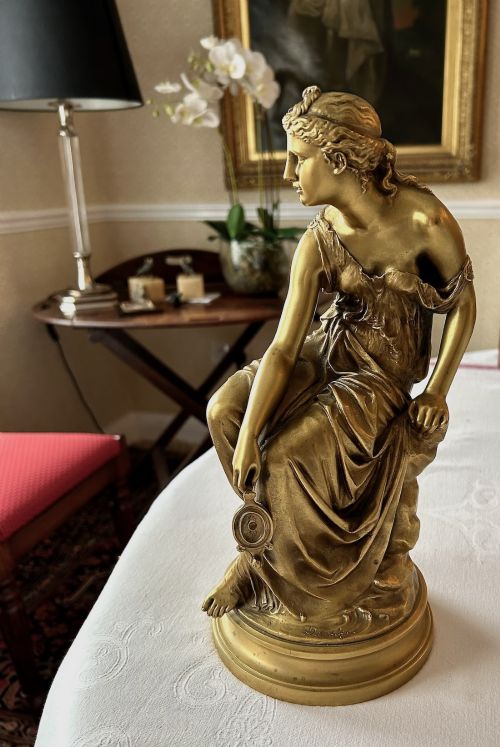
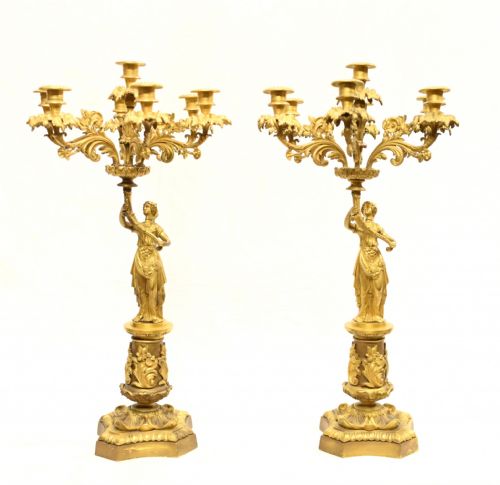
These gilt bronze maiden figures bring classical poise and fluid Art Nouveau styling into a room, fashioned from gilded metal and stone.
Gilt Bronze Maiden
A gilt bronze maiden refers to sculptural figures, lamps, candelabras and clocks depicting female forms rendered in gilded bronze, ormolu and mixed media. Buyers searching for a gilt bronze maiden encounter pieces ranging from strict 19th century neoclassical figures to sinuous Art Nouveau interpretations.
The objects take many functional and decorative forms, including mantel clocks, table lamps, candlestick pairs and centrepiece bowls. Victorian and 19th century examples frequently lean towards classical mythology or Grand Tour subjects, while later pieces adopt the flowing lines of the early twentieth century.
Most pieces seen on this page originate from French workshops and British collections spanning the Victorian era through the 1920s. Buyers are most likely to meet figures mounted on marble or onyx bases, alongside functional lighting and clock garnitures.
Materials and technique
The creation of these figures relied on traditional lost-wax or sand casting methods using bronze, which were then finished with mercury gilding, known as ormolu, or cold painting. Artisans combined cast metal with carved ivory in chryselephantine works, or paired the bronze directly with biscuit porcelain shafts.
Bases and secondary elements incorporate heavy natural stones such as green onyx, white marble and malachite, providing stable foundations for slender figures. Enamel details occasionally add colour to dials, vestments or decorative borders on clock garnitures and candelabras.
Gilt Bronze Maiden Retail Price Guide 2026
Typical asking prices for gilt bronze maiden among the pieces listed under this phrase on Sellingantiques today, from the lower quarter to the upper quarter. They describe what is for sale here now, not the wider market.
Object forms span practical table lighting and mantel clocks to decorative centrepiece bowls and standalone figural sculptures.
Quality distinctions
The distinction between ordinary and exceptional examples rests in the crispness of the metal chasing and the depth of the original fire gilding. Skilled founders hand-chased the cast bronze surfaces after removal from the mould, defining hair, drapery folds and facial expressions with sharp precision.
Material selection also dictates the standing of a piece, with dense marbles, rich green onyx or genuine malachite mounts elevating the overall execution. Furthermore, authenticated signatures from known 19th century bronzeiers or sculptors distinguish workshop output from anonymous commercial casting.
Etienne-Henri Dumaige·Ferdinand Preiss·Jean Jacques Pradier·Victor Paillard·Charlotte Monginot·Henri Honore Ple·Leon Pilet
The Gilt Bronze Maiden Glossary
- Gilt bronze
- Metal cast from a copper and tin alloy and coated with a layer of gold. This finish provides a warm, enduring lustre that resists tarnishing over decades.
- Ormolu
- Finely ground gold applied to a bronze base using a mercury amalgam technique, common in French decorative arts. It yields a distinctive, rich surface texture.
- Caryatid
- A sculpted female figure serving as an architectural support, often found incorporated into shafts of candlesticks or clock surrounds. This motif originates in ancient Greek design.
- Chryselephantine
- A term describing statues made from a combination of bronze and ivory. The technique gained popularity during the Art Nouveau and Art Deco periods.
- Clock garniture
- A set comprising a central mantel clock accompanied by matching side pieces such as urns or candelabras. They formed decorative centerpieces for nineteenth-century mantelpieces.
- Grand Tour
- A cultural journey undertaken by wealthy young Europeans in the 19th century, returning with small bronzes and classical souvenirs. These items often depict mythological figures and classical maidens.
Gilt Bronze Maiden: Frequently Asked Questions
What periods do these pieces come from?
The listings span the nineteenth century through the early twentieth century, taking in the Victorian era and the Art Deco period. Most objects reflect French manufacturing traditions of the 1800s and 1920s.
Design influences range from formal neoclassical revival styles to flowing Art Nouveau forms and Grand Tour souvenirs. Dates are typically attributed through stylistic markers and foundry marks.
How were these metal figures used originally?
Many figures served decorative roles as mantel garnitures, cabinet sculptures or centrepiece ornaments in wealthy nineteenth-century drawing rooms. Others fulfilled practical domestic duties as lamp bases, clock housings or candelabras.
Functional pieces integrated lighting and timekeeping into domestic interiors while showcasing artistic metalwork. They were placed prominently on mantelpieces, side tables and pedestals.
How do I care for gilt bronze and marble?
Dust bronze surfaces gently with a dry, soft microfibre cloth to prevent the accumulation of grit in recessed chasing. Avoid liquid polishes, abrasive pads and chemical cleaners that strip the original gilding.
Marble and onyx bases respond well to a gentle wipe with a damp cloth followed by thorough drying. Keep these objects away from direct sunlight and damp environments to protect the stone and metal finishes.
How do I tell Art Nouveau from neoclassical pieces?
Neoclassical pieces feature symmetrical arrangements, straight architectural lines and direct references to ancient Greek and Roman art. Maidens in these works wear classical drapery and display formal, restrained postures.
Art Nouveau figures embrace asymmetric, organic lines inspired by natural forms, featuring flowing hair and whipping drapery. The bases and surrounding elements often incorporate whiplash curves and stylised floral motifs typical of 1900 design.
What materials accompany the bronze in these works?
Founders frequently mounted bronze figures onto heavy bases of white marble, green onyx or Russian malachite to provide stability and contrast. Enamel dials and decorative panels also appear on clock garnitures.
Some twentieth-century sculptures incorporate carved ivory for the flesh portions of the figures in chryselephantine compositions. Biscuit porcelain occasionally forms structural elements such as candlestick shafts.