



Bronze Lady Figurine
A bronze lady figurine brings the elegance of the nineteenth and twentieth centuries into a room through cast metal and stone.
Bronze Lady Figurine
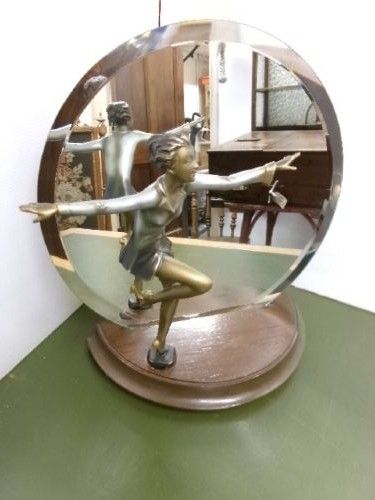
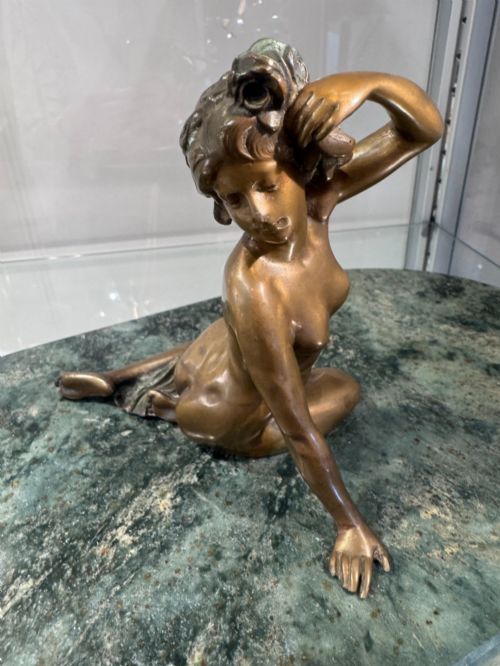
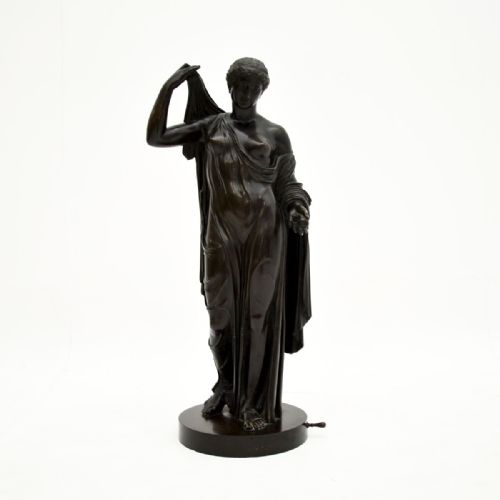
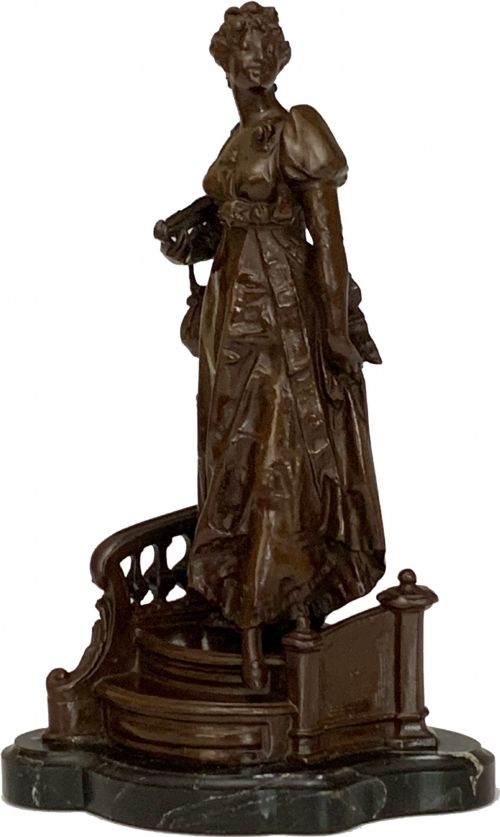
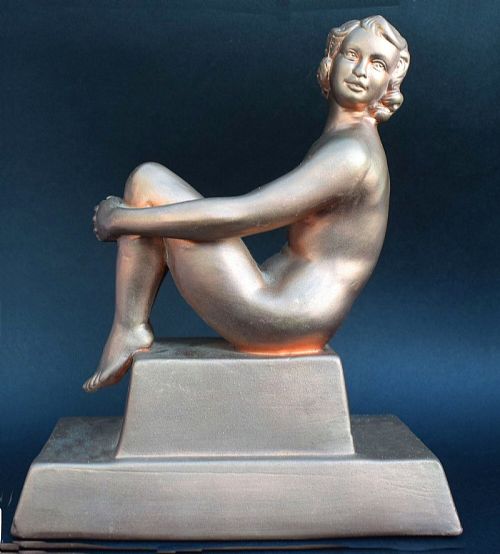
A bronze lady figurine spans distinct design movements from the late nineteenth century through to the interwar period. The selection includes dancers, bathers, and allegorical figures cast in metal and mounted on stone bases. Art Deco and Art Nouveau styles dominate the grouping, alongside nineteenth-century French interpretations of classical and neoclassical subjects.
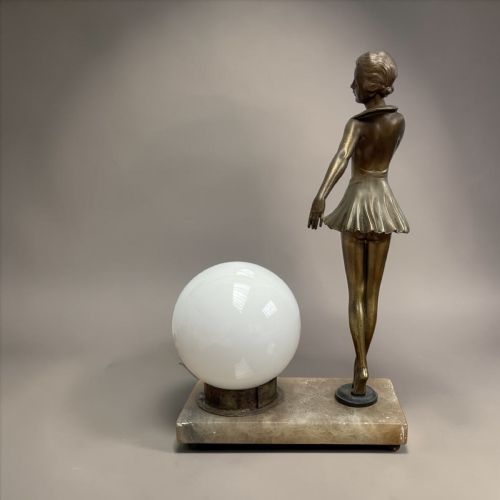
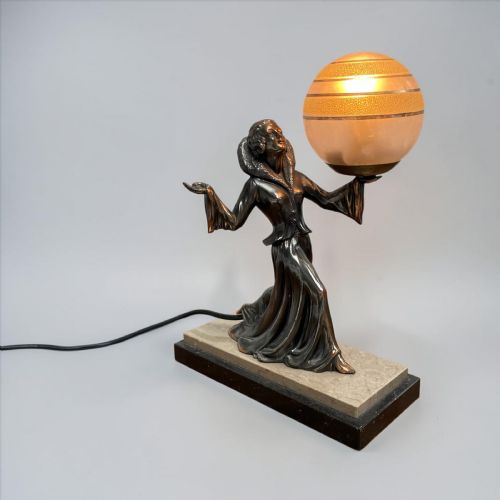
Makers produced these works in varied formats, ranging from cabinet sculptures and portrait busts to functional items like table lamps and car mascots. Spelter and patinated metal frequently substitute for solid bronze in more accessible versions, often paired with bases of marble, onyx, or alabaster.
Pieces from the 1920s and 1930s typically capture dynamic movement, such as dancing or running with greyhounds, while earlier nineteenth-century examples lean towards classical drapery and quiet repose. Buyers encounter both signed foundry editions and unsigned decorative models.
Materials and casting methods
Foundries utilised the lost-wax casting method for finer bronze figures, allowing crisp detail in drapery, hair, and facial expressions. Metal was heated, poured into moulds, and subsequently hand-finished with patination acids or cold-painted pigments.
Alternative materials like spelter - a zinc alloy - offered a less costly medium for mass production during the Art Nouveau and Art Deco periods, while retaining the appearance of bronze through surface finishes. Figures were routinely anchored to heavy natural stone plinths including marble, onyx, and alabaster to provide structural stability.
Listings span the nineteenth century, the Edwardian era, and the Art Deco period, utilising bronze, spelter, marble, onyx, and glass.
Distinctions in execution
The precision of the chasing and the depth of the patination define the upper tier of bronze figures. Skilled chiselling after the cast removed seam lines and sharpened details in hands, hair, and costume.
The quality of the mounting and the selection of the base material signal the standard of manufacture. Dense, well-polished marble or onyx plinths complement heavier metal casts, whereas lighter spelter pieces often sit on simpler or composite bases.
Georges Van Der Straeten·Bergman Vienna·Josef Lorenzl·Sylvain Kinsburger·Demetre Chiparus·Jennings Brothers·Maurice Bouval·Geo Maxim
The Bronze Lady Figurine Glossary
- Spelter
- A zinc alloy commonly utilised as a cheaper alternative to bronze for decorative figures. It takes patination well but is softer and more brittle than bronze.
- Patinated bronze
- Bronze that has been treated with chemical solutions to produce a specific surface colour or tone. This finish protects the metal and adds depth to sculptural contours.
- Chryselephantine
- A sculpture combining ivory or bone with bronze or other materials. Figures of this type appear frequently in Art Deco works.
- Cold painted
- Paint applied to unheated metal, typically bronze, without subsequent kiln firing. This technique requires careful preservation to prevent flaking.
- Car mascot
- A sculptural ornament mounted on the radiator cap of an automobile. Several Art Deco examples take the form of athletic or stylised women.
Bronze Lady Figurine: Frequently Asked Questions
What is the difference between bronze and spelter?
Bronze is a durable alloy of copper and tin that yields sharp casting details and considerable weight. Spelter is a softer zinc-based alloy that feels lighter and shows greater susceptibility to wear.
Examining the underside or areas of wear often reveals the greyish metal beneath a spelter finish, whereas bronze maintains its colour through the depth of the material.
How do I identify an Art Deco piece?
Art Deco figures generally display geometric styling, stylised drapery, and themes of modern movement such as dance, sport, or speed. The postures are clean and linear.
These works frequently incorporate materials like onyx and alabaster for their bases, contrasting with the organic curves typical of earlier Art Nouveau designs.
Where should I place these figures at home?
Position sculptures on stable surfaces away from direct sunlight and extreme temperature fluctuations to protect the metal patination and stone bases. Tabletops and mantelpieces offer suitable display locations.
Ensure figures mounted on marble or alabaster rest on level surfaces, as the stone bases can fracture if subjected to uneven weight distribution.