
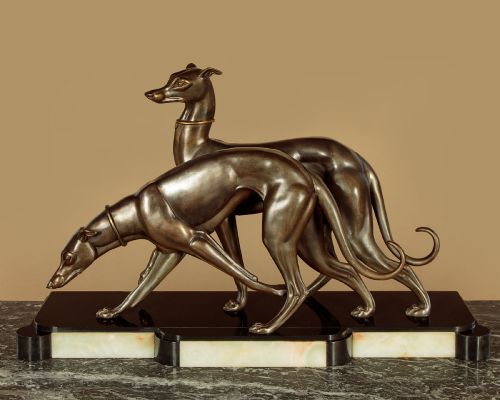
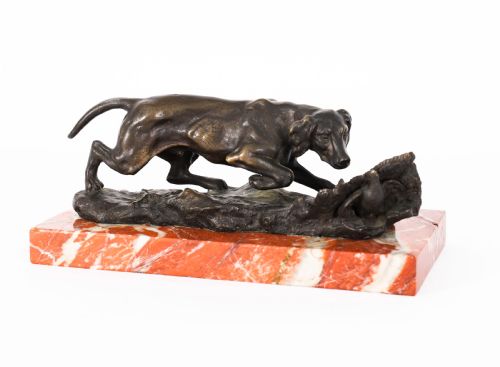
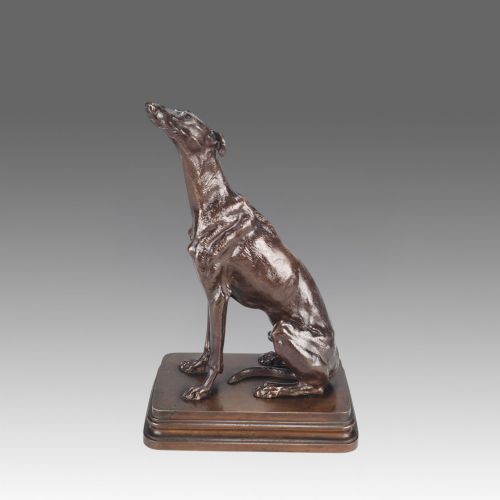
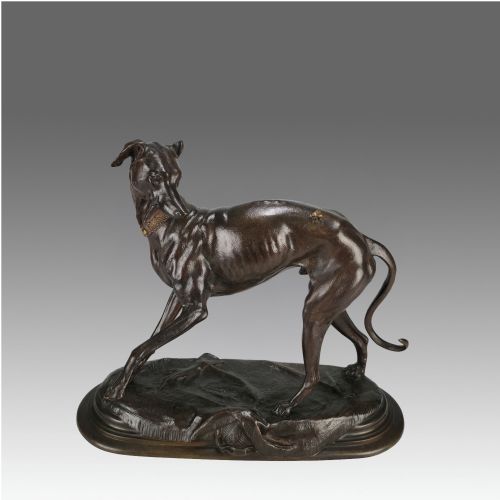


Bronze Hound Statue Sculpture
These bronze hound statue sculpture pieces capture canine form with anatomical precision, offering collectors enduring animalier artistry.
Bronze Hound Statue Sculpture
A bronze hound statue sculpture represents sporting, hunting, and companion dogs through periods spanning the nineteenth century to the art deco era. These works frequently depict greyhounds, setters, bassets, and hunting groups in resting, seated, or active poses.
Nineteenth century animalier works dominate the selection, often originating from French foundries and artists. Examples range from single hound figures to complex hunting groups paired with birds or prey.
Art deco interpretations introduce spelter and marble combinations alongside bronze, reflecting shifting material preferences by the nineteen thirties. These later pieces often incorporate human figures alongside the greyhounds.
Materials and casting methods
Foundries utilised traditional metal casting to shape the bronze, patinated bronze, and spelter into detailed canine forms. Many pieces combine these metal figures with heavy bases made from marble, onyx, or wood.
Makers applied chemical patination to the metal surface to create varied tonal depths, highlighting musculature and fur texture. Ormolu accents occasionally supplement the primary bronze work in multi-part compositions.
Listings span the nineteenth century through the nineteen thirties, featuring bronze, spelter, marble, and onyx materials in animalier styles.
Distinctions in execution
Quality rests upon the crispness of the chased surface detail and the naturalism of the animal anatomy. Master founders ensured that fur, expression, and muscle tone remained sharp after the casting process.
The choice of base material and the harmony between the metal sculpture and its marble or onyx mount influence the overall presence of the piece. Signatures from recognised animalier sculptors elevate the standing of individual works.
Carl Kauba·Alfred Dubucand·Alfred Barye·Pierre Jules Mene·Auguste Nicholas Cain·Arthur Waagen·Geo Maxim·Antoine Louis Barye·Joseph Francois Victor Chemin·Christophe Fratin·John Willis Good·Nikolai Lieberich·Barbedienne
The Bronze Hound Statue Sculpture Glossary
- Animalier
- A nineteenth century artistic movement focused on the realistic depiction of animals. Sculptors in this tradition studied live specimens closely to capture authentic movement and anatomy.
- Patinated bronze
- Bronze treated with chemical solutions to produce a specific surface colour or tone. This finish protects the metal and enhances sculptural detail.
- Spelter
- A zinc alloy used as a cost-effective alternative to bronze, particularly common in art deco figures. It takes plating and patination well to simulate heavier metals.
- Ormolu
- Gilt bronze ornamentation applied to furniture or sculptural bases. The technique involves bonding finely ground gold to a bronze base.
- Base
- The mounting plinth, typically fashioned from marble or onyx, that supports the metal sculpture. It provides stability and visual framing for the hound.
Bronze Hound Statue Sculpture: Frequently Asked Questions
What is an animalier bronze?
An animalier bronze is a nineteenth century sculpture specifically focused on realistic animal subjects. These works were created by specialised sculptors who studied animal anatomy in depth.
Such pieces often capture dogs in motion or repose, reflecting the Victorian passion for hunting and sporting animals.
How do I identify art deco hounds?
Art deco hound sculptures typically date from the nineteen twenties and thirties. They often feature stylised forms and may pair metal figures with geometric marble bases.
Materials used in this era also expanded to include spelter alongside traditional bronze.
What are marble bases used for?
Marble and onyx bases provide structural weight and a stable footing for heavy metal sculptures. They also act as a formal frame that elevates the bronze hound.
Many nineteenth century and later animalier works were purposefully designed to integrate with these stone plinths.
How should I clean bronze sculptures?
Bronze sculptures require gentle dusting with a soft, dry cloth to remove surface particles. Avoid chemical cleaners or water, which can damage the patinated surface.
Preserving the original patina maintains both the appearance and the historical integrity of the metalwork.