


Bronze Girl Figure
A bronze girl figure captures human movement and character in metal, offering a tactile focal point for a room.
Bronze Girl Figure
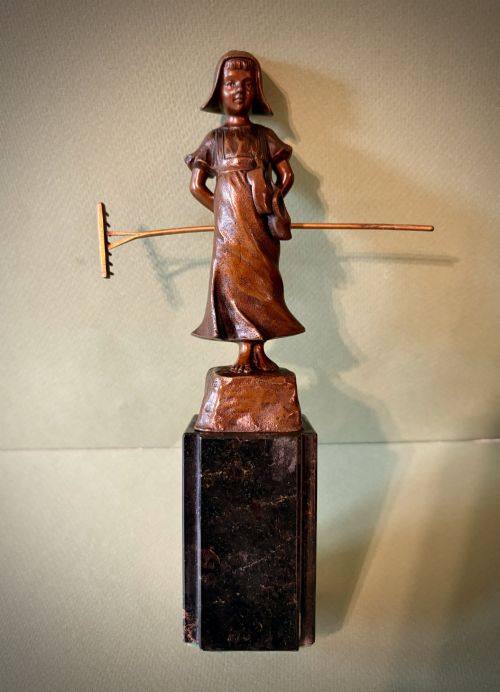
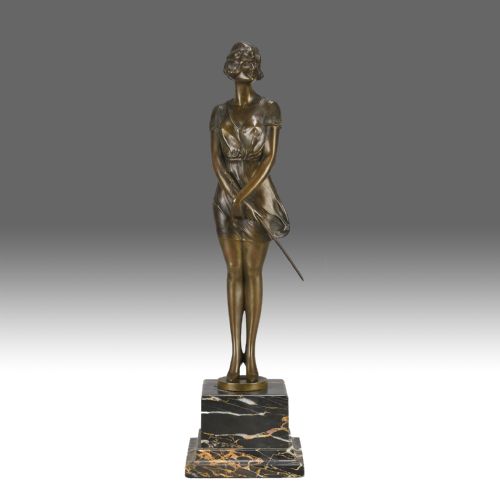
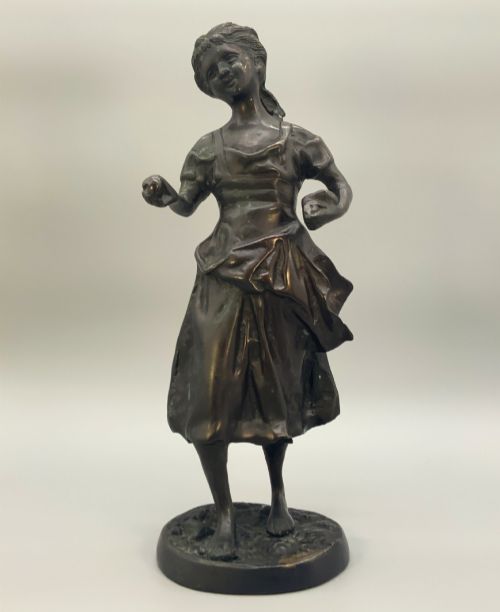
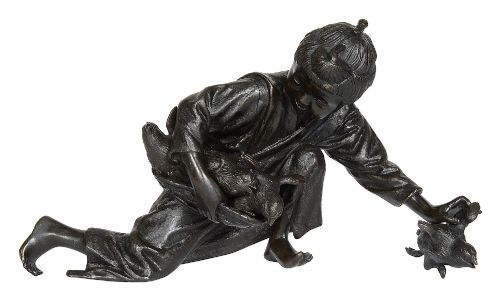
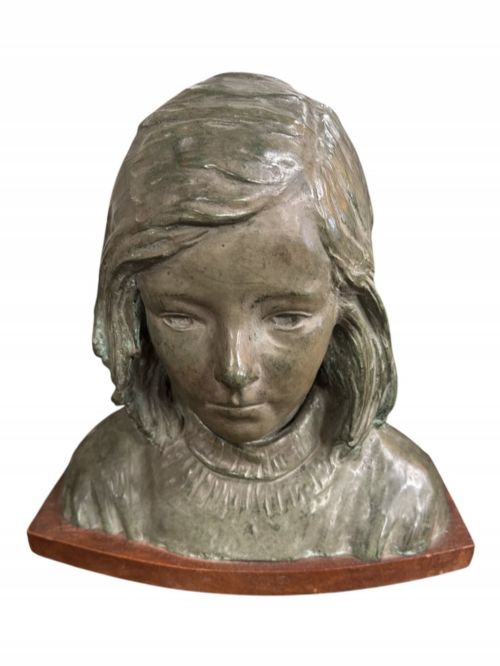
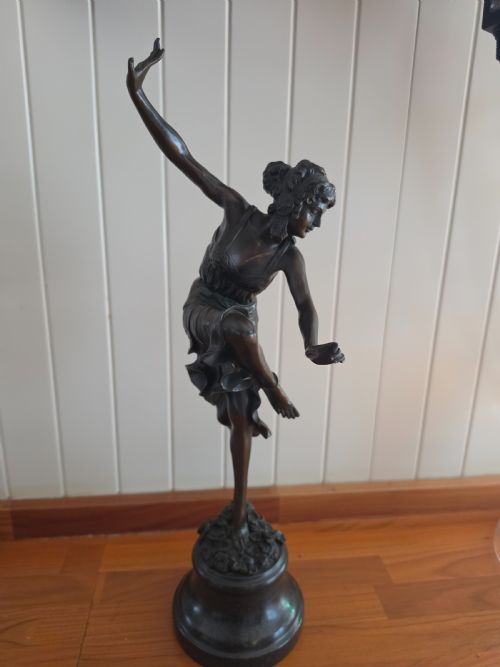
A bronze girl figure encompasses small statuettes, larger sculptures, portrait busts, and table lamps spanning the nineteenth century into the twentieth century. These pieces record subjects ranging from agricultural workers and traditional dancers to distinct Art Deco flappers and athletic youths.
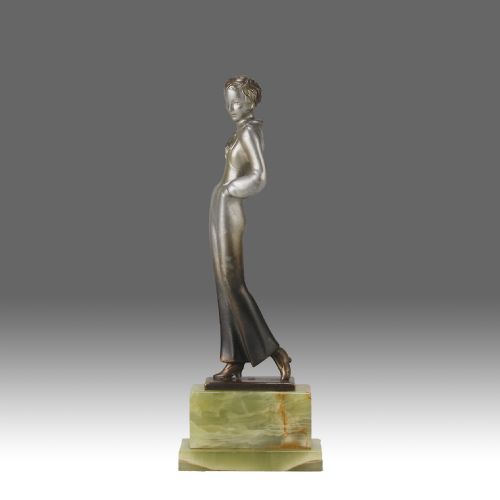
The most common examples on this page date from the Art Deco period of the nineteen twenties and thirties, often showing dancers or active figures on stone bases. Nineteenth-century French and Viennese works also appear frequently, alongside Japanese Meiji period examples and occasional Georgian or Victorian portrait studies.
Materials and production methods
Foundries produced these sculptures using traditional casting methods, frequently finishing the metal with patination, cold-painting, or gilding to enhance surface detail. Many figures combine cast metal with carved stone bases, utilising marble or onyx to anchor the composition.
Makers occasionally substituted spelter for bronze in commercial pieces, retaining the metallic appearance while altering the weight and durability of the statuette.
The listings span multiple centuries, incorporating Georgian and Victorian romantic studies alongside Art Deco dancers and Japanese Meiji bronzes.
Differentiating quality
Quality rests in the precision of the casting and the sensitivity of the final chisel work, which separates mass-produced items from master-modelled sculptures. Superior pieces exhibit crisp drapery, lifelike facial expressions, and nuanced surface patination that highlights anatomical structure.
The choice of base material and the presence of clear artist signatures or foundry marks further distinguish finer works from standard provincial castings.
Bruno Zach·Josef Lorenzl·C J R Colinet·D H Chiparus·Pierre Laurel·Alexandre Kelety·Emmanuel Villanis·J Camus·Geo Maxim·G V Vaerenbergh·Math Moreau·Mario Korbel·Leon Pilet·Charles Octave Levy·Henri Louis Levasseur·Andor Ruff
The Bronze Girl Figure Glossary
- Patinated bronze
- Metal treated with chemical solutions to produce a specific surface colour or aged appearance. This finish protects the bronze while defining shadows and contours on the figure.
- Cold-painted bronze
- Colour applied to a metal surface without subsequent firing or heat treatment. This technique is typical of Viennese animal and human figures from the late nineteenth and early twentieth centuries.
- Spelter
- A zinc alloy commonly utilised as an economical alternative to bronze. It is lighter in weight and softer than true bronze.
- Ormolu
- Finely ground high-carat gold mercury-gilded to bronze, or cast brass used decoratively. The finish yields a rich, warm lustre characteristic of French decorative arts.
- Meiji period
- The era of Japanese history lasting from eighteen sixty-eight to nineteen twelve. Bronzes from this time often display meticulous attention to traditional costume and daily activities.
Bronze Girl Figure: Frequently Asked Questions
What materials are these figures made from?
The pieces listed utilise cast bronze as the primary medium, often enhanced with cold-painting, gilding, or patination. Many figures also incorporate carved marble or onyx bases.
Some examples substitute spelter for bronze, offering a different weight and metallic composition while retaining similar sculptural forms.
How do I identify an Art Deco piece?
Art Deco sculptures typically feature streamlined designs, stylised clothing, and dynamic poses associated with the nineteen twenties and thirties. Dancers, athletes, and flappers appear frequently in this aesthetic.
These works often mount directly onto geometric marble or onyx plinths, reflecting the modernist design principles of the era.
Where were these sculptures produced?
The evidence shows a strong concentration of French foundries and sculptors, alongside Austrian Vienna bronze workshops and Japanese Meiji period metalwork. Provincial French and American makers also contributed to this tradition.
Each region maintained distinct approaches to casting, patination, and subject matter.
How should I display a bronze figure?
These sculptures require a stable surface away from direct moisture and extreme temperature fluctuations to preserve the metal patination and stone bases. Placement on a sturdy table or desk allows adequate appreciation of the three-dimensional form.
Heavier pieces with integrated lamps also function as focal lighting when placed appropriately near power sources.