



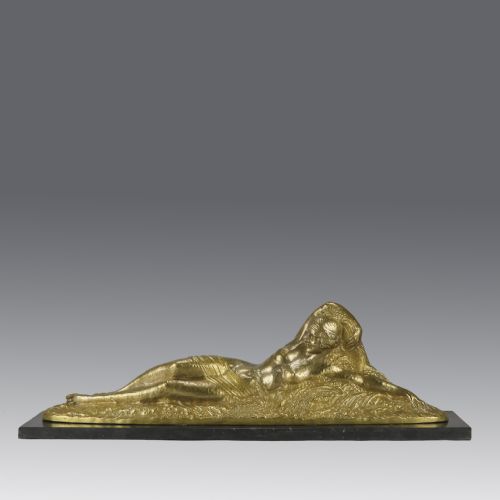




Bronze Female Reclining Nude
A bronze female reclining nude brings tactile weight and sculptural grace to a room, offering the enduring appeal of classical and modern form.

Bronze Female Reclining Nude
When you search for a bronze female reclining nude, you are looking at figural sculptures and figurines that depict women at rest across several distinct periods. These pieces range from classical nineteenth-century interpretations to stylised modernist works.
You are most likely to meet Art Deco examples from the nineteen-twenties and thirties alongside nineteenth-century French casts. They appear as standalone sculptures or functional items such as bookends.
The materials paired with the metal vary, creating distinct contrasts between the dark or gilt surfaces and their plinths. Marble, onyx, and slate frequently serve as bases for these figures.
Methods and materials of construction
The pieces are cast in bronze, patinated bronze, gilt bronze, or spelter, capturing intricate details of the female form. Foundry techniques allow for smooth contours and varied surface finishes.
Mounting often involves heavy stone plinths made of marble, onyx, or slate to anchor the reclining figures securely. These stone bases provide stability and visual contrast to the metalwork.
Bronze Female Reclining Nude Retail Price Guide 2026
Typical asking prices for bronze female reclining nude among the pieces listed under this phrase on Sellingantiques today, from the lower quarter to the upper quarter. They describe what is for sale here now, not the wider market.
Materials recorded across the selection include bronze, patinated bronze, gilt bronze, spelter, marble, onyx, and slate.
Distinctions in quality and execution
The choice and finishing of the supporting plinth also indicate quality. Dense, well-polished marble or onyx bases complement the metal sculpture far better than lesser materials.
Demetre Chiparus·Josef Lorenzl·Sibylle May·Edmond Leveque·James Pradier·Susse Freres·Ugo Cipriani
The Bronze Female Reclining Nude Glossary
- Patinated bronze
- Bronze treated with chemicals to produce a specific surface colour or tone. This finish protects the metal and enhances the sculptural depth.
- Spelter
- A zinc alloy frequently used as a cost-effective alternative to bronze in figural sculptures. It is typically painted or electroplated to imitate true bronze.
- Gilt bronze
- Bronze coated with a thin layer of gold leaf or gold powder. This technique adds a bright, reflective surface to the sculpture.
- Bookends
- A pair of heavy objects used to support a row of books upright. In this category, they incorporate reclining figures as decorative elements.
Bronze Female Reclining Nude: Frequently Asked Questions
What is the difference between bronze and spelter?
Bronze is a durable copper alloy valued for its strength and ability to take fine detail during casting. Spelter is a softer, zinc-based metal that was often used to produce more accessible decorative figures.
Spelter pieces are generally lighter than bronze and require careful handling to avoid surface damage. Over time, the applied finishes on spelter can show wear differently than a true chemical patina on bronze.
How do I identify an Art Deco piece?
Art Deco pieces from the nineteen-twenties and thirties typically feature streamlined forms, stylised anatomy, and geometric bases. The posture of the figure often emphasises modern elegance rather than classical realism.
These sculptures frequently utilise contrasting materials such as patinated metal paired with polished marble or onyx plinths. The overall aesthetic reflects the design sensibilities of the interwar period.
Are these figures mounted on stone bases?
Many of the reclining figures are secured to heavy bases made from materials like marble, onyx, or slate. These plinths provide necessary weight and stability while framing the sculpture.
The interaction between the warm metal of the figure and the cool, polished stone is a defining characteristic of many period pieces.
How should I display a reclining nude?
These sculptures require a stable surface where their full length and profile can be appreciated from multiple angles. Low tables or open shelf spaces allow the interplay of metal and stone to catch ambient light.
Because many pieces incorporate substantial stone bases, ensure the furniture supporting them has adequate load-bearing capacity.