



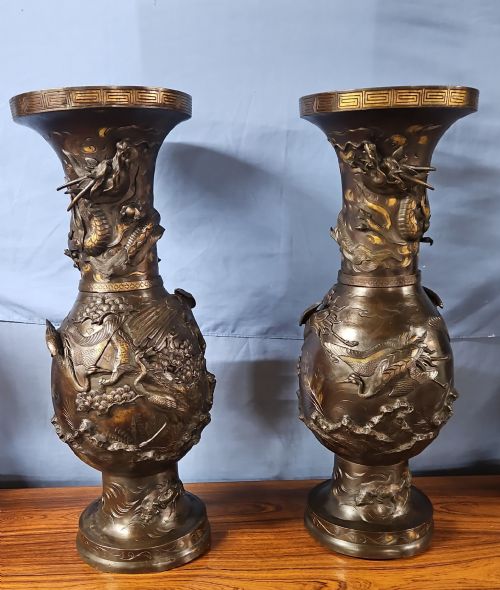


Bronze Dragon Vase
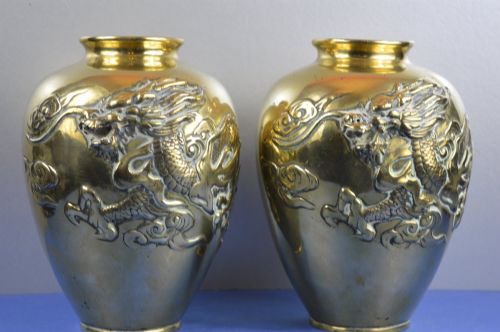
A bronze dragon vase brings monumental presence to a room, cast with writhing scales and powerful claws that define the finest metalwork.
What these bronze dragon vases are
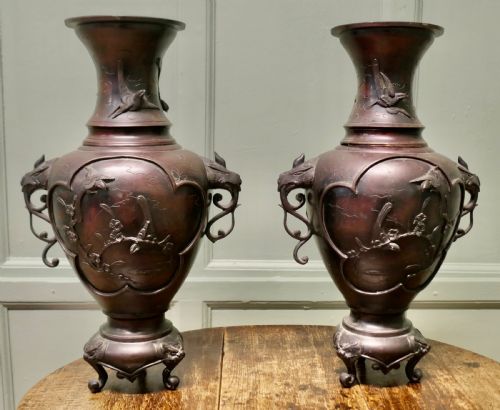
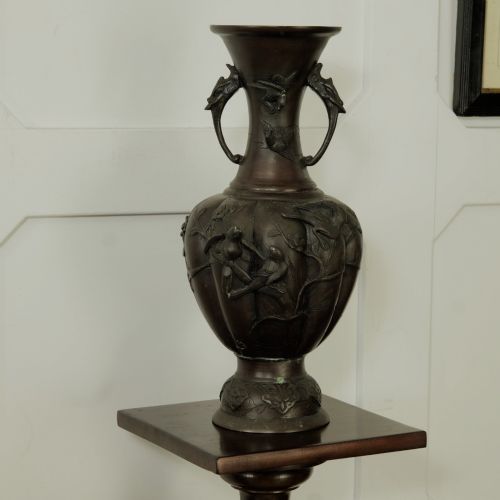
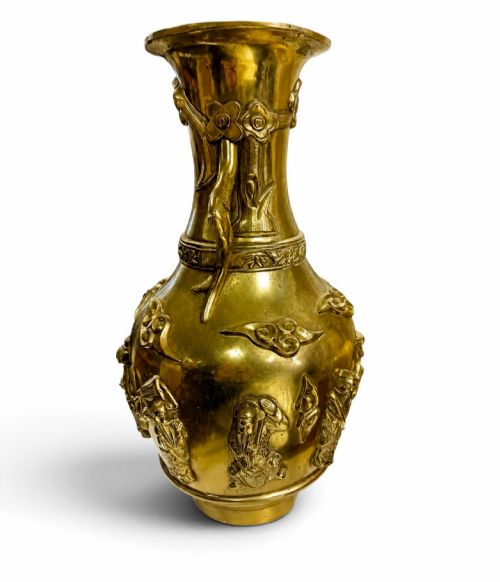
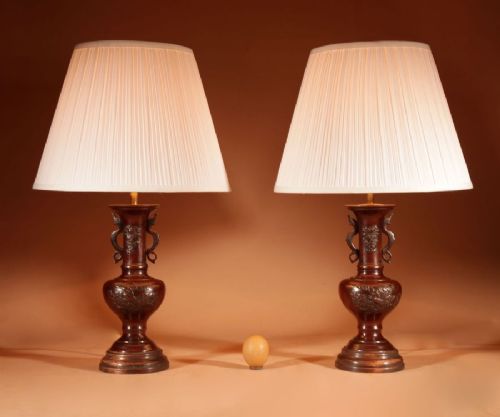
A bronze dragon vase stands as a commanding decorative vessel, typically originating from 19th Century China and Japan. These pieces range from imposing pairs to single large vessels that double as incense burners.
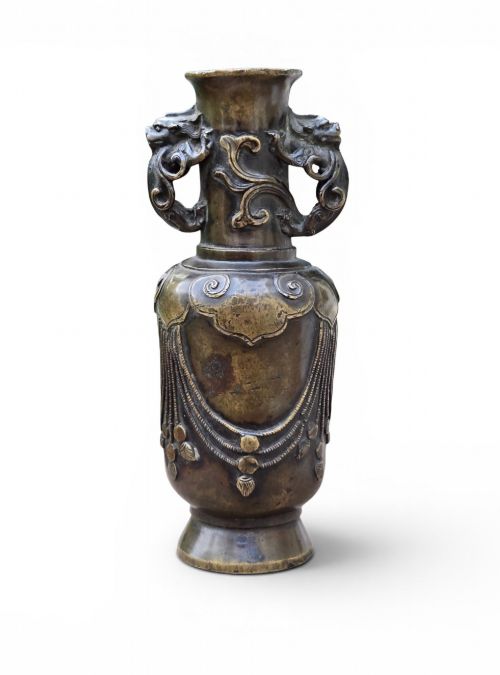
Buyers encounter striking Japanese Meiji period examples alongside Chinese Qing Dynasty pieces and Tibetan or Himalayan works. The form is defined by muscular cast dragons wrapping around the neck or body of the vessel.
The aesthetic bridges several distinct cultural traditions, spanning the restrained patination of early Japanese bronzes to the ornate, decorated surfaces of Chinese imperial styles.
How these bronzes were made
Artisans utilised traditional casting methods to shape the bronze, often adding patinated bronze, gilt bronze or brass finishes to the metal surface. These heavy vessels frequently weigh several kilograms, reflecting substantial metalwork.
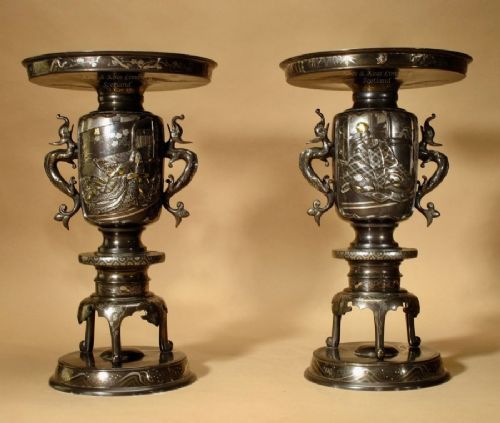
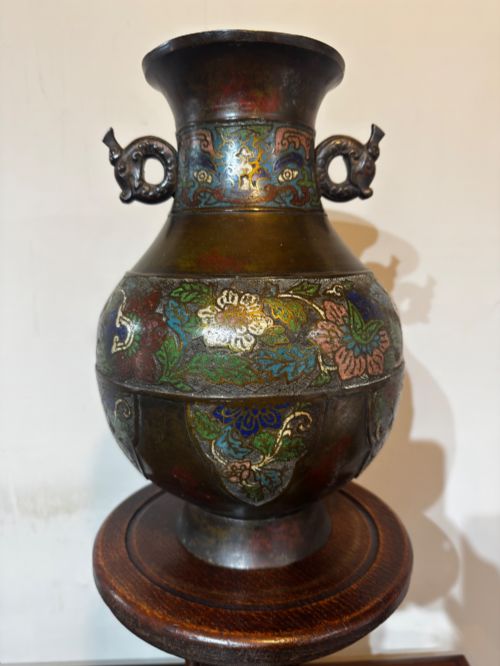
Decoration went beyond simple casting through the application of turquoise, coral and champlevé enamel. Some examples incorporate mixed metal onlaid techniques to create vivid contrast against the dark bronze ground.
Retail Price Guide 2026
Typical UK retail prices for bronze dragon vase, calculated from the Sellingantiques database of over a million retail prices indexed since 2003. This retail price guide relies exclusively on Sellingantiques data; no external sources or auction records are used, so the figures do not describe the wider market.
Materials appearing alongside bronze include turquoise, coral and champlevé enamel, alongside mixed metal onlaid decoration.
What varies in quality
The standard of the casting separates ordinary production from exceptional work, particularly in the crisp definition of the dragon scales and claws. Superior examples display deep, deliberate multi-patination and precise chasing across the entire surface.
The integration of decorative elements such as champlevé enamel or mixed metal onlays dictates the upper tier of the range. Masterful composition ensures the dragon motif wraps naturally around the vessel rather than feeling applied as an afterthought.
The Bronze Dragon Vase Glossary
- Patinated bronze
- Bronze that has been chemically treated or aged to produce a specific surface colour and tone. This finish protects the metal while enhancing visual depth.
- Champlevé enamel
- A technique where troughs are dug into the bronze surface and filled with enamel paste before firing. This colourful decoration creates vibrant contrast against the metallic body.
- Qing Dynasty
- The final imperial dynasty of China, ruling from 1644 to 1912. Metalwork from this period is characterised by formal weight and classical decorative motifs.
- Mixed metal onlaid
- A decorative method where different metals such as copper, silver and brass are applied onto the bronze ground. This creates contrasting highlights across the dragon design.
Frequently Asked Questions
Where were these bronze dragon vases made?
The pieces originate primarily from China and Japan during the 19th century, with occasional Tibetan or Himalayan examples appearing. Each region brought distinct casting techniques and stylistic conventions to the dragon motif.
Chinese pieces often align with Qing Dynasty traditions, whilst Japanese examples frequently date to the Meiji period.
How heavy are these bronze vases?
These vessels are substantial, with individual pieces commonly weighing between three and four kilograms. Pairs and particularly large examples command considerable physical presence and require sturdy placement.
The weight comes from thick-walled casting and solid bronze construction designed to support elaborate dragon decorations.
How do I care for an antique bronze vase?
Keep the bronze clean by gently dusting with a soft, dry cloth to protect the original patination. Avoid harsh chemical cleaners or polishes that strip away historical surface treatments.
Display the vessel away from direct moisture and extreme temperature fluctuations to preserve the metal and any enamel or stone inlays.
What is champlevé enamel on bronze?
Champlevé enamel involves carving recesses directly into the bronze surface to hold coloured glass paste. The piece is then fired to fuse the enamel into the metal channels.
This method produces durable, colourful patterns that complement the dark bronze body of the vase.
Can these vases hold water?
Many of these vessels were created primarily for display or as incense burners rather than for holding cut flowers. Some feature open forms or historical casting seams that are not watertight.
It is prudent to check the interior before introducing water to any antique metal vessel.